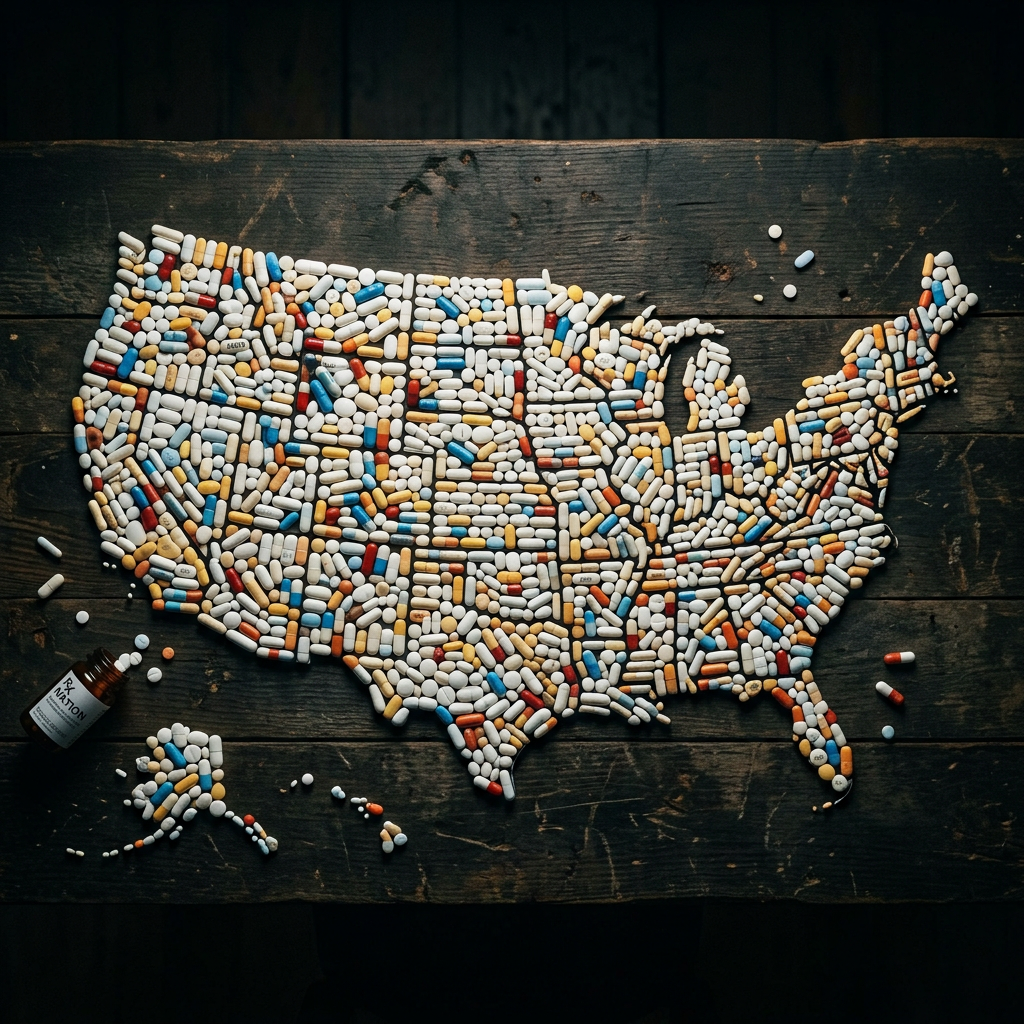
Drug abuse has a long and storied history in the United States, and we’ve been “at war” with it for decades. Yet despite the country’s best efforts to fight it, the problem is still prevalent. There were more than 68,400 drug overdose deaths in the 12-month period ending in October 2025, according to the CDC.
It’s crucial for the government to address this issue and prevent it from getting any worse. The government must also deal with the changing landscape of drug use, as newer drugs like fentanyl become more widespread. In fact, the DEA seized the equivalent of more than 369 million lethal doses of fentanyl in 2025.
To determine where drug abuse is most pronounced and which areas are most at risk, WalletHub compared the 50 states and the District of Columbia across 20 key metrics, ranging from arrest and overdose rates to opioid prescription use and employee drug testing laws.
“Drug problems can start from multiple sources, like taking illegal substances with friends or getting hooked on a prescription that was originally given for a legitimate medical issue. As states fight drug addiction, they need to consider all angles and make sure they are not just addressing things from a law enforcement perspective but also providing the resources necessary to help people with addictions get clean.”
Chip Lupo, WalletHub Analyst
In-Depth Look at the States With the Biggest Drug Problems
New Mexico
New Mexico has the biggest drug problem in the U.S., especially when it comes to teenagers. The state has the highest percentage of teens using illicit drugs and the highest share of teenagers who report having tried marijuana before age 13. New Mexico has the second-highest share of adults who use illicit drugs, as well.
New Mexico also lags behind other states when it comes to putting policies in place to discourage drug use or help people overcome it. For example, the state does not have employee drug testing laws, and it has the 13th-lowest share of Medicaid patients with addiction who were treated for marijuana use It also has the eighth-highest share of children who lived with anyone who had a problem with alcohol or drugs.
Most importantly, New Mexico has a large number of drug overdose deaths per capita, highlighting the severity of the drug crisis in the state.
Arkansas
Arkansas has the second-biggest drug problem, which is highlighted by the fact that it has the 10th-largest share of high school students who report being offered, sold, or given illegal drugs on school property and the second-most college campus drug arrests per capita.
The Natural State has the ninth-lowest number of substance abuse, behavioral disorder, and mental health social workers and counselors per capita, which makes it more difficult for people with drug problems to get the help they need.
The widespread use of prescription opioids is a major concern in the state. It has the highest number of opioid prescriptions dispensed per 100 people, suggesting that these medications are more commonly given out here than in any other state.
Alaska
Alaska has the third-biggest drug problem, and it has the ninth-highest percentage of students who were offered, sold or given an illegal drug on school property, at nearly 30% (during the latest year for which data is available). In addition, the state has the second-highest share of teenagers who report that they tried marijuana before age 13.
Alaska also ranks poorly in terms of the impact of substance abuse on its population. It has the second-highest number of drug overdose deaths in the country and experienced the sixth-highest year-over-year increase in such fatalities. In addition, the state has the highest share of children who have lived with someone struggling with alcohol or drug problems and a high percentage of adults who don’t receive treatment for their drug problems.
Methodology
In order to determine which states have the biggest drug problems, WalletHub compared the 50 states and the District of Columbia in three overall categories: 1) Drug Use & Addiction, 2) Law Enforcement and 3) Drug Health Issues & Rehab.
Those categories include a total of 20 relevant metrics, which are listed below with their corresponding weights. Each metric was graded on a 100-point scale, with a score of 100 representing the biggest drug problem.
We then determined each state and the District’s weighted average across all metrics to calculate its overall score. This total score was the basis for our final ranking. So the state ranked 1st in this study has the biggest drug problem, based on the data at hand, while the state ranked 51st has the smallest drug problem.
Discover more from The Cameron Journal
Subscribe to get the latest posts sent to your email.