Image Credit: Unsplash
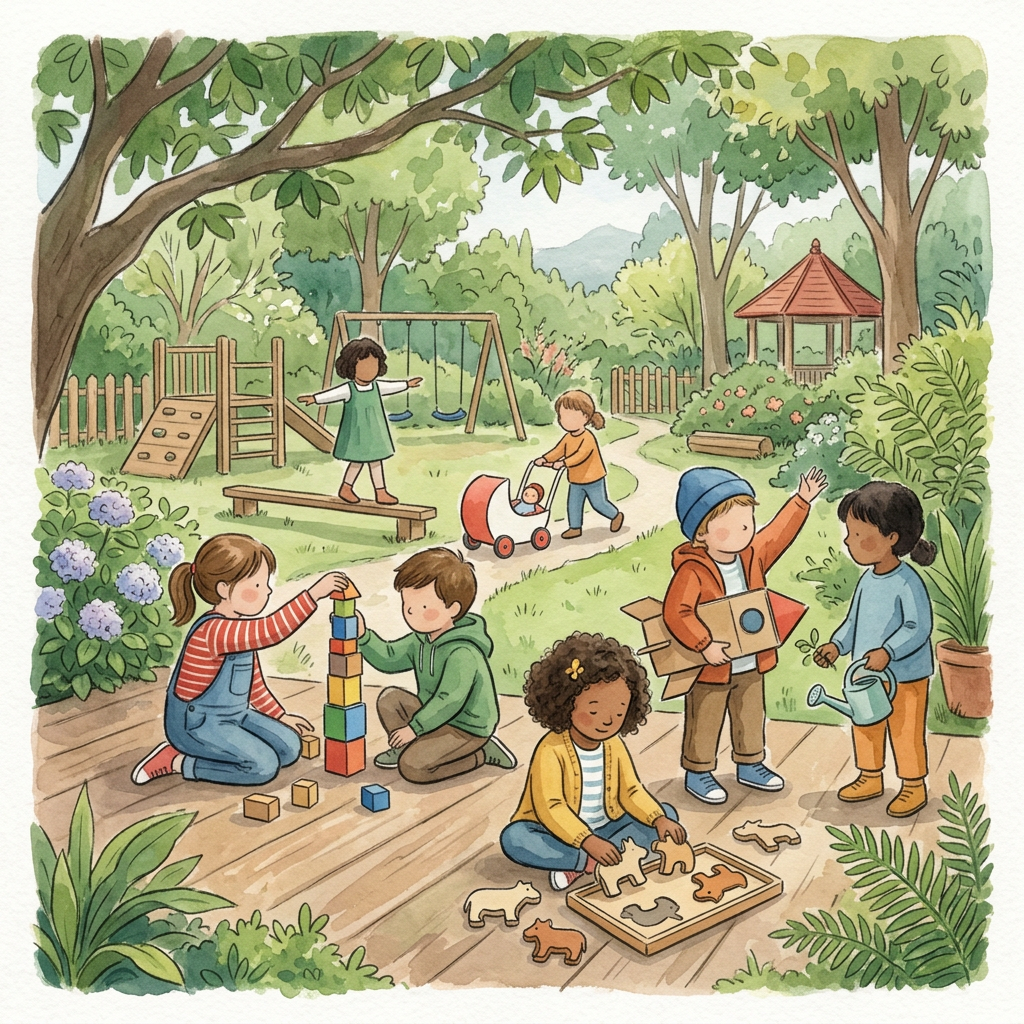
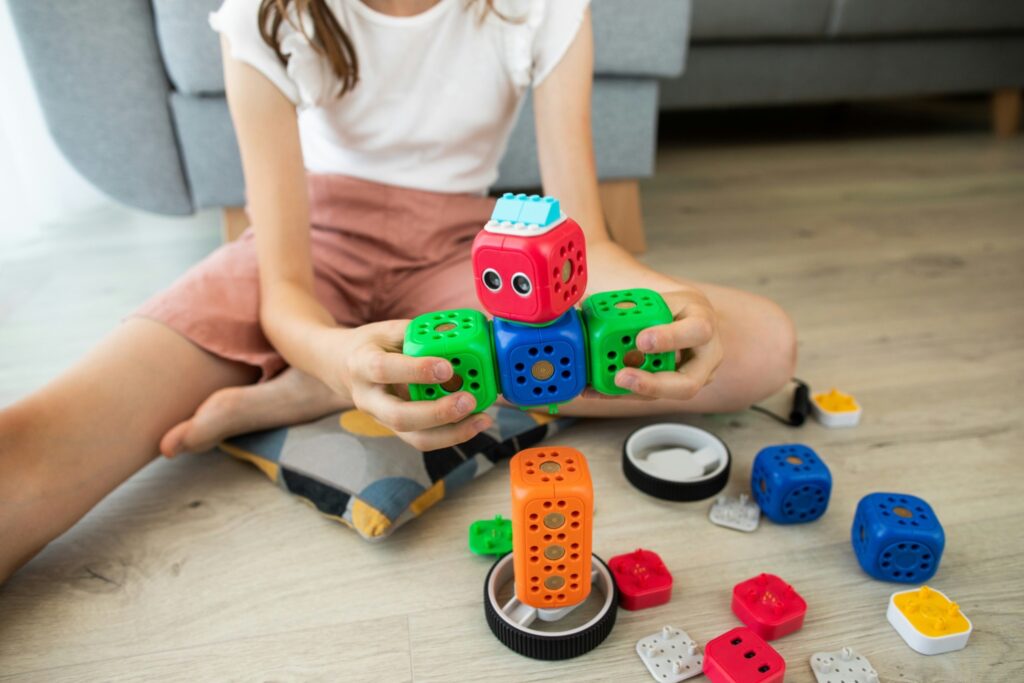
A child building a tower of blocks is doing much more than just stacking shapes. In those moments of concentration, trial, and error, they’re architects, engineers, and scientists all at once. People often see play as a simple pastime, a way for kids to burn off energy between meals and naps. But a growing body of research shows it’s one of the most important jobs of childhood, a powerful engine for learning, emotional development, and creativity. To help these vital skills grow, parents and educators can use different strategies. These range from giving open-ended prompts to playing collaborative story games, all designed to create a rich environment for children’s storytelling.
The Philosophy of Play
Simply put, play is an activity done just for the fun of it. It’s voluntary, joyful, and driven by inner motivation rather than outside rewards. The play-based learning philosophy, embraced by many educators and child development experts, suggests that children learn best when they are actively involved and interested. When a child is lost in a world of their own making, they aren’t just having fun; they’re running experiments, testing theories, and figuring out the world around them.
As researcher Stuart Brown explains, play is more than fun; it’s a deep biological drive that shapes the brain and helps us adapt. This isn’t just true for children but for adults too, showing how fundamental it is to our well-being and intelligence throughout our lives.
Play as a Learning Tool
Every game and playful interaction is full of learning opportunities. A toddler sorting toys by color is practicing how to classify things. A group of preschoolers negotiating the rules of a make-believe game are developing complex social and language skills. Play is where abstract ideas become real and understandable.
Think about these common situations:
- Problem-Solving: When a child figures out how to make a sandcastle that doesn’t fall apart or how to fit a puzzle piece into its correct spot, they’re sharpening their critical thinking and spatial reasoning.
- Math and Science: Counting steps, measuring ingredients in a toy kitchen, or watching what sinks and floats in the bathtub are all informal lessons in basic scientific and mathematical ideas.
- Language: Through pretend play, children try out new words, practice taking turns in conversations, and develop storytelling skills by creating narratives.
When Play Needs Guidance
While play comes naturally to most children, some might find it hard to start games, interact with others, or get into imaginative scenarios. Difficulties with communication, sensory processing, or motor skills can create barriers, making play frustrating instead of fun. In these cases, a little guidance can make a huge difference.
Sometimes, this guidance is as simple as a parent or caregiver showing how to play, suggesting a new game, or providing adaptive toys. Other times, a more structured approach might be necessary. For families looking for support, organizations like MetroEHS Pediatric Therapy offer specialized services that use play-based methods to help children build important skills. Therapists can use a child’s natural desire to play to work on specific goals, turning therapy sessions into engaging activities that build confidence and ability.
Social and Emotional Growth Through Play
Play is the main way children learn to navigate their social world. It’s where they practice sharing, taking turns, and solving conflicts. When a game of tag falls apart because someone isn’t playing fair, the group has to work together to find a solution. This is a real-world lesson in negotiation and cooperation.
Pretend play is especially powerful for emotional development. By acting out different roles (a doctor, a parent, a superhero) children can explore a range of emotions in a safe space. They learn empathy by imagining what it’s like to be someone else and develop emotional control by managing the ups and downs of a story they create. Successfully building a LEGO creation or winning a board game also gives a healthy sense of accomplishment and boosts self-esteem.
Creative Play for Every Child
Creativity isn’t just about being good at art; it’s about thinking flexibly and coming up with new ideas. The best way to encourage this is through open-ended play, where there are no instructions or pre-set outcomes. A simple cardboard box can become a spaceship, a castle, or a car. A pile of blankets can transform into a secret fort.
To encourage creative play, try to offer simple, versatile materials instead of toys that only do one thing. Give children the time and space to be bored, because boredom often sparks the imagination. The goal isn’t to create a perfect drawing or a flawless sculpture. The real value is in the process of exploring, experimenting, and bringing an idea to life.
Ultimately, play is the essential work of childhood. It’s how children build their brains, their bodies, and their understanding of the world. By recognizing its power, we can give them the space and opportunity they need to grow into capable, creative, and well-adjusted individuals.
Discover more from The Cameron Journal
Subscribe to get the latest posts sent to your email.