
Image Credit: Unsplash
Your home should be that one special place where the outside world’s noise just… fades away. It’s where you can truly relax, recharge, and feel completely at ease. And guess what? A skilled custom home architect can really help you make that happen. Your living space isn’t just a bunch of rooms; it has the power to be your very own sanctuary, a little retreat designed just for your comfort and well-being.
Getting to this peaceful feeling isn’t about spending a fortune or chasing every new trend. It’s really about making thoughtful choices that help create a calm, restorative vibe. By focusing on a few key design ideas, you can turn your house or apartment into a haven that genuinely feels like you.
What Makes a Space Feel Serene?
Think about it: a serene space is one that helps quiet your mind and your eyes. Our brains actually like order, which is why a cluttered environment can often make us feel stressed and anxious. So, the first step to building your sanctuary is usually to declutter and get organized. This doesn’t mean you have to go full minimalist; it just means making sure everything has a home and your surfaces aren’t buried under stuff.
But it’s not just about being tidy. Serenity also comes from surrounding yourself with things that genuinely make you happy and comfortable. Maybe it’s artwork you adore, photos of sweet memories, or fabrics in your favorite colors. A serene space feels personal and real. It shows off who you are, not what some catalog tells you to be. It’s that wonderful feeling when you walk through the door and just think, “Ah, I’m home.”
Strategic Lighting for Mood
Lighting is a powerful tool for setting a room’s mood, and it’s often overlooked. Harsh, bright overhead lights can feel a bit like an office or a hospital, while layered lighting that’s been thought out creates warmth and coziness. To design a calming space, try thinking about three layers of light:
- Ambient Lighting: This is your room’s main light source, often from a ceiling fixture or recessed lights. Go for bulbs with a warm glow and put in dimmer switches if you can, so you can adjust the brightness throughout the day.
- Task Lighting: This is focused light for specific activities, like a reading lamp next to your favorite chair or under-cabinet lights in the kitchen. It gives you the light you need without having to blast the whole room with brightness.
- Accent Lighting: Use this to show off cool architectural details, artwork, or plants. A small spotlight on a beloved painting or a soft light shining up behind a big plant can add depth and visual interest to your space.
Letting in as much natural light as possible is also a big deal. Keep your window coverings simple to welcome in plenty of daylight, since natural light has a significant impact on our well-being.
The Importance of Thoughtful Layout
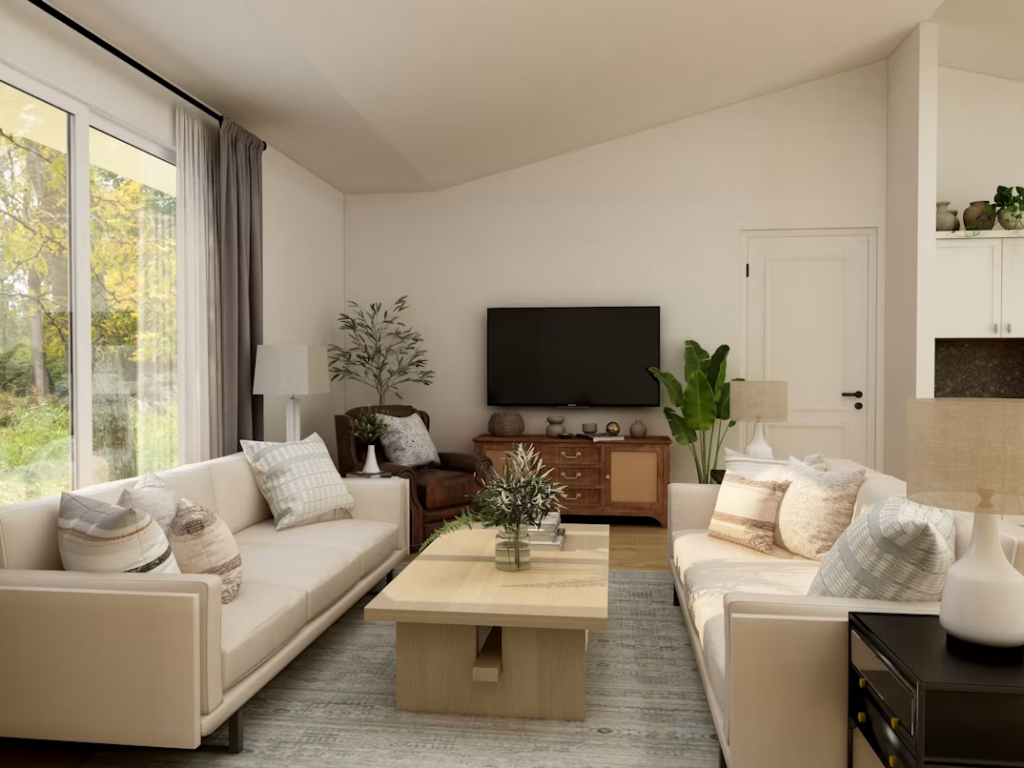
How you arrange your furniture and carve out different areas really changes how a home feels. A well-planned layout helps things flow smoothly and easily, making a space feel intuitive and comfortable. Think about the natural paths people take through a room. Are they blocked by furniture? Does your setup encourage people to chat and connect, or does it feel a bit jumbled? Creating distinct zones for different activities – like a snug reading nook or a dedicated spot for work – can make a room feel more organized and purposeful.
For bigger projects, like a renovation or building something new, the basic structure of the space sets the stage for everything else. They can help plan out what you see, how people move around, and how big rooms should be to create a home that feels effortlessly calm and put-together.
Materiality and Texture Choices
The materials you choose for your home really speak to your sense of touch and play a huge part in how a room feels overall. Hard, sleek surfaces like metal and glass can look modern and clean, but too many of them can make a space feel cold. To create a sanctuary, you’ll want to balance these with soft, natural textures.
Think about bringing in materials that just feel good. A soft wool rug under your feet, breezy linen curtains that gently filter the light, or a chunky knit blanket draped over the sofa all add layers of comfort. Natural materials like wood, stone, and rattan connect us to the outdoors and bring a warm, organic feel inside. A coffee table with a live-edge wood top, a slate-tiled entryway, or woven baskets for storage can ground a room and make it feel much more inviting.
Blurring Indoors and Outdoors
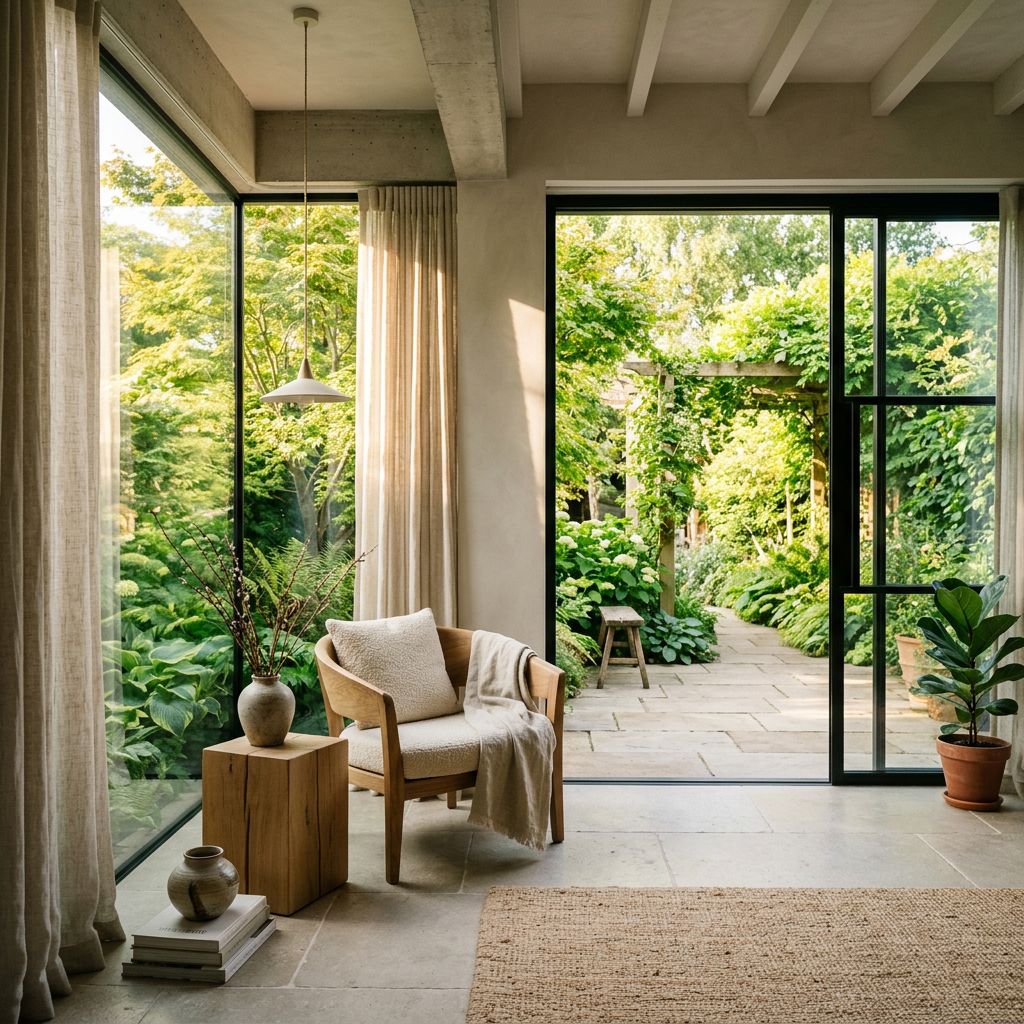
Connecting with nature is a proven way to feel calmer. And you can do this even if you don’t have a huge garden. Big windows or glass doors that frame a view of the sky or a nearby tree can make a room feel bigger and more open. If you’re doing a renovation, think about how you can improve that visual link to the outside.
The easiest way to blend indoors and out is by bringing plants inside. Greenery not only helps clean the air but also adds life, color, and a sculptural touch to any room. Pick out a variety of plants with different leaf shapes and sizes, and place them at various heights to get that lush, layered look. Using a color palette inspired by nature – like earthy greens, soft blues, and warm sand tones – can also bring in that outdoor tranquility.
Ultimately, designing your sanctuary is all about creating a space that supports your life and nourishes your soul. It’s a very personal journey of curating an environment that makes you feel centered, comfortable, and truly at peace.
Discover more from The Cameron Journal
Subscribe to get the latest posts sent to your email.




