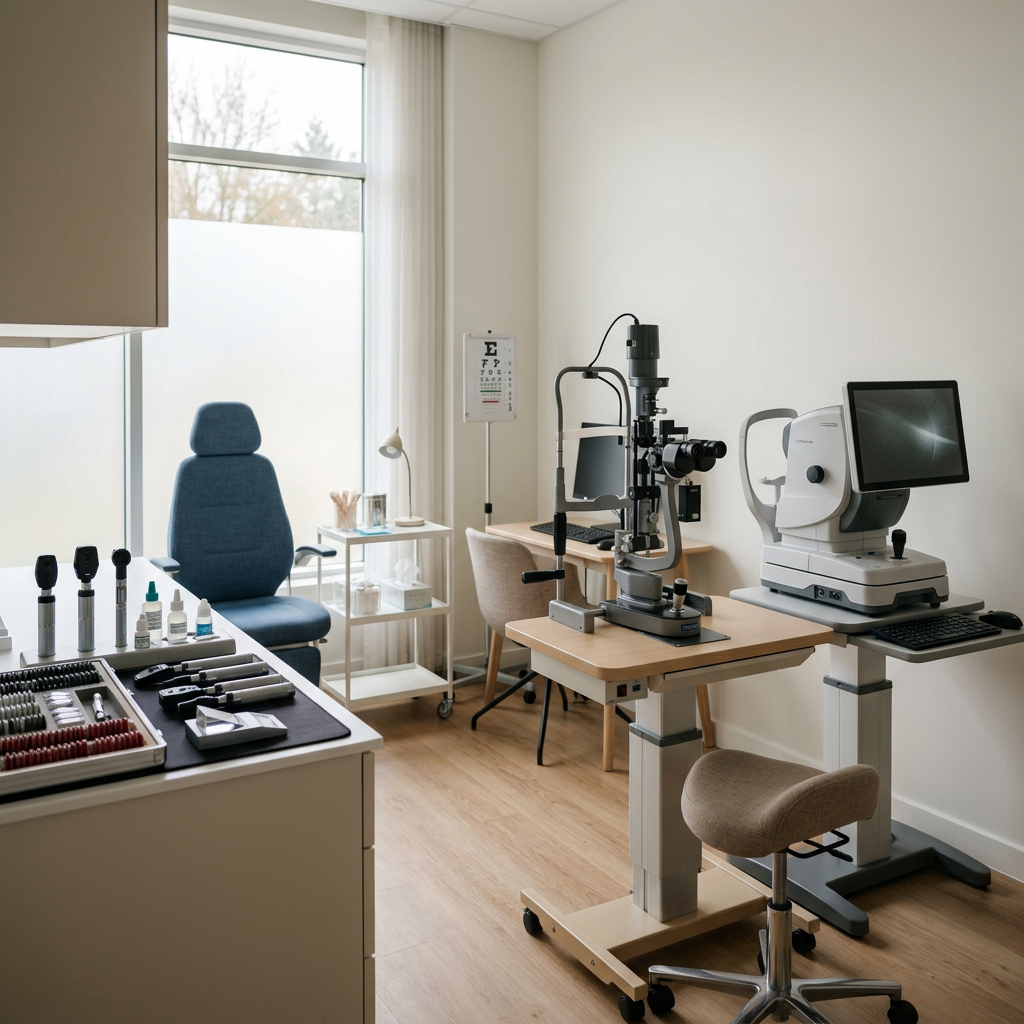
Most people think of eye care as a check for glasses. An ophthalmologist handles another side of that work: medical and surgical care for eye disease and vision loss.
What sets an ophthalmologist apart
An optometrist is often the first stop for routine vision needs. They test sight and prescribe glasses or contacts. They also diagnose and manage many eye conditions, referring patients when a problem calls for specialist care.
An ophthalmologist is a medical doctor with specialized training in eye and vision care. That background covers the diagnosis and treatment of eye disease, including surgery when needed.
The two roles often work side by side. Many practices include both, and a patient may see an optometrist for a routine exam and an ophthalmologist for follow-up on glaucoma or cataracts.
Symptoms that need immediate attention
Some symptoms should never wait for a routine appointment.
Sudden vision loss in one eye or both eyes is an emergency. Severe eye pain also needs urgent assessment. A sudden increase in floaters, new flashes of light, or both need immediate attention because they can signal a retinal tear or detachment.
A dark curtain or shadow in vision is another warning sign. It can creep in from the edge and block more sight. It often causes no pain, which makes it easy to dismiss.
These symptoms need immediate professional care, even without pain.
Seek immediate care from an eye doctor or emergency department for these warning signs rather than waiting for a routine visit. A dilated eye exam can reveal a retinal tear or detachment. Prompt assessment and treatment can help protect sight.
Blurred vision that isn’t just about glasses
Blurred vision is a common reason to book an eye visit. A new prescription may fix it, but not always. When blur lingers after a lens update or keeps getting worse, an eye exam can help distinguish a prescription problem from an eye condition such as cataracts. Diabetic retinopathy can also affect vision, though its early stages often cause no symptoms.
Cataracts cloud the lens with age. They often bring glare around lights and trouble with night driving. Colors may look washed out, and halos may form around lamps.
Changes in central vision can point to a different problem. Age-related macular degeneration affects central vision and can make faces or print hard to see. Straight lines may look wavy, and a blurry spot may sit in the center. New distortion or a new central blurry spot calls for prompt contact with an eye doctor rather than waiting for a routine checkup.
A dilated eye examination and pressure readings tell more than a sight chart alone. They let the doctor view the retina and optic nerve and measure intraocular pressure (IOP). These checks help detect glaucoma, which rarely causes pain yet harms the nerve over time.
For readers in the Buffalo area with persistent, non-urgent symptoms, finding an ophthalmologist in Williamsville can be a step toward a medical eye assessment when a prescription change hasn’t resolved the problem.
Daily symptoms worth a closer look
Some eye trouble is persistent rather than sudden. It deserves attention when it sticks around.
Dry eye syndrome is one example. Short bouts of dryness from wind or late nights are common. Burning or a gritty feeling that lasts for weeks deserves a closer look. It can point to inflammation on the surface of the eye or blocked oil glands. Ongoing redness also warrants an eye exam.
Headaches tied to visual work are another clue. Eyes that tire or lose focus may need more than rest. Uncorrected vision problems force extra effort, and that strain can become noticeable by late afternoon.
Digital eye strain can also leave eyes tired and temporarily blurry. Symptoms that persist despite breaks and changes to lighting deserve an eye exam rather than an assumption that screens are the only cause. New double vision or light sensitivity should not be dismissed as ordinary screen fatigue; contact an eye care professional promptly for guidance on urgency.
Describing when symptoms begin, how long they last, and whether they affect one or both eyes can help the clinician understand the problem.
Health history and age change the timing
Eye risk doesn’t start with symptoms for everyone. Health history can make medical eye care important well before sight changes.
Diabetes is a clear example. High blood sugar harms small blood vessels, and the retina is full of them. That damage can lead to diabetic retinopathy, which can cause bleeding or swelling without early pain. Blood pressure problems also raise risk, since strain on vessels harms the eye as well as the rest of the body.
Family history matters too. A parent or sibling with glaucoma raises the odds for others in the family. Pressure checks and optic nerve exams can catch that disease while sight still feels normal.
Age brings other changes. Focus up close often slips after 40 as presbyopia sets in. Later decades bring higher odds for cataracts and macular degeneration. Symptoms may stay quiet at first, so exams timed to personal risk give the doctor a baseline for tracking changes.
People with diabetes or high blood pressure can discuss exam timing with an eye doctor. The same holds for those with a family history of glaucoma or new trouble with night vision. The timing depends on personal risk.
Changes in sight deserve attention, but symptoms alone cannot identify the cause. Urgent signs need immediate care, while lasting blur or dryness warrant an eye exam. The goal is to understand what is changing and arrange the right follow-up, not to diagnose an eye condition at home.
Discover more from The Cameron Journal
Subscribe to get the latest posts sent to your email.