Image Credit: Unsplash
The world of high-stakes finance has been fundamentally reshaped by technology. Gone are the days when trading floors were filled with shouting brokers and paper tickets. Today, sophisticated software, powerful algorithms, and vast amounts of data help make the most critical financial decisions. This digital transformation has not only increased the speed and efficiency of markets but has also created new opportunities and challenges for traders and investors alike. Understanding the tech behind these decisions is key to understanding modern finance itself.
Algorithms Reshaping Markets
Algorithms, complex sets of rules that execute trades automatically, sit at the heart of modern trading. High-Frequency Trading (HFT) is a prime example, where algorithms can execute millions of orders in fractions of a second, capitalizing on tiny price discrepancies. This has profoundly changed how markets operate. Proponents argue that HFT provides liquidity, making it easier for buyers and sellers to find each other. However, critics point to the potential for increased volatility and the creation of a market environment that favors speed above all else. The growing sophistication of these systems, particularly with the integration of artificial intelligence, continues to shape AI’s influence on market dynamics.
Data Science in Investment Strategies
While algorithms handle the execution, data science provides the intelligence behind the strategy. Investment firms now employ teams of data scientists to sift through enormous datasets, looking for patterns and predictive signals. This goes far beyond traditional financial reports. Analysts use machine learning models to process alternative data sources, such as satellite imagery to track activity at factories, or sentiment analysis of news articles and social media posts to gauge public mood about a company. By identifying these subtle correlations, firms can develop investment theses grounded in a much broader and deeper understanding of the world.
Platforms for Precision Trading
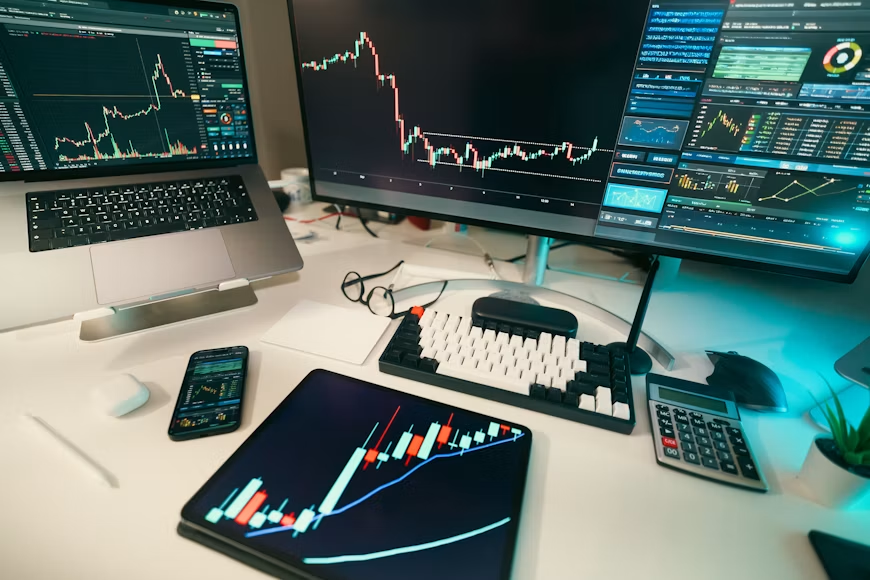
The tools available to individual traders have also become incredibly powerful. Modern trading platforms are no longer simple order entry systems. They are comprehensive analytical dashboards offering real-time data feeds, advanced charting capabilities, and integrated risk management features. These platforms democratize access to tools that were once exclusive to large institutions. However, having the tools is only half the battle; traders also need capital. This is where a specialized company, such as a futures proprietary trading firm, comes in. These firms provide funded accounts to skilled traders, giving them the capital necessary to use these advanced platforms and strategies effectively in the market.
Empowering Traders with Advanced Tools
Beyond the platform itself, a suite of specialized tools empowers traders to refine their approach. Advanced charting software allows for deep technical analysis, with hundreds of indicators and drawing tools to map out potential price movements. Risk management calculators help traders determine appropriate position sizes and set stop-losses to protect their capital from adverse moves. Many platforms also offer features for backtesting, allowing a trader to test a strategy against historical data to see how it would have performed. This ability to simulate trading without risking real money is an invaluable tool for developing and validating new ideas before putting them into practice.
Future Trends in Fintech and Trading
The technological evolution in finance is far from over. Several emerging trends promise to bring even more significant changes. Applying more advanced AI developments in finance, including deep learning and reinforcement learning, will likely lead to more autonomous and adaptive trading systems. Quantum computing, though still in its early stages, holds the potential to solve complex optimization problems that are currently impossible for classical computers, which could revolutionize portfolio management and risk analysis. Finally, blockchain technology may offer new ways to streamline the clearing and settlement of trades, increasing security and reducing costs for all market participants.
The integration of technology into finance is a continuous process. For traders and investors, staying informed about these technological shifts is no longer optional. It has become a fundamental aspect of navigating the complexities of modern financial markets, especially with the growing importance of financial data infrastructure.
Discover more from The Cameron Journal
Subscribe to get the latest posts sent to your email.