

Strip away the fantasy armor and the esports production values, and a ranked ladder is astonishingly simple: a number next to your name that goes up when you win and down when you lose. That’s the whole machine. And yet this machine reliably outmotivates paychecks, keeps millions of adults practicing a skill with the discipline of conservatory students, and — in its failure mode — turns a hobby into a nightly anxiety generator. The ladder is one of the purest psychological instruments ever built. Understanding why it works is the difference between using it and being used by it.
Why a Number Works This Hard
Ranked ladders sit on a stack of motivational mechanisms that behavioral science knows individually, but games combine with unusual purity:
- Immediate, unambiguous feedback. Most of adult life offers murky, delayed signals about whether you’re improving. The ladder answers after every single match, in integers. That clarity is almost narcotically satisfying to a brain starved of it.
- Visible, granular progress. The distance between ranks is broken into small, countable steps — each one a micro-goal, each micro-goal a dopamine checkpoint. Ladders are progress bars for the self.
- Calibrated challenge. Matchmaking’s whole job is keeping you near a 50% win rate — the exact difficulty band where psychologists locate flow. The ladder is an engine for manufacturing “hard but possible,” indefinitely.
- Identity stakes, safely bounded. The rank feels like you — a public measure of a real skill — while remaining consequence-free outside the game. High meaning, low stakes: the formula for engagement that stays engaging.
None of this is sinister by itself. It’s the same architecture behind belt systems in martial arts and chess ratings — centuries-old technologies for making improvement legible. Games just run the architecture at industrial scale and speed.
Where the Machine Turns
The failure mode has a recognizable shape, and it isn’t “playing too much.” It’s a shift in the relationship between the player and the number. Healthy climbing treats rating as a measurement — an instrument that reports on skill, consulted with curiosity. The unhealthy version inverts it: the number becomes the point, matches become transactions with the number, and the underlying skill — the thing the number was supposed to measure — fades into a means. Players in this mode describe the telltale symptoms with remarkable consistency: relief rather than joy after wins, disproportionate anguish after losses, “one more game” chasing recovery of the number rather than enjoyment of the match, and rating-checking behavior that resembles a trader watching a position.
The classic tells that the ladder has started climbing you: playing when tilted because rating was lost that “must” be won back tonight; avoiding play near a milestone out of fear of dropping (rating conservatism — a rank so precious it stops being used); and the milestone hangover, where a long-chased number, once reached, delivers a day of satisfaction and a permanent new floor of anxiety.
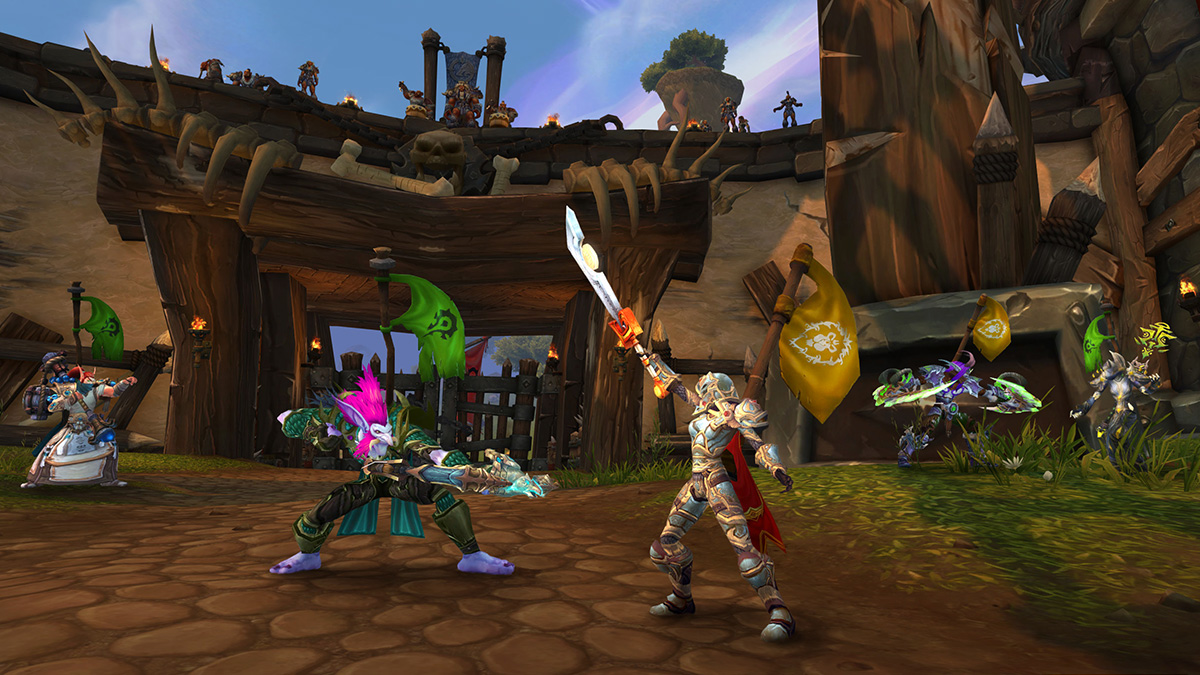
The Ladder Economy
One more mirror worth looking into: everything the ladder makes players feel, it also makes markets. Around every major ranked system — from tactical shooters to the arena ladders of the big MMOs — an economy of coaching, guides, review services, and rating-climbing assistance operates year-round (https://xboosty.com/wow/pvp shows what this looks like in one long-running arena ecosystem). Its existence is usually discussed as controversy, but psychologically it’s just evidence: the numbers matter enough to people that a service sector formed around them, exactly as one forms around any credential humans care about, from test prep to golf handicaps. Ladders mint meaning; markets follow meaning. The player’s task isn’t to judge that economy — it’s to notice what their own participation in the whole system, free or paid, is actually for.
Climbing Without Being Climbed
The durable answer, from sports psychology and from every veteran who has kept a healthy decade-long relationship with a ladder, is a small set of deliberate habits. Set process goals, not number goals — “improve my openings this month” survives variance; “reach the next rank” is hostage to it. Cap sessions by matches, not by outcomes, so tilted chasing has no oxygen. Review losses on a delay, when they’re data instead of wounds. Schedule off-ladder play to keep the skill connected to the joy that started everything. And once a season, ask the only diagnostic question that matters: if the number were hidden, would tonight’s session still be worth playing? When the answer is yes, the ladder is doing its old, honorable job — making a real skill visible. When it’s no, the wisest competitive move on the menu is the one no ladder measures: logging off with the number un-defended, and letting it wait.
Discover more from The Cameron Journal
Subscribe to get the latest posts sent to your email.