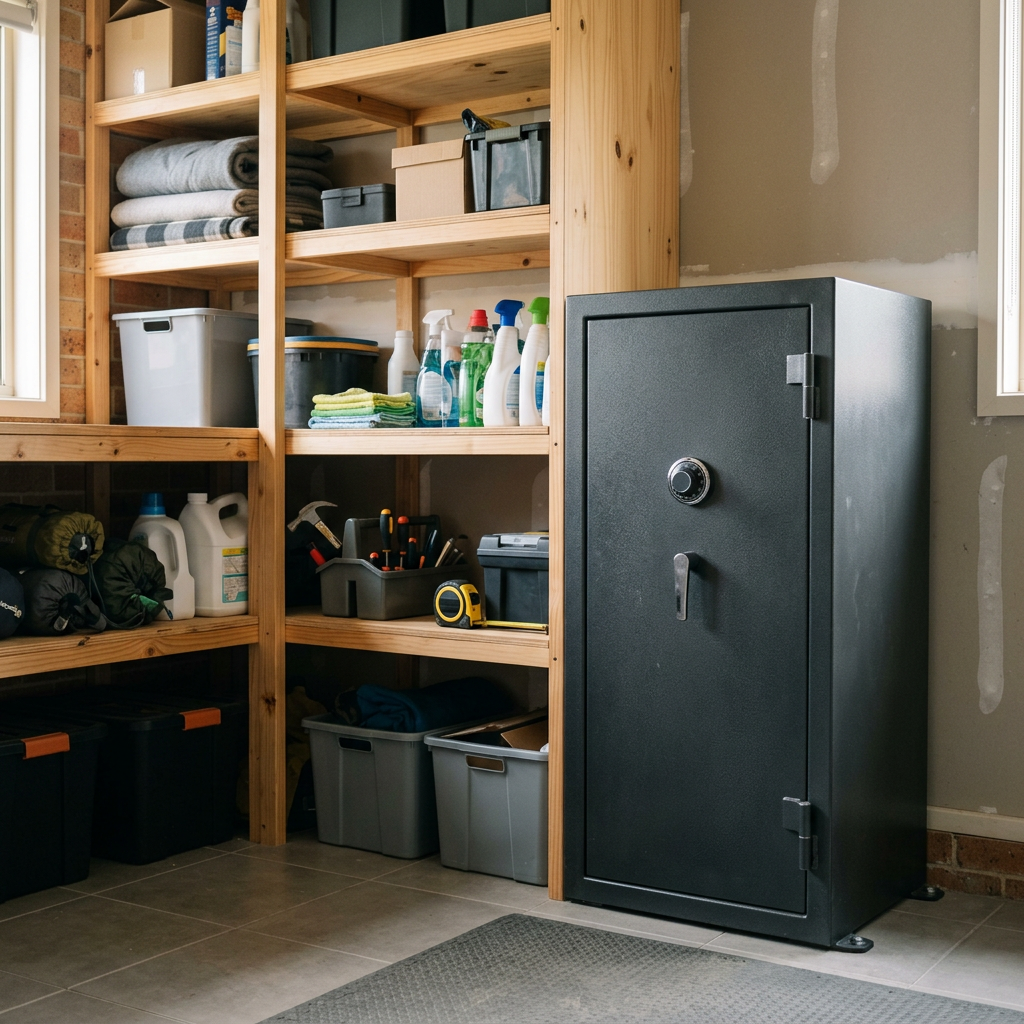
In Australia, firearm storage is part of holding a license. The right safe meets the storage conditions for your license category and fits your home, regardless of whether it’s the biggest model on sale.
Start with your license category and local rules
Storage rules are set at state and territory level, so local police guidance is the place to start. As a general pattern, owners are expected to take reasonable precautions against loss and theft. The same duty covers unauthorized access. Standards also change with the license category. NSW Police, for example, publishes separate standards for Category A/B and Category C/D/H. The current police safe storage page for your state or territory can help explain the requirements before shopping begins.
That guidance shapes everything else. It explains whether ammunition needs its own locked section and whether your category calls for a higher level of security. A product listing alone isn’t enough to go on. A safe that looks solid online may still fall short of local conditions.
Size for usable space, not sticker capacity
Don’t shop by the number on the box alone. Check how the manufacturer defines capacity and whether the layout accommodates scopes and other fitted accessories. Door organizers can also take up space. Four longarms with optics may fit differently from four without them, even in a safe labeled for six. Usable internal space matters more than the headline count. Allow for fittings on the inside of the door too.
Think through what else must live inside. Depending on the applicable rules and storage arrangement, ammunition may need a separate locked compartment or container. Shelves help, but they also cut height for long items. Measure your longest firearm with its scope fitted, then compare that length to the actual interior height and depth. Leave breathing room so you aren’t forcing stocks past metal edges.
Tight storage gets annoying fast.
Compare new and second-hand options
A new safe may come with specifications and warranty coverage that make comparison easier. Check the actual terms rather than assuming every model has the same protection. A used safe may cost less, but its design and installation must meet applicable requirements as well as being in sound condition. To get a sense of what used models sell for and which sizes appear often, browse second-hand listings on gunbuy.com.au alongside retail stores to compare condition and inclusions. A listing isn’t proof of compliance. It can be a starting point for comparing a model’s features with current police guidance.
Inspect in person when you can, opening and locking the door several times. Look for drill marks near the lock and bent frames that stop the bolts from seating cleanly. Ask how old the safe is and why it’s being sold. If keys are missing or the code can’t be reset in front of you, walk away.
Rust around seams and soft spots in the base need close attention. They point to moisture damage that weakens the unit over time. Factor a new lock or professional service into your budget if anything feels stiff.
Fit the safe to your home layout
Placement affects both security and condition. A safe tucked out of direct sight draws less interest than one seen through a window or open garage. Damp corners and unsealed sheds shorten safe life and invite rust on firearms. Pick a dry spot with steady airflow where you can open the door fully.
Installation deserves attention alongside the safe itself. Resistance to removal is one consideration, but anchoring requirements depend on the applicable storage rules and the safe. A qualified installer familiar with local firearm storage requirements can assess the building structure and the manufacturer’s installation instructions. Discuss the proposed location before buying, especially if you rent or have timber floors. A receipt and photos can document the work without replacing any required inspection.
Measure halls and doorways before delivery, since a safe that fits the bedroom may not turn the corner in a narrow apartment hall with tight angles. Think about daily use too. If access is awkward, shortcuts start to creep in.
Control access and plan the full cost
A safe works only if access stays limited. Keep keys off hooks near the front door and out of the top drawer everyone checks first. Don’t label spare keys or store them with the address. For combination units, change the code if a former housemate or tradesperson may have seen it. If friends stay over, locking the room that holds the safe adds another barrier alongside the safe itself.
Plan the full spend before you commit. Delivery to a back room often costs more than curbside drop-off, and professional installation and extra shelves add to the bill. A small dehumidifier unit or desiccant helps in humid rooms, but it needs power or regular upkeep. Include those costs in the safe price for a clearer picture of the total.
Set a reminder to check hinges and locks for smooth action. Look for loose fixings and signs of moisture inside. Small faults are cheap to fix early and costly to ignore. Keeping purchase papers and installation photos together provides a record if police ask how storage was set up.
Good storage keeps firearms out of the wrong hands and supports the responsibilities of holding a license. Category requirements and usable space should guide the choice. A careful installation at home means less worry over time.
Discover more from The Cameron Journal
Subscribe to get the latest posts sent to your email.