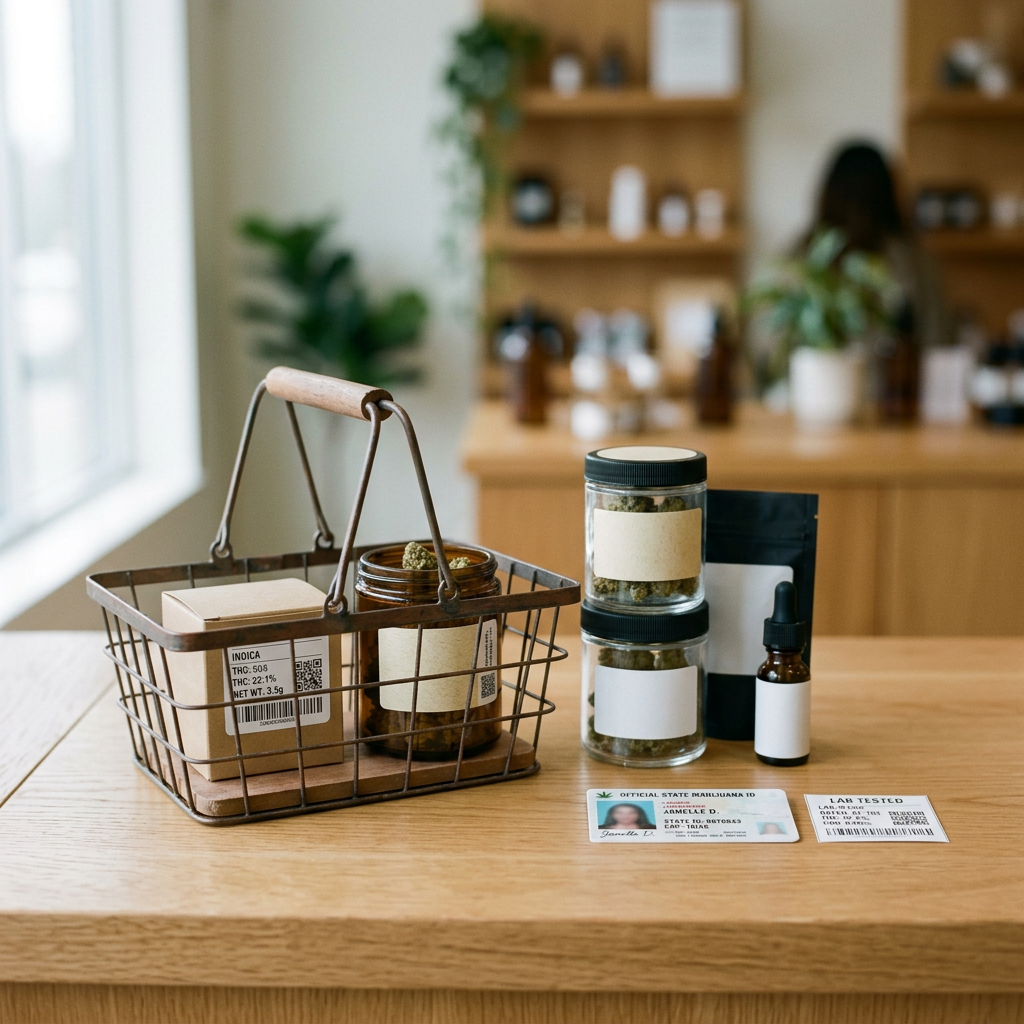
Old stories about cannabis can make a visit to a marijuana dispensary in Modesto sound more complicated than it is. Licensed shops operate under state rules for age checks, testing, and labeling. Separating those rules from common assumptions helps curious adults understand what a visit involves.
Myth 1: you need a medical card to get inside
This one sticks around because of Prop 215, the old medical law that shaped cannabis in California for years. Under Proposition 64, which voters passed for adult use, anyone 21 or older can buy from a licensed adult-use store with a valid government-issued ID. No doctor’s note is needed. Neither is a medical card.
The DCC, California’s cannabis regulator, still keeps a separate medical path for patients 18 and older with a physician recommendation. That path has its own rules. For most adult shoppers, though, the door check is simple: staff look at an ID to confirm age, as state law requires.
Having a current ID ready keeps the visit straightforward.
Myth 2: you need to be an expert before you walk in
There’s no quiz at the counter. People walk in every day without knowing strain names or product terms, and that’s normal. A budtender’s job is to listen to what a shopper wants and explain what is on the shelf in plain terms.
First-time shoppers don’t have to start at the counter, either. Many stores allow online ordering with in-store pickup, so there’s time to read at home. In the shop, questions are expected. Staff would rather explain a label than have someone guess what it means.
Myth 3: higher THC always means better cannabis
THC percentage gets a lot of attention, but it is only one number on the label. Two products with the same THC level can smell and taste quite different. Lab results give more context than a single percentage.
Terpenes are part of that context. These aromatic compounds shape much of cannabis’s smell and flavor, from citrus to pine. They don’t tell the full story on their own, and a very high THC number is not proof of quality. Fit matters more than the biggest number.
Myth 4: higher prices always mean higher quality
Licensed pricing reflects more than the contents of a package. Testing and compliance work are part of bringing a product to market. Every batch must be tested in a licensed lab and tracked through the state system under strict retail rules.
State cannabis taxes are another part of the total. Some menus show tax-inclusive prices, while others add tax at checkout, so the final price matters more than the display number. Any advertised discount also needs a look at its terms. A lower tag is not automatically a better deal if the package is smaller or the products differ.
For someone searching for “Dispensary Modesto California,” Cali Kosher’s Modesto location page is one place to review store details before visiting. Checking the location page and the store’s menu serves different purposes: one helps plan the trip, while the other helps compare products.
Myth 5: any cannabis storefront must be licensed
A clean sign and glass cases don’t prove a shop holds a state license. Unlicensed storefronts still exist, and they don’t follow the same testing or sales rules. Looks alone can’t settle the question.
California gives shoppers a direct way to check. The DCC runs an online license search, and retailers must display their state license in the window. The certificate’s QR code also allows shoppers to verify license status. Matching the listed business name and address to the store is more useful than relying on reviews, a polished website, or a professional-looking display. A shop’s appearance cannot substitute for that check.
Myth 6: lab-tested cannabis carries no risk at all
Testing is a real safeguard, but it is not a promise that every product will suit every person. Under DCC rules, each batch must pass through a licensed testing lab with a certificate of analysis before it can be sold. Labs screen for issues like mold and pesticides while also checking potency accuracy. A batch that fails cannot be sold unless it undergoes approved remediation and passes retesting.
Unwanted effects are still possible, and health questions belong with a clinician rather than a retail counter. Testing provides quality control without guaranteeing that a product is risk-free.
Myth 7: legal purchase means use is legal anywhere
A lawful retail sale does not remove the separate rules governing where cannabis may be used. Buying something at a licensed shop is not permission to open it in a parking lot, carry it into another state, or use it wherever it seems convenient. Purchase rules and use restrictions address different situations.
Where cannabis is used matters too. The DCC notes that public use stays restricted. Property owners can prohibit use on their premises, and cannabis can’t be carried across state lines. A hotel or workplace may have its own ban. Legal to buy doesn’t mean open to use in any spot.
With those misconceptions out of the way, the actual visit is pretty ordinary. It involves an ID check and time to browse the menu or ask questions before paying. For curious adults, knowing what to expect can make that first visit less intimidating.
Discover more from The Cameron Journal
Subscribe to get the latest posts sent to your email.