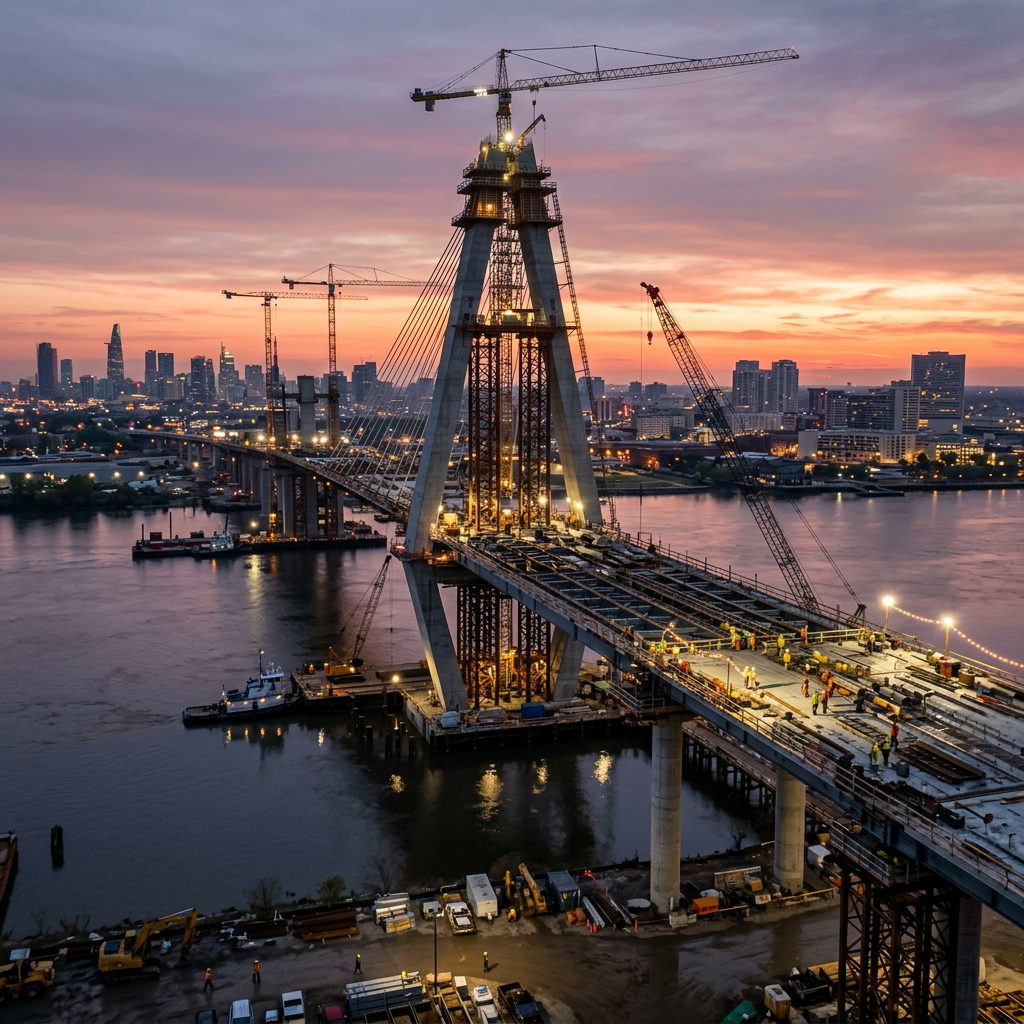

Image Credit: Pexels
From the bridge you cross on your morning commute to your office building, modern life relies on an invisible framework of powerful materials. We often take these structures for granted, but they’re the result of centuries of innovation and engineering. The roads, skyscrapers, and homes that define our cities are built on fundamental pillars, both literally and figuratively, making our way of life possible.
Building Blocks of Civilisation
Every great structure starts with its core components. For millennia, people have relied on a handful of key materials to build their world, and that hasn’t changed. Concrete, plastic, ammonia, and steel are often called the four materials of the modern world we simply can’t function without. Steel, especially, forms the skeleton for our tallest buildings and longest bridges, offering incredible strength and flexibility. Concrete gives us the mass and durability for foundations and motorways, creating the solid ground beneath our feet. These materials are so common we barely notice them, yet they are the true building blocks of our society. For any construction project, from a backyard shed to a major development, sourcing reliable steel supplies is an important early step. Quality steel products provide the strength and structural integrity needed for everything from framing and supports to fencing, beams, and other fabricated components. Choosing the right materials for the project’s requirements can help ensure the finished structure is durable, safe, and built to last.
Material Science Innovations
While traditional materials like steel and concrete are still vital, material science keeps pushing boundaries. Scientists and engineers are developing new substances that promise to make our infrastructure stronger, more sustainable, and even smarter. Imagine concrete that can heal its own cracks, cutting maintenance costs and extending the life of buildings and roads. Or think about transparent wood, a potential replacement for glass that’s stronger and more insulating. These aren’t just ideas from science fiction; they’re part of a wave of innovative construction materials currently in development. Other advances include aerogels that provide incredible insulation and carbon fibre composites that offer strength at a fraction of steel’s weight, opening up new architectural design possibilities.
Why Quality Construction Matters
The materials you choose directly and permanently affect a structure’s safety, durability, and cost. Picking low-quality components might save money in the short term, but it can lead to higher expenses later on through repairs, replacements, and maintenance. Poorly made materials can fail under stress, causing structural weaknesses that need costly repairs or, in the worst cases, create serious safety hazards. A well-built structure, on the other hand, is an investment in longevity. Using high-grade steel, properly mixed concrete, and durable fittings ensures a building can withstand the elements and the test of time. This commitment to quality not only protects the people who use the structure but also reduces its environmental footprint by cutting down on frequent repairs and replacements.
The Future of Urban Development
Looking ahead, the way we build our cities is set to change dramatically. Sustainability and efficiency are driving a new era of urban design, with smart cities and green buildings becoming a reality, alongside innovative construction materials that are redefining the industry. The materials we use will be central to this transformation. Future developments will likely include modular construction, where building sections are prefabricated off-site for faster, more precise assembly. We’ll see more buildings that generate their own power through solar-integrated glass and harvest rainwater for internal use. 3D printing technology is also poised to revolutionise construction, allowing for complex and efficient designs to be built with minimal waste. Even with these futuristic methods, the fundamental need for strong, reliable, and well-engineered materials will remain the unseen pillar supporting it all.
Ultimately, the structures around us are a testament to human ingenuity and the remarkable properties of the materials we’ve learned to master. Taking a moment to appreciate the engineering behind a simple bridge or a towering skyscraper offers a new perspective on the world we’ve built.
Discover more from The Cameron Journal
Subscribe to get the latest posts sent to your email.