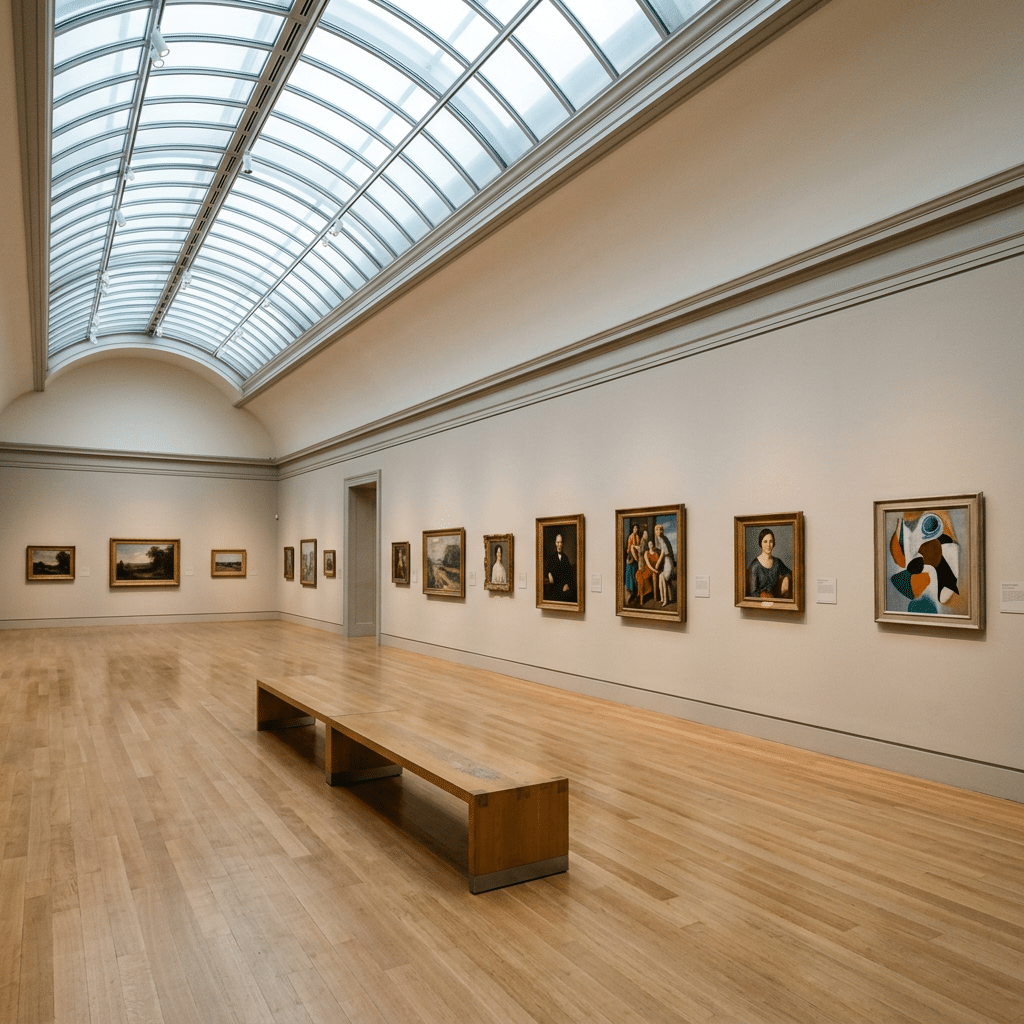
A museum visit should feel like time well spent, not like a test of patience. Yet many people leave museums feeling more tired than inspired. The galleries may be beautiful, the collection may be excellent, and the day may still end with sore feet, a headache, or the quiet wish to get outside as quickly as possible.
This does not mean someone dislikes art, history, or culture. Often, it means the visit was planned in a way that made the body and mind work too hard.
Museums can be intense places. There are hard floors, echoing rooms, bright spotlights, changing temperatures, school groups, guided tours, narrow passages, security checks, and long stretches without a proper place to sit. For some visitors, this is only mildly tiring. For others, especially people who are sensitive to noise, crowds, visual overload, anxiety, fatigue, or mobility strain, it can turn a promising cultural visit into something they have to recover from later.
The good news is that a calmer museum visit is possible. It usually does not require special access or complicated planning. It starts with choosing the right time, moving more slowly, and accepting that a good visit does not mean seeing everything.
Choose the quietest part of the day
The easiest way to make a museum visit calmer is to avoid peak hours. Late morning and early afternoon are often the busiest, especially in popular museums, during school holidays, and on weekends. If a museum opens early, the first hour can be much easier. If it stays open late, the final part of the day may also feel more relaxed.
This is not always about avoiding people completely. A museum does not need to be empty to feel comfortable. The difference is often in the sound level, the space around each display, and whether you can stop in front of something without being pushed along by the movement of a crowd.
Before going, check the museum’s opening hours, ticket system, and any visitor information about quieter times. Some museums now offer quiet hours, relaxed openings, sensory-friendly sessions, or access information for visitors who prefer a lower-stimulation experience.
Plan a short visit, not a heroic one
One of the biggest mistakes visitors make is trying to “do the whole museum” in one visit. That sounds efficient, but it often makes the experience worse. After a while, paintings blur together, labels become harder to read, and even beautiful rooms can feel like a maze.
A better approach is to choose a small number of rooms or themes before entering. You might decide to see one collection, one floor, or a few objects that genuinely interest you. Leaving with a clear memory of five things is usually better than walking past one hundred things while feeling exhausted.
For travellers who want a softer, less crowded experience, this guide on quiet museum visit without crowds offers practical ideas for handling echo, timing, seating, and sensory comfort inside museums.
Use seating as part of the visit
Many people treat sitting down as something they do only when they are already tired. In museums, it is better to sit before fatigue takes over.
A short rest can change the whole rhythm of the visit. It gives your eyes time to adjust, your feet time to recover, and your attention time to reset. Even two or three minutes on a bench can make the next room more enjoyable.
If seating is limited, notice where the benches are as you move through the building. You do not need to stop at every one, but knowing where they are makes the visit feel less pressured. In larger museums, cafés, courtyards, stair landings, and quiet side rooms can also become useful pauses.
Protect your attention
Museums ask for a lot of attention. You are looking, reading, comparing, remembering, navigating, and making decisions all at once. That mental effort is part of the pleasure, but it can also become tiring.
A calmer visit allows attention to narrow. Instead of reading every label, choose the ones that matter. Instead of photographing every room, take fewer pictures and spend more time actually looking. Instead of following the crowd automatically, pause and ask what you really want to see next.
This is especially helpful in museums with dense displays. A room full of objects can be fascinating, but it can also overwhelm the eye. Pick one case, one painting, one sculpture, or one small detail. Give it time. Then move on.
Avoid the loudest routes
In many museums, the loudest spaces are predictable: entrances, ticket areas, cloakrooms, gift shops, cafés, staircases, and rooms near large group tours. These are not bad spaces, but they are not always the best places to recover.
If the museum map shows several routes, choose the one that moves away from the main entrance first. Upper floors, side galleries, older wings, and smaller rooms are often quieter than central halls. If a large group enters a room, it is fine to step aside, wait, or visit another gallery and return later.
A museum visit does not have to follow the official order. Sometimes the most peaceful route is the one that avoids the obvious flow.
Dress for standing, not for the photo
Museums are often part of a day out, so it is tempting to dress for the city, the restaurant, or the photographs. But if the visit involves hard floors and slow walking, comfort matters.
Shoes are the most important choice. A museum visit is not fast walking, but it is a lot of standing. Standing slowly on stone, concrete, or polished floors can be more tiring than walking outside. Comfortable shoes, light layers, and a small bag can make the experience far easier.
The same applies to water and food. If museum rules allow it, carry water. If not, plan where you can take a break. Hunger and dehydration make noise, crowds, and decision-making feel worse.
Know when to leave
A good museum visit should not be judged by how long it lasts. Sometimes the best decision is to leave while you still feel interested.
There is no prize for staying until you are exhausted. If the rooms begin to feel too loud, if you stop absorbing what you see, or if you are only continuing because you feel you “should,” the visit has probably done enough.
Leaving early can make the memory better. You may remember the collection with pleasure instead of associating it with fatigue. You may even want to return.
Culture does not have to be rushed
Museums are often presented as places where visitors should absorb as much as possible. But culture works better when it has room to breathe. A quiet visit is not a lesser visit. It may be the most attentive kind.
To enjoy a museum without crowds or sensory overload, choose your time carefully, make the visit smaller, rest before you need to, avoid the loudest spaces, and give yourself permission to stop.
You do not have to see everything. You only have to see enough to make the visit meaningful.
Discover more from The Cameron Journal
Subscribe to get the latest posts sent to your email.