
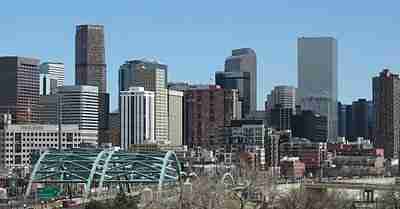
The late Aughts and the Early 10s were a busy time in public policy. The financial crisis of 2008 spawned the Tea Party on the right and the Occupy movement on the left. I have the unique distinction of being involved in both at some level. The Tea Party promised to be a movement of the people but quickly devolved into a competition among its wealthier members for influence over candidates and within the media. By the time I had left the Tea Party movement the left-response to this was well-underway and Denver’s contribution to fighting the 99% had camped out in Lincoln park in front of the West steps of the State Capitol. A state capitol I might add that is topped with gold leaf.
When I first drove into downtown Denver to take a look at the protest I anticipated that I would be seeing the traditional protest. People with signs, perhaps literature, and maybe a song or two. What I found was can only be described as a small town. I don’t know what other protests were like but this “Occupy Town” had a library, a sleeping spot, an active kitchen, and other forms of makeshift shelter for various participants. I knew then that his was a different kind of protest. They had built buildings and created a sense of permanence. These people were occupying a public and intended to stay.
The People of Occupy
A variety of people both rich and poor had gathered to protest. A wealthy lady talked to me about her ex-husband and his wealthy family and their admissions that the system is rigged to favor them and that she was protesting because of how awful they were as people. I was surprised that her feet didn’t hurt more in her $200 sandals. She may be a member of the 99% but she bravely protested in those sandals for hours at a stretch. She bought food and building materials and was involved at every meeting.
She wasn’t the only person of means involved in the protest. In the early days of the protest, many of the more prominent people with plans and ideas were often middle class business owners. One of the first people I met at an assembly was a man who owned a medical marijuana dispensary. He advised people on how to get to bathrooms, get toiletries, have a nap, or otherwise access the many services of the protest.
The outsized influence on Occupy Denver, especially in it’s 2nd incarnation across the street in City Park, were the various street people that were involved in the protest. There is no shortage of mental health issues within that community but there are also experiences and stories that are important as well. For everyone who obviously suffers from a mental health concern there are several people who do not and have a range of problems ranging from drug addiction to the simple desire to drop out of society. Although alternative ways of living are now all the rage, I saw many young men (and a few women) who had decided that living an irregular life free of rent (and the required labors required to make that happen) was a preferred and more free way of living.
The people were interesting and they all had interesting stories. Why they were protesting, what had happened to them, or how they wanted to help people.
Why Occupy?
It might seem suspicious that someone who had ran a Tea Party backed publication would end up at the Left’s signature protest in this century. But Occupy and the Tea Party were very different. The Tea Party was the kind of protest one would expect. Occupy was raw and real. I didn’t want to miss out on my generations protest of the elite. I had a rub as much as anyone else. I was fresh out of grad school with no job prospects of note and 50K of fresh student loan debt. What was worse is that it had nothing to do with how I did or did not work or even what skills I did or did not have. I did not have a functional degree and my job prospects showed it. I always thought I would be recruited into business to do something. I wasn’t quite sure what that would be but by 2011, that line of thinking had all but died out in the greater economy. I had barely survived the dark days of 2009 and 2010 with what freelancing clients I could conjure up. I lacked the sophisticated technical skills that many of my clients required. They didn’t just need copywriting or marketing they needed blogs, websites and other things that I could not provide which meant that their business often went elsewhere. But I still believed that there was room in the economy for me and that it was only a matter of time before I found something that would move my career forward. I felt that it wasn’t fair that the banks were bailed out while there was no help for the rest of us. Many businesses weren’t even hiring. At times, due to sequestration and budget cuts the government wasn’t even hiring.
Occupy gave voice to mine and many others frustrations in what the financial crisis had done to us. The financial crisis laid bare the lie at the heart of the American economy and we were all it’s collective victims. I had the chance to talk about and discuss the deeply held and broken social contract that the financial crisis shattered for an entire generation. Occupy was an amazing journey of people, things, ideas, and the singular focus that if we stayed their long enough and did enough direct actions (like demanding the governor of Colorado come out and speak with us) that we could change the world and get our country (and our world) back on track.
Occupy 5 years Later
I was sitting in City Park with my young cousin, whom I mentor, and I was telling him all my memories of Occupy and I realized how much I still believe in the original cause of Occupy. The fences that the city of Denver put up after they finally evicted the last of the camp and hauled away it’s contents are still there. They were originally put up to help the grass recover from constant use for several months but the fences haven’t left; a reminder of what happened on those grounds. The people sleeping together, communally, in peace. Even in winter, it’s warm under blankets, under the trees with others around for body heat. It was exciting to see how people could come together as an adhoc society for the good of all. For me, to be welcomed and to be able to be active in that circle and to be heard was something I didn’t expect.
Influences
Occupy still has an outsized influence. The language of economics that is now commonplace, “The 1%” and “the 99%” resulted from Occupy. Income inequality and student loan problems are in the national discourse because of the occupy movement. Occupy didn’t change the world. It wasn’t 1968 by far. But it did change the conversation. It was the kind of action that no one had taken in a long time. People, all over the world, took to their public spaces and reclaimed them for the people. Solving the economic problems that we face is now a priority. While not as iconic, Occupy hasn’t changed anything directly but it also changed everything.
I know it changed me and my perspective on the world will never be the same.
Did you participate in the Occupy protests? Do you have anything to share?
Discover more from The Cameron Journal
Subscribe to get the latest posts sent to your email.


