Image credit: Unsplash
The cities we live in are intricate systems of steel, concrete, and data, constantly adapting to meet new challenges. Beneath the surface of our daily routines, engineering innovation is quietly reshaping the very foundation of urban life. These advancements aren’t just about building bigger or taller structures; they’re about creating smarter, more resilient, and more sustainable environments for future generations.
The Evolution of Urban Planning
Urban planning has come a long way from the simple grid layouts of ancient cities. For centuries, cities either grew organically or were designed based on the limitations of their time. The Industrial Revolution brought rapid, often chaotic, expansion that prioritized function over form and well-being. This led to the 20th-century ideal of the master-planned community, which tried to impose order through zoning and separating different uses.
Today, urban planning is transforming again. It’s becoming a more dynamic and data-informed discipline. Planners now use sophisticated modeling to predict traffic flow, energy consumption, and population growth. This allows them to design infrastructure that is not only efficient for today but also adaptable for tomorrow’s needs. The focus has shifted from rigid blueprints to flexible frameworks that can evolve with the city itself.
Smart Infrastructure for Resilient Cities
“Smart infrastructure” is a core idea in modern urban development. It involves embedding sensors, data analytics, and connectivity into a city’s main systems, like the power grid, water supply, and transportation networks. This creates a responsive urban environment that can monitor its own health and react to issues in real time. For example, a smart water grid can detect leaks and reroute supply to prevent service disruptions, while smart traffic lights can adjust their timing based on actual traffic flow to reduce congestion.
These intelligent systems are key to building urban resilience. As cities face increasing pressure from climate change and population growth, the ability to anticipate and respond to disruptions is critical. By creating resilient and efficient cities, smart infrastructure helps ensure that essential services remain operational even during a crisis, from extreme weather events to public health emergencies.
Minimizing Disruption with Advanced Methods
One of the biggest challenges in modernizing a city is upgrading aging infrastructure without bringing daily life to a halt. Traditional construction methods often involve extensive excavation, which means closed roads, noise, dust, and major inconveniences for residents and businesses. Fortunately, engineering has developed innovative solutions to work around this problem.
Trenchless technologies are a prime example of this progress. Techniques like directional drilling allow new pipes, cables, and conduits to be installed underground with only minimal surface-level excavation. By boring a path horizontally beneath the ground, crews can lay new utility lines under roads, buildings, and natural obstacles without needing a massive open trench. This approach dramatically reduces project time, cost, and community disruption, making it an essential tool for urban renewal.
Underground Networks and Future Connectivity
Much of a city’s most critical infrastructure is hidden from view, running through a complex web of underground networks. These subterranean highways carry our water, electricity, and, increasingly, our data. The demand for high-speed connectivity is pushing engineers to expand and upgrade these networks at an unprecedented rate. Laying down robust fiber optic systems is the foundational step for enabling next-generation technologies like 5G, the Internet of Things (IoT), and autonomous vehicles.
The work of installing and maintaining these networks is a specialized field, with engineers who build smarter cities from the ground up. Careful planning is required to ensure that new installations don’t interfere with existing utilities. Advanced mapping and locating services are used to create a precise digital twin of the world beneath our feet, allowing for safe and efficient expansion of the networks that will power our future.
Sustainability in Construction Practices
Innovation in urban engineering is also deeply connected to sustainability. The construction industry has historically been a major consumer of resources and a significant source of emissions. Today, there’s a strong movement toward greener practices that minimize the environmental impact of building and maintaining our cities.
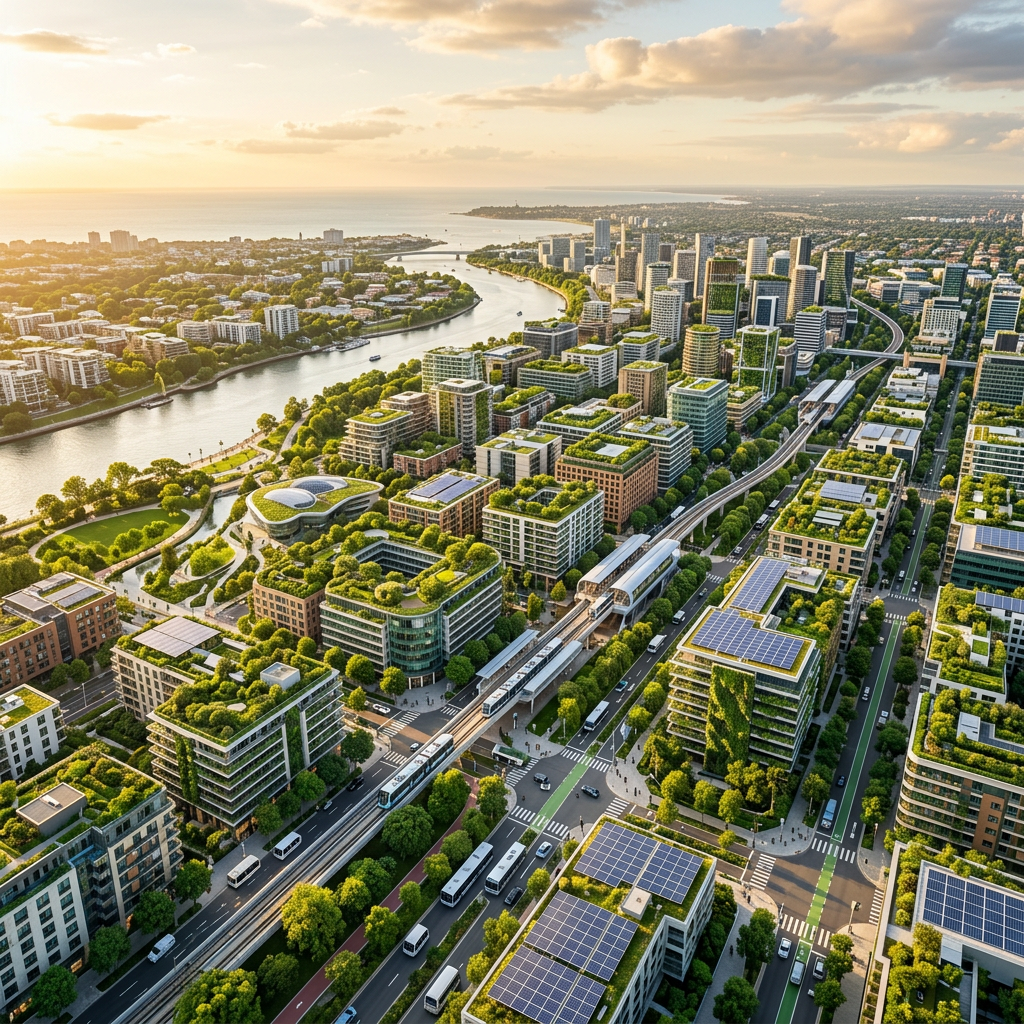
This includes developing and using new materials, such as low-carbon concrete, recycled asphalt, and building components made from reclaimed plastics. It also involves adopting construction methods that reduce waste and energy consumption. Beyond materials, sustainable design principles are being applied to infrastructure itself. Projects like green roofs, permeable pavements that absorb stormwater, and integrated public transit systems all help create cities that are not only functional but also in better harmony with the natural environment.
These engineering innovations are more than just technical solutions. They are the building blocks of a more connected, resilient, and livable urban future, ensuring that our cities can continue to thrive for decades to come.
Discover more from The Cameron Journal
Subscribe to get the latest posts sent to your email.