
Image Credit: Pexels
Historic stone buildings can survive for centuries, yet a single poorly planned lift may crack masonry, disturb foundations or damage features that can’t be replaced. Preservation projects therefore need modern engineering alongside traditional conservation skills. Before heavy work begins, project teams need to understand the structure, document its condition and choose equipment that can operate within strict limits.
The Delicate Nature of Aging Stone
Stone appears solid, but age changes how it behaves. Mortar can lose strength, moisture may open hidden joints, and earlier repairs can create uneven stress. A sandstone parapet, for example, might look sound from ground level while containing fractures that shift under a modest load. Even moving an object nearby can transfer pressure through floors or foundations.
Start with a condition survey that records cracks, loose material and previous alterations. Engineers and conservation specialists can then identify load limits and exclusion zones. Photographs, crack gauges and vibration monitors provide a baseline, giving the team evidence if conditions change during the project.
Modern Lifting Meets Antiquity
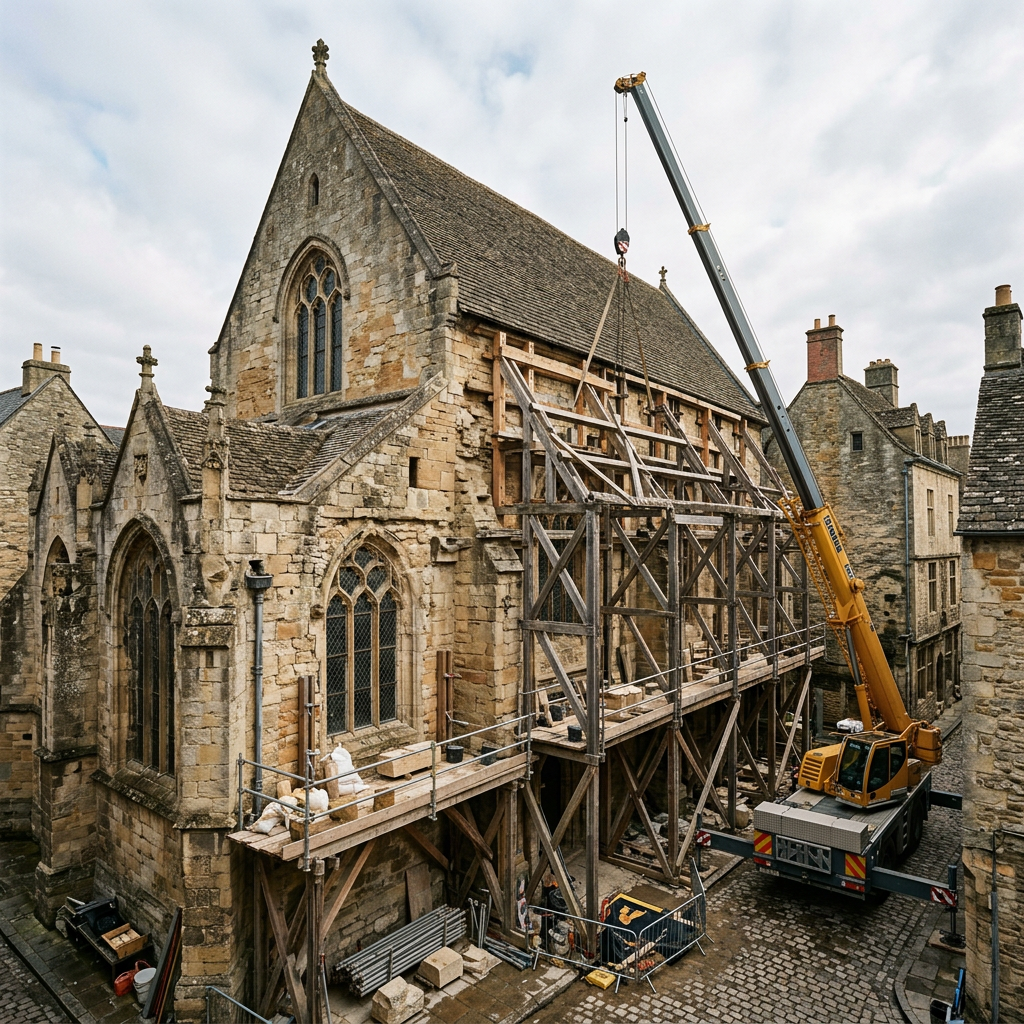
Modern lifting equipment gives project teams precise control over components that workers once moved with ropes, timber frames and considerable risk. The equipment still needs to suit the site. Restricted access, fragile paving, overhead obstacles and limited ground capacity may determine the machine’s position long before work starts.
When a project requires heavy components to be lifted or positioned, professional crane hire can help provide suitable equipment for the task. Before work begins, the lift plan should specify the item’s verified weight, attachment points, travel path and landing position. A trial lift of a few centimetres can confirm balance before a stone feature or structural element leaves its supports.
Mitigating Ground Vibration Risks
Vibration deserves attention even when lifting equipment never touches the historic structure. Vehicle movement, stabiliser placement and nearby excavation can send low-level energy through the ground. Repeated vibration may widen existing cracks or loosen brittle mortar, particularly in buildings already affected by settlement.
Measure background vibration before work and set project-specific trigger levels with the structural engineer. Position heavy equipment on assessed ground, use load-spreading mats where specified and keep unnecessary vehicle movements away from vulnerable walls. Monitoring should continue during lifting, with a clear stop-work procedure if readings cross the agreed threshold. Teams should also inspect known cracks after each major lift, not only at the project’s end.
Extending Century-Old Legacies
A successful heritage project leaves both the building and its story intact. That requires accurate records of surveys, lift plans, monitoring results and any material removed or reinstated. These documents help future custodians understand what changed, where hidden supports sit and which parts need closer inspection. For a broader perspective on how engineering advances influence the built environment, read Innovation in Infrastructure Engineering: Tomorrow’s Cities.
The global heritage challenges identified by the World Monuments Fund include climate pressures, rapid development and limited resources. Careful lifting practices address one manageable part of that wider problem. When engineers, conservators and lifting specialists agree on tolerances before equipment arrives, historic fabric has a better chance of reaching its next century without avoidable scars.
Discover more from The Cameron Journal
Subscribe to get the latest posts sent to your email.





