Key Takeaways
- Dance combines movement, music, memory, balance, and social interaction in one enjoyable activity.
- Consistent practice can support coordination, body awareness, confidence, and connection with others.
- Beginners do not need a partner, perfect rhythm, or special clothing to start.
- A good class makes room for clear instruction, consent, comfort, and gradual progress.
- Dance can be part of a healthy routine, but it is not a replacement for medical or mental health care.
Why Dance Feels Different From a Typical Workout
For many people, exercise becomes easier to sustain when it feels like an experience rather than another task on the calendar. Dance brings together music, movement, variety, and attention, so a class can feel less repetitive than time on a treadmill or a standard gym routine. For New Yorkers who want a welcoming entry point, bachata lessons NYC can offer a structured way to learn rhythm, footwork, and partner connection while meeting other people.
Partner dance adds another element: communication. Instead of simply counting repetitions, dancers learn to notice timing, shift weight smoothly, respond to music, and share space respectfully. No previous experience is required. Every skilled dancer began by learning where to place their feet, how to hear the beat, and how to stay relaxed when a step did not go as planned.
The Physical Skills Dance Can Build
Dance can develop practical movement skills, including balance, coordination, mobility, rhythm, posture, and body control. Repeated basic steps teach the body to transfer weight from one foot to the other without rushing. Over time, simple patterns can help a beginner become more aware of alignment, direction, and how much effort a movement actually requires.
The intensity of a class depends on the style, pace, length, music, and individual effort. One session may feel like gentle movement practice, while another may raise the heart rate through longer combinations and faster songs. Start with a short warmup, drink water, wear supportive shoes, and adapt or pause when something causes pain. People managing an injury, condition, or recent surgery should ask a qualified health professional what movement is appropriate for them.
What Research Says About Dance and Well-Being
Dance is being studied as more than exercise because it involves physical activity alongside creativity, learning, and social participation. Research on dance and psychological and cognitive health outcomes suggests potential benefits for well-being while also highlighting the need for a stronger understanding of how those effects occur.
That distinction matters. A positive class experience may help someone feel more energized, capable, or connected, but results vary based on health, preferences, teaching quality, attendance, and many other factors. Dance may complement a wellness routine, yet it should not be presented as a cure for anxiety, depression, chronic pain, dementia, or any other health condition.
How Dance May Support Confidence
Confidence often grows through small, visible wins. A beginner may first focus on finding the beat and completing a basic pattern. A few weeks later, they may recognize a familiar song, remember a sequence, or recover more easily after missing a step. Those moments create evidence that learning is happening.
Progress does not need to mean dramatic turns, advanced styling, or flawless performance. It can mean feeling less tense, asking a question without embarrassment, or dancing through an entire song with a calmer mindset. Avoid comparing your first month to another dancer’s fifth year. Consistency and comfort are more useful measures than trying to look advanced quickly.
The Social Side of Partner Dance
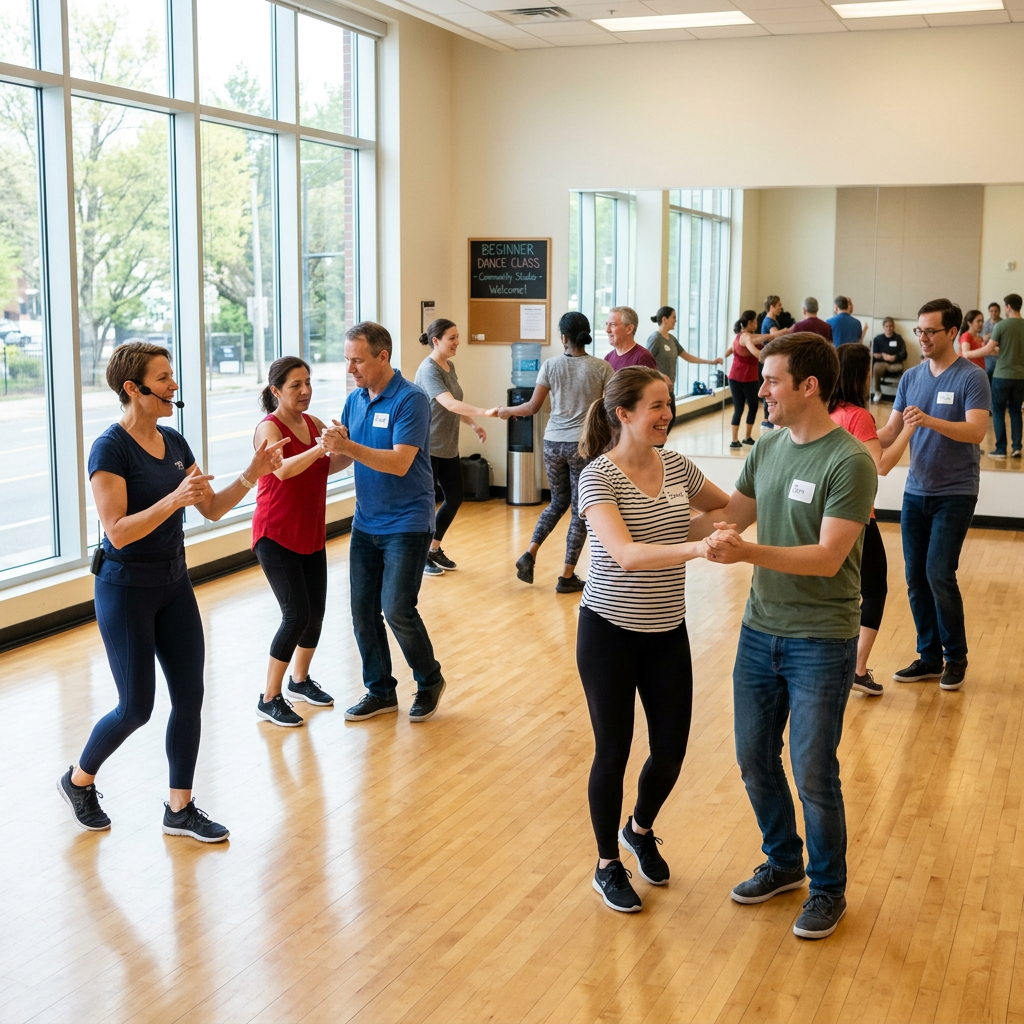
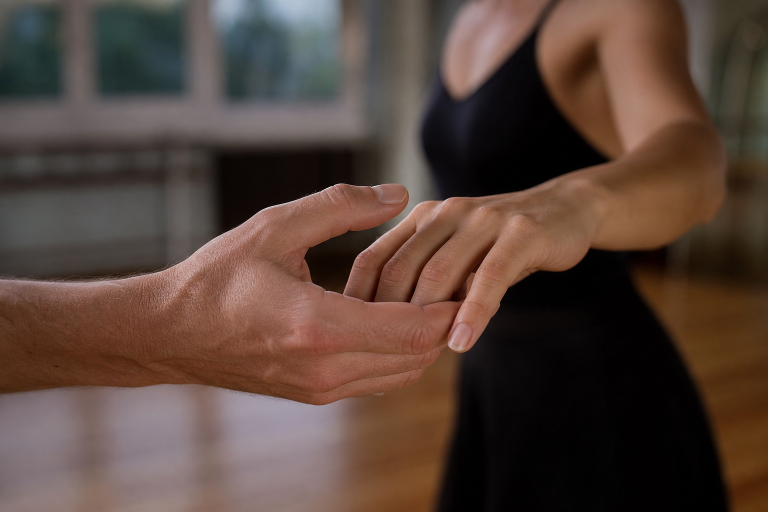
Partner dance creates repeated opportunities to communicate without needing long conversations. Dancers use timing, hand placement, shared direction, and gentle, clear signals to coordinate movement. In a healthy class, leading and following are learned roles, not expressions of control. Either role requires attentiveness, patience, and respect.
Rotating partners can help newcomers meet people in a structured, low-pressure setting. It also helps dancers learn that each person moves differently. Still, participation should always be optional. Nobody should be pressured to dance with a specific person, tolerate uncomfortable contact, or explain why they need a break.
What a Respectful Dance Class Should Include
- Clear demonstrations before partner practice begins.
- Simple explanations of timing, lead-and-follow roles, and safe connection.
- Permission to sit out, change partners, ask questions, or modify movement.
- Attention to personal space, hygiene, and appropriate physical contact.
- Corrections that help students improve without embarrassing them.
- A pace that allows beginners to repeat basics before adding complexity.
How to Pick the Right Class
- Check the level. Choose a true beginner or introductory class if you are new to the style.
- Review the format. Look for details about instruction, guided practice, and social dancing.
- Ask about rotation. Find out whether partner changes are common and whether they are optional.
- Consider the pace. A weekly class may feel more manageable than an intensive workshop.
- Check accessibility. Ask about stairs, seating, floor surfaces, and available movement modifications.
- Choose convenience. A class that fits your schedule is more likely to become a steady habit.
What to Wear and Bring
Wear clothing that allows easy movement and does not need constant adjustment. Clean shoes with support and soles that are not overly sticky are usually more helpful than shoes chosen only for appearance. Bring water, arrive a few minutes early, and avoid loose accessories or heavy jewelry that could distract from movement or make partner work less comfortable. Looking like an experienced dancer is never the goal. Feeling safe enough to learn is.
A Simple Four-Week Practice Plan
- Week one: Learn basic timing, posture, walking patterns, and weight changes.
- Week two: Practice short combinations and focus on staying loose rather than forcing precision.
- Week three: Add direction changes, basic turns, and simple musical accents.
- Week four: Review fundamentals, try a social practice, and notice which movements feel more natural.
Five to ten minutes of focused practice between classes can be enough to reinforce a new pattern. The goal is a repeatable habit, not exhausting sessions that make dance feel like a chore.
Common Beginner Questions
Do You Need a Partner to Join?
Many group classes welcome solo participants, especially when partner rotation is part of the format. Check the studio policy before attending.
What If You Have “Two Left Feet”?
Rhythm and coordination are learned skills. Missing a step is normal, and recovering with a smile is part of the process.
Can Dance Help With Stress?
Music, movement, focused attention, and social contact may help some people feel more present and relaxed. Researchers are also studying how music, social interaction, and cognitive challenge in dance may affect fitness, memory, and brain health, as shown by ongoing work on dance and brain health. The field remains active, so realistic expectations are important.
Start Small and Let Skill Build Over Time
Dance can offer movement, focus, creative expression, and a natural path to social connection. Start with a class that feels safe, welcoming, and suited to your current ability. One class per week, a few minutes of practice, and a willingness to be a beginner can turn simple steps into a lasting part of a balanced wellness routine.
Discover more from The Cameron Journal
Subscribe to get the latest posts sent to your email.