Key Takeaways
- Put your health and safety first, then preserve evidence as soon as possible.
- Document the incident, your injuries, treatment, expenses, and communications.
- Notify the appropriate insurer, but avoid guessing about fault or the extent of your injuries.
- Do not accept a settlement or sign a release before understanding what it covers.
- Personal injury deadlines can be strict, so timely action matters.
Filing a personal injury claim in Las Vegas can feel overwhelming, particularly while you are managing pain, medical appointments, vehicle repairs, or missed work. A clear process can make the situation more manageable. For people who want to understand their options after an accident, blakefriedmanlaw.com offers information about pursuing injury-related claims in Nevada.
A personal injury claim is typically a request for compensation from the person, business, or insurer believed to be responsible for an injury. Claims may arise from car crashes, pedestrian accidents, falls on unsafe property, bicycle collisions, dog bites, rideshare incidents, or other situations involving negligence. Every case is different, but the basic steps below can help protect your health and preserve important information.
Get Medical Care and Protect Your Safety
Your priority after an accident should be immediate safety. Call 911 if anyone appears injured, traffic is blocked, a vehicle is unsafe to drive, or there is a serious hazard. Move away from danger when it is safe to do so, but do not leave an accident scene before meeting any applicable reporting obligations.
Medical care matters even if an injury initially seems minor. Symptoms involving the neck, back, head, soft tissue, nerves, or emotional health may develop gradually. Prompt evaluation creates a record of your symptoms and allows a medical professional to recommend appropriate treatment. Be accurate about how the incident happened and how your symptoms affect daily activities.
Gather Evidence at the Scene
If your condition permits, collect information before it disappears. Photographs and short notes made on the day of an accident can be far more useful than memories recalled weeks later. Do not argue with the other party or make statements accepting blame. Focus on recording facts.
- Take photos of the location, hazards, vehicles, property damage, and visible injuries.
- Photograph traffic signals, signs, lighting, weather conditions, debris, or obstructions.
- Get names, phone numbers, and email addresses for witnesses.
- Exchange insurance and contact details with other drivers after a vehicle collision.
- Request the responding officer’s name, agency, and report number if law enforcement arrives.
- Preserve dashcam footage, surveillance video, damaged clothing, and other physical evidence.
Report the Incident When Required
Reporting requirements depend on the type of accident. In the event of a motor vehicle crash, law enforcement may investigate at the scene. When a crash is not investigated by an officer, Nevada’s reporting rules can still apply. The Nevada DMV crash-reporting instructionsstate that an SR-1 report must generally be filed within 10 days when an uninvestigated crash caused injury, death, or more than $750 in property damage.
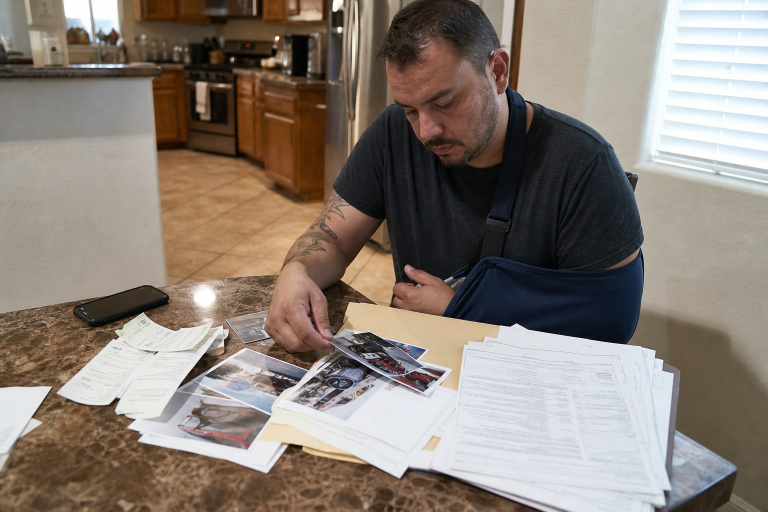
For a fall at a store, hotel, casino, apartment complex, or other business, notify a manager and ask that an incident report be created. Request a copy if one is available, but do not rely only on the business report. Take your own photographs, identify witnesses, and write down the exact location and conditions that contributed to the injury.
Create a Claim File
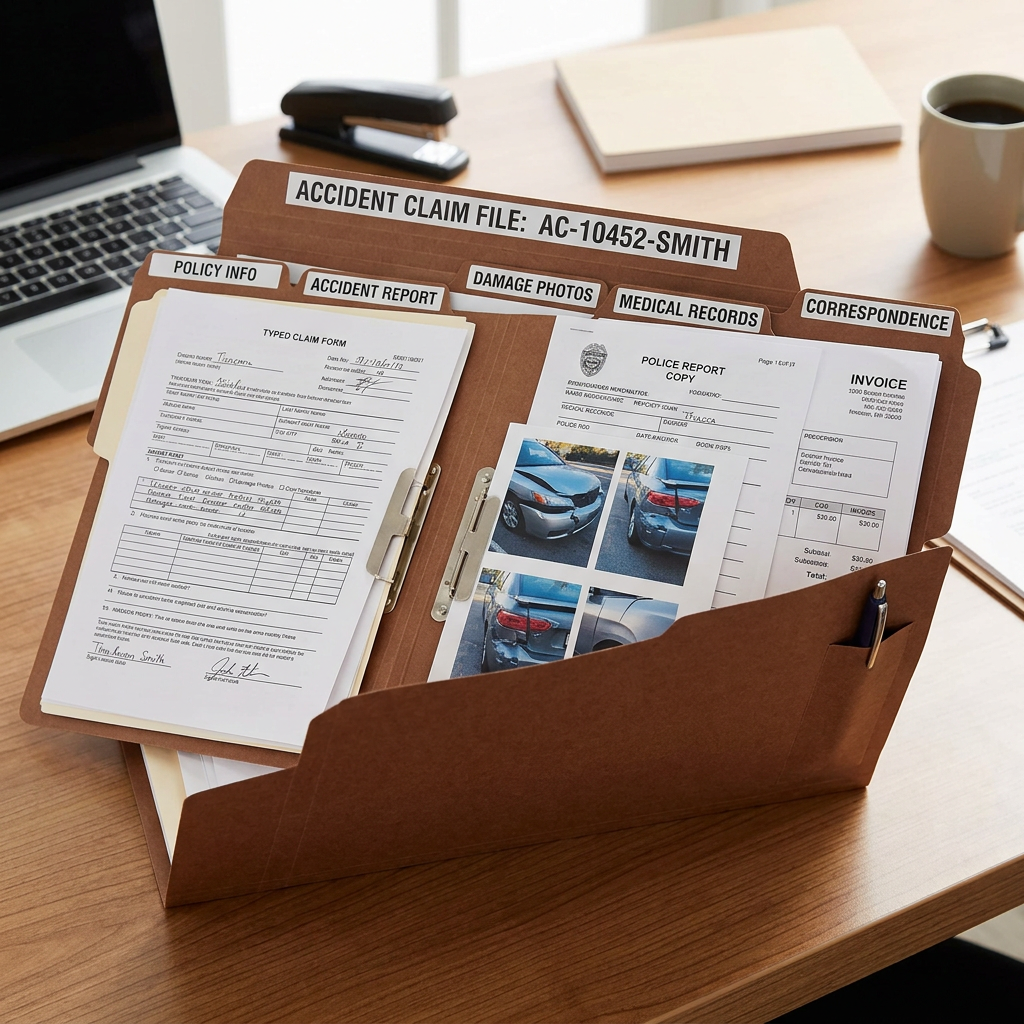
A well-organized file helps you track the claim and respond to requests from doctors, insurers, and legal professionals. Keep paper copies in a folder and save digital copies in a secure location. Include the date on every note you create.
- Incident records: photos, videos, police reports, incident reports, witness details, and written notes.
- Medical records: discharge papers, diagnoses, bills, prescriptions, test results, therapy notes, and appointment dates.
- Financial records: pay stubs, missed-work documentation, repair estimates, towing invoices, receipts, and transportation costs.
- Insurance communications: claim numbers, letters, emails, settlement offers, and summaries of phone calls.
- Personal impact notes: pain levels, sleep problems, mobility limitations, missed events, and changes to normal routines.
Notify the Insurance Company Carefully
Most insurance policies require prompt notice of an accident. Report the event honestly and provide basic facts, but avoid speculation. You may not know who is legally responsible, whether additional injuries will appear, or how long recovery will take. It is usually better to say that you are still receiving medical evaluation than to guess about your condition.
Be cautious with requests for broad medical authorizations, recorded statements, or a quick settlement. An insurer may need information to evaluate a claim, but you should understand what you are being asked to provide. Keep communications professional, save copies of everything, and avoid discussing the accident on social media while the claim is pending.
Understand What a Claim May Include
Depending on the facts, an injury claim may seek compensation for medical expenses, future treatment needs, lost income, reduced earning ability, property damage, and pain or emotional distress. A single bill or a standard formula does not determine the value of a claim; it depends on the nature of the injury, available evidence, insurance coverage, fault, recovery progress, and the effect on the injured person’s life.
How Shared Fault Can Affect a Claim
Nevada uses a comparative negligence rule in many injury cases. Under Nevada’s comparative negligence statute, an injured person may still recover damages if their negligence was not greater than the negligence of the party or parties from whom recovery is sought. Any assigned share of fault can reduce the recoverable amount, which is one reason detailed evidence is important.
Do Not Rush Into a Settlement
An early offer can be tempting when bills are arriving, but accepting a settlement often requires signing a release. That release may end the right to seek additional compensation from the responsible party for the same incident. Before agreeing, consider whether you have reached maximum medical improvement, whether all bills are known, and whether future care or missed income remains uncertain.
Read every document carefully. A check, electronic payment, or settlement agreement may contain language that affects your rights. Ask questions before signing anything you do not fully understand.
Watch the Filing Deadline
Insurance negotiations do not automatically stop the legal deadline for filing a lawsuit. In Nevada, many claims seeking damages for personal injuries caused by another person’s wrongful act or neglect must be filed within 2 years, although exceptions and different rules may apply. Waiting until the deadline is close can make it harder to investigate the facts, locate witnesses, and preserve evidence.
When Legal Advice May Be Helpful
Professional legal guidance may be especially useful when injuries are serious, treatment is ongoing, fault is disputed, multiple parties may be responsible, an uninsured driver is involved, or the claim concerns a commercial vehicle, hotel, casino, employer, or government entity. Speaking with a lawyer does not necessarily mean filing a lawsuit. It can help a person understand deadlines, evidence needs, insurance issues, and settlement options.
Conclusion
A successful personal injury claim begins with practical steps: obtain medical care, document the incident, preserve records, report the matter appropriately, and proceed carefully with insurers. Staying organized from the first day can reduce stress and put you in a better position to make informed decisions about your claim.
Discover more from The Cameron Journal
Subscribe to get the latest posts sent to your email.