
Image Credit: Unsplash
In today’s competitive business world, being able to change direction quickly isn’t just nice to have; it’s essential. Companies need to grow their operations, reshape teams, and adapt to market shifts at lightning speed.
This need for agility goes beyond just organizational charts and digital tools; it directly affects the physical places where people work. When a company’s growth gets held back by its own headquarters or facilities, it’s at a real disadvantage. Modern construction methods offer a powerful solution, letting businesses build workspaces that can grow and change right along with them.
The Need for Adaptable Workspaces
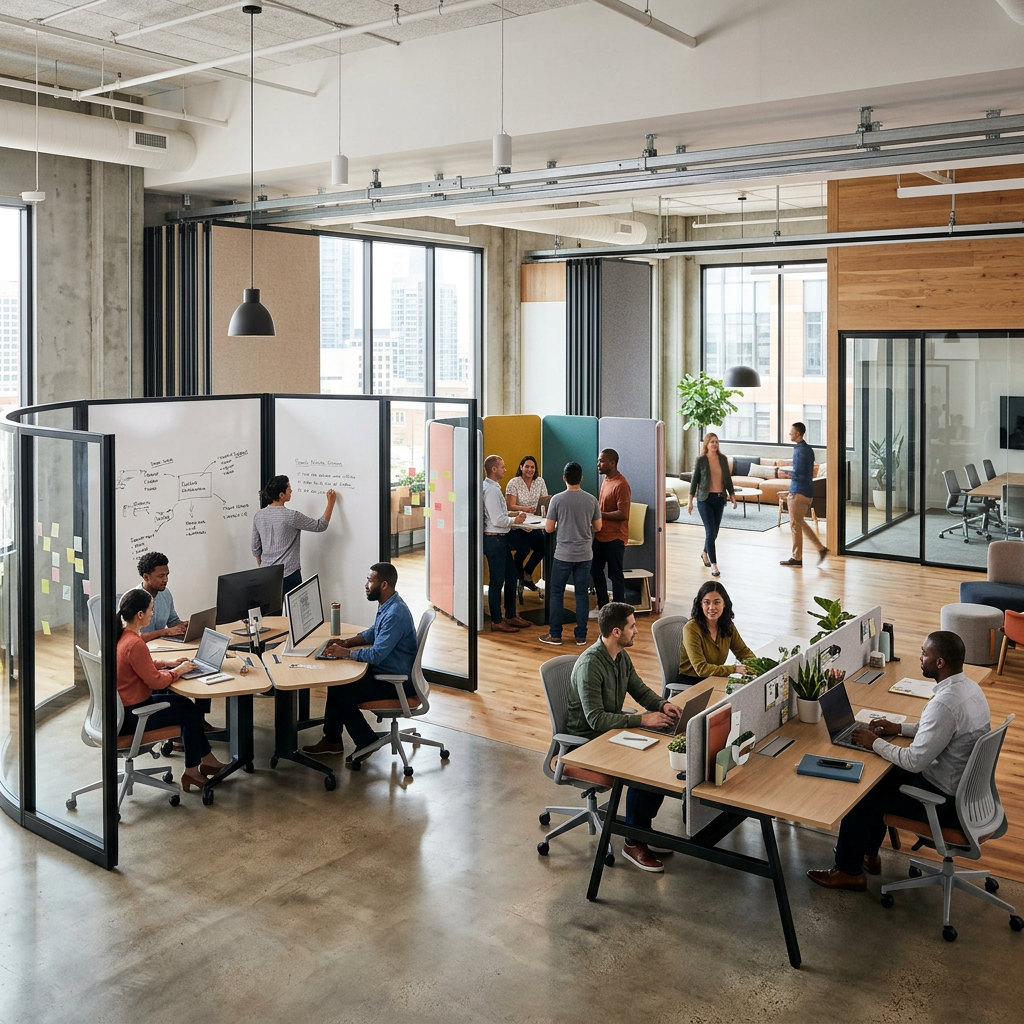
Workplaces today are always changing. With hybrid work models, project-based teams, and shifting service demands, a rigid office or facility layout can quickly become outdated.
An adaptable workspace is built with change in mind, making modifications easy and affordable. These spaces help businesses stay agile by letting them expand or shrink their footprint, rearrange floor plans for new projects, or create special zones for collaboration or focused work.
Benefits of adaptable office space include happier employees, better use of space, and the ability to attract and keep talent by offering a dynamic work environment.
Traditional Building Limitations
For decades, traditional construction was the go-to for commercial projects. But this method has built-in limits that just don’t work with today’s need for speed and workplace flexibility.
A conventional building process is step-by-step and linear, often slowed down by bad weather, on-site logistics problems, and not enough workers. Timelines can stretch from months into years, making it hard for a business to jump on immediate opportunities.
Once finished, a traditionally built building is pretty much set in stone. Big changes are expensive, disruptive, and time-consuming, essentially trapping a business in a physical setup that might not suit its future needs.
Embracing Modular Construction Benefits
Modular construction offers a game-changing alternative to these problems. This innovative process involves making building parts, or modules, in a controlled factory setting while the foundation work happens at the same time on the property. These finished modules are then brought to the site and put together. This parallel workflow drastically cuts down the total project time.
For businesses looking to grow or set up a new location fast, commercial modular buildings provide a high-quality, efficient solution. This approach lets companies get up and running sooner, whether they’re adding a new administrative office, a classroom, or a healthcare clinic.
Speed, Sustainability, and Cost Efficiency
The benefits of modular building touch on several key business areas. The most obvious advantage is speed. Projects can often finish in half the time of a traditional build, helping businesses start earning revenue sooner. Cost efficiency is another big factor. Factory production allows for buying materials in bulk, lower labor costs, and fewer weather delays, leading to more predictable budgets.
It’s also good for the environment. The controlled manufacturing process creates less waste, and the tight construction of modules often means better energy efficiency. While there are potential challenges and limitations to think about with any construction method, the streamlined nature of modular building offers compelling financial and operational advantages.
Strategic Growth Through Flexibility
Perhaps the biggest benefit of modular construction is the long-term strategic flexibility it offers. These buildings are not only faster to put up but are also designed to be reconfigured, expanded, or even moved. A business can start with a smaller facility and easily add more modules as the company grows.
If a market changes, a temporary modular office or retail space can be moved to a better location. This adaptability turns a company’s physical setup from a fixed, long-term burden into a flexible asset that can be adjusted to support strategic business goals.
By making sure physical infrastructure can keep up with operational agility, businesses can react more effectively to change. Modern construction techniques give us the tools to build for what’s next, ensuring a company’s workspace helps it grow, instead of holding it back.
Discover more from The Cameron Journal
Subscribe to get the latest posts sent to your email.




