Key Takeaways
- A dental routine works best when it is simple, repeatable, and suited to the person using it.
- Brushing twice daily with fluoride toothpaste and cleaning between teeth daily are core habits for most people.
- Dental needs can change with age, medications, pregnancy, diet, orthodontic treatment, and health conditions.
- Regular dental visits may identify concerns before they become painful or more complex.
- Small adjustments, such as reminders and easy-to-use tools, can lower the stress of daily care.
Family dentistry is about more than scheduling cleanings when a tooth hurts. For Hinsdale, Illinois, households balancing school mornings, commuter schedules, sports practices, and changing health needs, a practical routine can make oral care easier to maintain at every age. Families looking for locally focused guidance can start with dentistsofhinsdalelake.com as they build a plan that fits their daily lives. The most helpful approach is usually the simplest one: consistent home care, thoughtful food and drink habits, and regular professional attention. Children, teens, adults, and older adults all have different needs, but each stage benefits from routines that are realistic enough to repeat day after day.
Why A Simple Routine Works Better
An elaborate routine may sound impressive, but it is less useful if it is difficult to sustain during a busy week. A toothbrush placed where it is easy to reach, fluoride toothpaste that everyone likes to use, and a dependable method for cleaning between teeth can create a stronger foundation than a cabinet full of unused products. For many Hinsdale families, consistency is the goal. Keep travel-size supplies in a gym bag or overnight tote, set a short evening reminder, and make brushing part of an existing habit, such as getting ready for bed. These small systems can help make oral care automatic rather than another task to remember.
The Core Daily Dental Routine
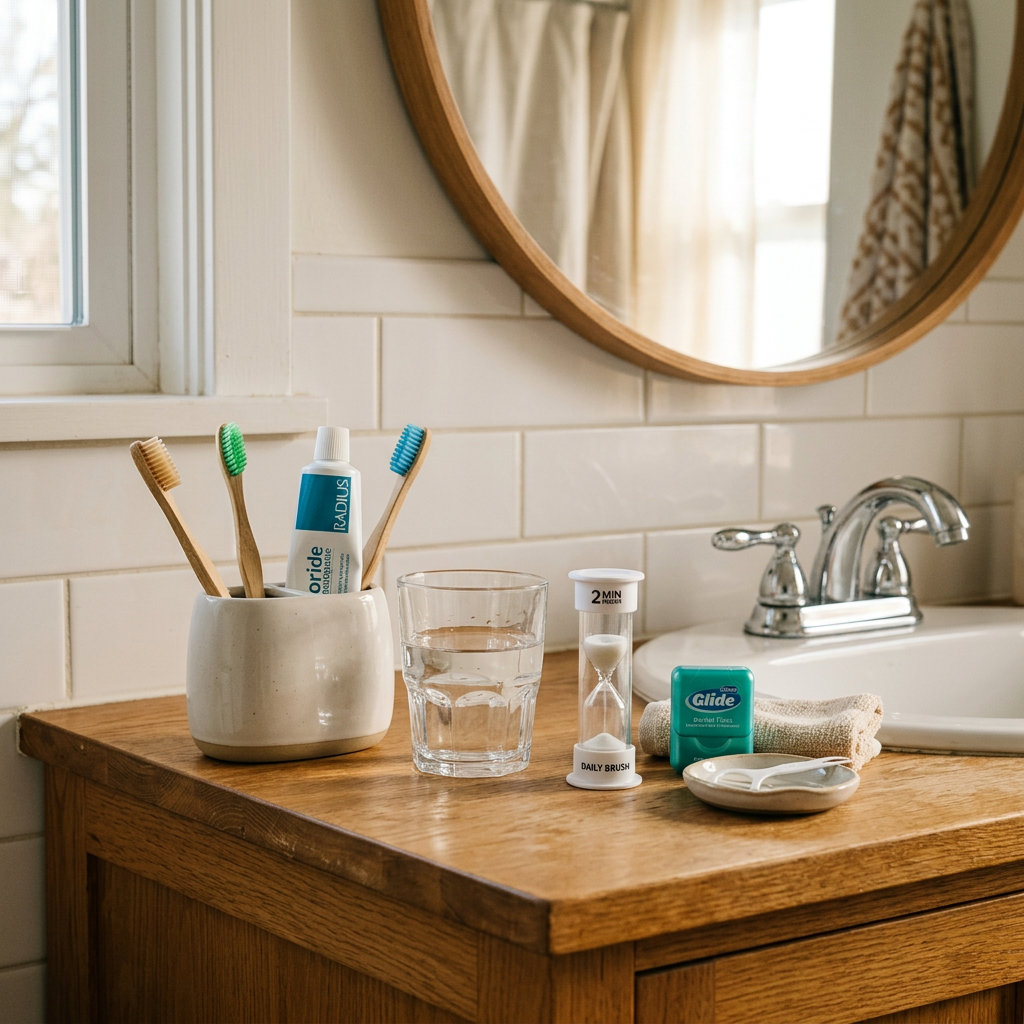
The American Dental Association recommends a straightforward pattern of brushing twice daily with fluoride toothpaste, cleaning between teeth daily, limiting sugar, and seeing a dentist regularly. For most families, the routine can be broken into a few manageable steps:
- Brush for about two minutes in the morning and before bed.
- Clean between teeth once a day with floss, interdental brushes, or another suitable tool.
- Brush or clean the tongue gently if it helps with buildup or breath concerns.
- Drink water throughout the day, especially after meals or sweet drinks.
- Replace a toothbrush or electric brush head when bristles look worn or frayed.
How To Make Brushing More Effective
Brush gently rather than scrubbing hard. Clean the outer, inner, and chewing surfaces of every tooth, then focus on the gumline, where plaque can collect. A manual toothbrush can be effective when used carefully, and a powered brush may be helpful for people who prefer its timer, motion, or easier grip. The best choice is the one that feels comfortable and is used consistently.

Cleaning Between Teeth Without Added Stress
A toothbrush cannot clean every space where teeth touch. Traditional string floss, floss holders, interdental brushes, and water flossers can all be useful options depending on spacing, braces, bridges, dexterity, and preference. Try pairing this step with a familiar evening activity, such as listening to a favorite song. If gums bleed repeatedly, teeth are difficult to reach, or a tool feels ineffective, ask a dental professional for individualized instruction.
Food, Drinks, And Everyday Habits
Frequency matters. Repeated exposure to sugary snacks, sweetened drinks, and acidic beverages increases teeth’s exposure to acid. Water is a practical default at home, at school, and while running errands around Hinsdale. After eating acidic foods or drinking acidic drinks, rinsing with water can be a helpful habit. Tobacco use can harm oral health, and persistent dry mouth should be discussed with a dental professional, particularly when it may be related to medication.
Dental Care At Different Life Stages
Children And Teens
Young children need help and supervision until they can brush thoroughly on their own. Early routines teach that brushing is a normal part of the day, not a punishment after sweets. Teens may need reminders around braces, busy activity schedules, and sports. A properly fitted mouthguard can help protect teeth during contact sports. Ongoing tooth pain, chewing difficulty, or frequent mouth breathing are worth bringing up at a dental visit.
Adults
Adults often delay care because work, caregiving, travel, or stress takes priority. Pregnancy, changing diets, dry mouth, and missed appointments can also affect oral health needs. A lack of pain does not always mean there is no concern, so linking dental visits to another recurring reminder, such as an annual calendar review, may help keep preventive care on track.
Older Adults
Older adults may experience dry mouth, gum recession, medication effects, or reduced hand strength. Larger-handled toothbrushes and powered brushes may make daily care easier. Dentures, crowns, bridges, and implants also need regular cleaning and professional evaluation. Family members can help by making sure supplies are easy to find, easy to open, and comfortable to use.
Keeping Dental Visits Low-Stress
Schedule appointments at a time when the patient is likely to feel rested and unhurried. Before the visit, write down questions about symptoms, costs, past experiences, or treatment options. Let the dental team know about anxiety, sensitivity, or a need for explanations before care begins. Patients can ask for a pause, clarification, or a step-by-step explanation during an appointment.
When A Routine Problem Needs Prompt Attention
Do not wait for a routine appointment if there is persistent or worsening tooth pain, facial or gum swelling, frequent bleeding, a loose adult tooth, a broken tooth, lost dental work, or a sore or patch that does not go away. Changes such as numbness or difficulty swallowing also need timely evaluation. Difficulty breathing or swallowing with swelling requires urgent medical attention.
A Seven-Day Family Dental Reset
- Day One: Check toothbrushes, toothpaste, and between-teeth cleaning tools.
- Day Two: Set morning and evening brushing reminders.
- Day Three: Choose one comfortable interdental cleaning method.
- Day Four: Replace one sugary drink with water.
- Day Five: Notice any sensitivity, swelling, bleeding, or damaged dental work.
- Day Six: Write down dental questions for the household.
- Day Seven: Schedule a routine visit if anyone is overdue.
A Prevention-Focused Approach
Current oral health guidance increasingly emphasizes prevention and less invasive care when appropriate. The World Health Organization has highlighted preventive and less invasive approaches to managing dental caries, reinforcing a message that applies at home as well: daily habits and early attention can support better long-term choices.
Common Questions
How Often Should Someone Brush?
Most people should brush twice a day with fluoride toothpaste. A dental professional may suggest additional or personalized steps based on individual needs.
Is Flossing The Only Way To Clean Between Teeth?
No. Floss, floss holders, interdental brushes, and water flossers may be appropriate for different mouths and preferences.
Should Someone Wait For Pain Before Seeing A Dentist?
No. Some dental concerns develop without obvious discomfort, which is why routine preventive visits are valuable.
Conclusion
Family dentistry in Hinsdale, Illinois, can feel far more manageable when each person has a routine that matches their stage of life. Start with twice-daily brushing, daily cleaning between the teeth, drinking water regularly, and paying attention to changes in the mouth, such as sensitivity, discomfort, bleeding gums, or persistent bad breath. Children may need help developing consistent brushing habits. In contrast, teenagers and adults may need to pay closer attention to diet, oral hygiene, dental visits, and other factors that can affect oral health. Older adults may also benefit from routines that account for changes in medications, dry mouth, dental restorations, or difficulty cleaning certain areas. Regular dental checkups can help identify concerns early and provide guidance based on individual needs. At home, replacing worn toothbrushes, using appropriate oral care products, and limiting sugary snacks and drinks can support daily oral care. Small, consistent choices can help every member of the household protect their smile through school years, working years, and beyond.
Discover more from The Cameron Journal
Subscribe to get the latest posts sent to your email.