

Key Takeaways
- Strong supplier relationships support dependable planning, product quality, and operational improvement.
- Price matters, but it should be evaluated alongside service, capacity, risk, and total cost.
- Shared forecasts, clear specifications, and regular reviews help teams address problems earlier.
- Small pilots give businesses a practical way to test new products, packaging, and processes.
- The best partnerships treat suppliers as problem-solving contributors, not simply order takers.
Why Supplier Partnerships Matter More
Food businesses must manage changing customer preferences, fluctuating input costs, staffing constraints, product availability, and strict quality expectations. A purchase order alone cannot solve those challenges. Businesses need suppliers that understand their operation, communicate promptly, and help teams make sound decisions before a disruption reaches the customer.
That approach starts with treating a supplier relationship as a working partnership. Companies such as C.H. Guenther & Son emphasize collaboration across customer operations, product development, and foodservice needs. For buyers, the lesson is straightforward: suppliers can deliver greater value when they have a clear view of the business goals they are expected to support.
A transactional relationship focuses mostly on availability and unit price. A partnership also considers consistency, responsiveness, planning, quality systems, capacity, and adaptability. Procurement, operations, quality assurance, finance, and product teams all have a role in making that relationship productive.
What a Strong Supplier Partnership Looks Like
Useful supplier partnerships are built on practical habits rather than complicated programs. Both sides should understand what success looks like and how they will work through setbacks.
- Shared goals: The buyer and supplier agree on priorities, such as fewer shortages, better quality consistency, or improved delivery accuracy.
- Open communication: Teams raise changes and concerns early, when there is still time to respond.
- Reliable performance: Expectations for quality, delivery, and service are measured over time.
- Adaptability: The supplier can help when demand, recipes, packaging, or distribution needs change.
- Practical problem-solving: Teams focus on root causes and corrective actions instead of blame.
- Continuous improvement: The relationship creates opportunities to improve products and processes.
Step 1: Set Clear Partnership Goals
Before selecting a supplier or renewing an agreement, define what the business actually needs. List required products, service levels, delivery locations, quality standards, lead times, and flexibility needs. Then separate essential requirements from preferences.
Set targets for quality, delivery, cost, communication, and problem resolution, then explain how each target will be measured. For example, a multi-location foodservice operator may want to reduce incomplete deliveries while maintaining the same product specifications across all locations. Sharing that goal before negotiations helps the supplier determine whether it has the right network, processes, and support team.
Step 2: Look Beyond Price During Supplier Selection
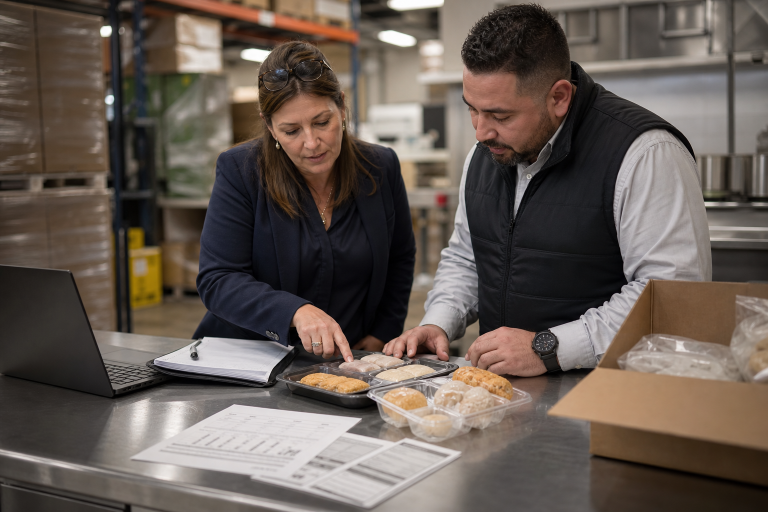
The lowest quote does not always create the lowest total cost. A less expensive product can become costly when it results in waste, rework, emergency freight, missed sales, customer complaints, or labor-intensive substitutions.
Create a weighted selection scorecard that considers:
- Product consistency, specification accuracy, and quality history.
- On-time, complete delivery performance and geographic coverage.
- Production capacity, alternate facilities, and business continuity plans.
- Response procedures for shortages, recalls, and urgent requests.
- Communication speed, account support, and issue resolution.
- Total cost, including freight, waste, downtime, and replacement orders.
Step 3: Build a Shared Communication Rhythm
Regular communication prevents routine concerns from becoming costly surprises. The schedule should match the category’s importance and complexity, but it should always result in clear decisions and assigned follow-up work.
- Weekly check-ins: Review immediate orders, shortages, substitutions, and delivery concerns.
- Monthly reviews: Discuss service results, quality trends, and unresolved issues.
- Quarterly planning: Compare forecasts, promotional activity, seasonal demand, launches, and capacity.
- Annual business reviews: Evaluate the relationship as a whole and agree on priorities for the next year.
Short meetings are often more effective than long discussions. End every review with an action list that identifies the owner, due date, and expected result for each open item.
Step 4: Share Useful Data Without Creating Confusion
Suppliers plan more effectively when buyers share information that affects production, inventory, and transportation. The goal is not to circulate every available report. It is to provide timely data that helps both sides act.
- Demand forecasts, seasonal patterns, and expected promotions.
- Order volumes, lead times, inventory levels, and safety-stock needs.
- Delivery accuracy, fill rates, complaints, returns, and specification issues.
- Upcoming menu changes, packaging revisions, and product launches.
Agree on who owns each metric, how often it will be reviewed, and what response is required when performance falls below target.
Step 5: Create a Simple Supplier Scorecard
A supplier scorecard should encourage improvement, not function as a pass-or-fail document. Keep it easy to understand and review it with the supplier.
- Quality: Defect rates, complaint volume, and specification accuracy.
- Delivery: On-time delivery and complete-order performance.
- Service: Response time and time needed to resolve an issue.
- Cost: Product cost, freight, waste, and emergency-order expense.
- Innovation: Useful concepts, trials, product improvements, or efficiency ideas.
- Risk: Backup capacity, traceability readiness, and contingency planning.
Step 6: Test New Ideas Through Small Pilots
New ingredients, product formats, packages, and distribution methods should be tested before a full rollout. A regional operator, for example, could trial a revised product format in several locations, gather operational and customer feedback, and adjust the process before expanding it.
- Select one product, market, location group, or customer segment.
- Define the trial period and success measures in advance.
- Track cost, quality, customer feedback, waste, and operational issues.
- Review the results jointly with the supplier.
- Improve the process before approving a broader launch.
Step 7: Plan for Disruption Before It Happens
Disruption planning should be a normal part of supplier management. Ask whether there is a qualified backup source, another facility that can produce the item, acceptable substitute specifications, and a defined communication path for urgent changes. Identify the ingredients and materials with the greatest exposure, then determine reasonable safety-stock levels and approval authority for emergency decisions.
Step 8: Include Quality and Traceability From the Start
Quality is a shared responsibility, not a final inspection step. Use clear product specifications, agreed testing procedures, lot documentation, corrective-action processes, and periodic recall exercises. The FDA explains that its food traceability requirements for certain foods focus on records that link key data to critical tracking events throughout the supply chain. Even when a particular rule does not apply, accessible records can help teams investigate problems and make faster decisions.
How Retailers and Foodservice Operators Can Improve Collaboration
Buyers can make supplier relationships more effective by inviting suppliers into relevant planning conversations, sharing realistic forecasts, providing prompt feedback on product performance, and clarifying approval steps. Suppliers are more likely to offer useful ideas when they understand the operator’s customer needs, menu strategy, and operational limits.
Common Mistakes That Weaken Supplier Relationships
- Selecting suppliers solely on unit price.
- Changing forecasts without explaining the reason or likely duration.
- Using vague specifications or delaying quality feedback.
- Waiting for a shortage to discuss backup options.
- Measuring supplier performance without discussing results together.
- Expecting innovation without allowing time and scope for a pilot.
- Keeping procurement, operations, and quality teams in separate silos.
Questions to Ask During a Supplier Review
- Which performance areas are working well?
- Where do delays, waste, rework, or complaints occur most often?
- What changes in demand should the supplier prepare for next quarter?
- Which products or materials need a stronger backup plan?
- What improvement is worth testing on a small scale?
- How quickly can each side respond to an urgent issue?
Conclusion
Better supplier partnerships require clear expectations, honest communication, useful data, and steady follow-through. Food businesses that treat suppliers as part of the operating team can improve planning, respond more effectively to change, and create a more reliable path from production to the customer. In 2026, that value extends well beyond the purchase order.
Discover more from The Cameron Journal
Subscribe to get the latest posts sent to your email.




