Key Takeaways
- Tooth replacement options include traditional dentures, partial dentures, bridges, single implants, implant-supported dentures, and fixed full-arch restorations.
- Removable and fixed restorations differ in stability, cleaning requirements, surgical needs, and maintenance.
- Implant-supported dentures may offer improved retention but still require daily hygiene and professional follow-up.
- Candidacy depends on gum health, bone support, medical history, oral hygiene, and personal needs.
- Comparing total costs, treatment timelines, maintenance, and alternatives can help patients make informed decisions.
Replacing missing teeth can affect more than appearance. The right option may support comfortable chewing, clearer speech, and confidence in daily routines. For people who want added stability, implant-supported dentures for a secure fit may be one option to discuss with a dental professional. There is no universal “best” restoration. The practical choice depends on how many teeth are missing, the condition of the gums and jawbone, medical history, budget, preferred cleaning routine, and whether a person wants teeth that can be removed at home or remain in place.
Start With The Main Goal
A helpful starting point is to identify the problem the treatment needs to solve. One person may prioritize a replacement that is easy to remove and clean. Another may be more concerned about movement while eating or speaking. Appearance matters, but comfort, function, hygiene, and follow-up care deserve equal attention. Missing teeth can change how the mouth functions, especially when a gap affects chewing or nearby teeth shift over time. The ways bridges, dentures, and implants can replace missing teeth provide a useful foundation for comparing treatments with a dentist.
Know The Main Tooth Replacement Options
Several approaches may be appropriate, depending on the situation:
- Traditional full dentures: Removable appliances that replace all teeth in an upper or lower arch.
- Partial dentures: Removable appliances designed to replace several missing teeth while fitting around remaining teeth.
- Dental bridges: Restorations that fill a smaller space by using adjacent teeth or implants for support.
- Single dental implants: Implant-based replacements for individual missing teeth, generally completed with a crown.
- Implant-supported dentures: Dentures that connect to implants for added retention and support.
- Fixed full-arch restorations: Full sets of replacement teeth attached to implants and removed only by a dental professional.
Compare Removable And Fixed Restorations
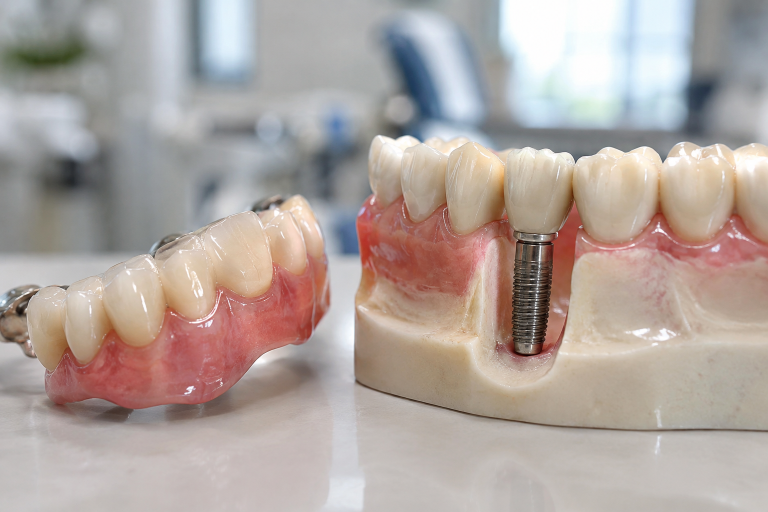
Both removable and fixed solutions can be effective when selected and maintained appropriately. This side-by-side view highlights questions worth discussing during a consultation.
| Consideration | Removable Restoration | Fixed Restoration |
|---|---|---|
| At-home removal | Usually removed for cleaning | Stays attached in the mouth |
| Daily care | Clean appliance and oral tissues | Clean around restoration and supporting teeth or implants |
| Surgery | May not require surgery | May involve implant surgery |
| Stability | Varies by fit and design | Often designed to remain in place |
| Future maintenance | May need adjustments, relines, or replacement | May need professional maintenance or repairs |
Fixed treatment is not automatically better for every patient. A removable option may be less invasive, easier for some people to clean, more compatible with certain health circumstances, or a better fit for available finances.
Where Implant-Supported Dentures Fit
An implant-supported denture connects to dental implants rather than relying only on the gums for support. Some versions are removable by the patient, while others are secured in place and removed during professional visits. This distinction matters because the home-care routine, appointment needs, and repair process can differ. Greater retention may help reduce unwanted denture movement during everyday activities. However, implants and attachments still require consistent cleaning, regular examinations, and occasional maintenance. An implant-supported denture should also not be confused with a fixed full-arch bridge, which is a different type of restoration.
Health Factors That May Affect Candidacy
A dental recommendation should follow a complete evaluation, not a quick comparison of prices or appearances. The clinician may assess:
- Jawbone volume and quality.
- Gum health, infection, and inflammation.
- Remaining teeth, bite, and prior dental treatment.
- Medical conditions, medications, and healing considerations.
- Tobacco use and current oral hygiene habits.
- The ability to attend follow-up appointments and perform daily care.
Age alone does not decide whether someone is suitable for dentures, bridges, or implants. Overall dental health, medical history, and the ability to maintain the chosen restoration are more meaningful factors.
What The Treatment Process May Involve
- Consultation: Review goals, concerns, health history, and previous dental experiences.
- Examination and imaging: Evaluate teeth, gums, bite, and available bone.
- Preparation: Treat gum disease, infection, damaged teeth, or other concerns when needed.
- Restorative or surgical treatment: Prepare teeth, place implants, or create the selected appliance.
- Healing and adjustments: Use temporary teeth when appropriate and monitor comfort or healing.
- Final restoration and follow-up: Fit the finished restoration and review cleaning, bite, and maintenance.
Timelines vary widely. Extractions, bone procedures, healing needs, laboratory work, and the selected type of restoration can all affect the schedule.
Costs, Insurance, And Long-Term Value
The visible teeth are only part of the total cost. A written treatment plan can clarify charges for examinations, imaging, extractions, grafting, surgery, temporary restorations, laboratory work, adjustments, and follow-up appointments. Ask whether future relines, replacement attachments, repairs, or maintenance visits are included. Dental benefits may have annual maximums, exclusions, waiting periods, or alternate-benefit provisions. Financing can make payments more manageable, but it does not determine whether a treatment is the right clinical choice. Comparing long-term upkeep alongside the initial fee creates a more realistic picture.
Cleaning And Maintenance After Treatment
Every replacement option needs daily care. People with removable dentures should clean the appliance as directed, clean the gums and tongue, and store the denture safely when not in use. The daily denture-cleaning and fit-check habits recommended by the American Dental Association also include contacting a dentist when dentures are damaged or no longer fit properly. Fixed restorations and implant-supported appliances need careful cleaning around the gums, connectors, and supporting implants or teeth. A dentist or hygienist can recommend brushes, flossing aids, or other tools suited to the restoration. Soreness, looseness, bleeding, swelling, a persistent bad taste, or a sudden fit change should be evaluated rather than repaired at home.
Questions To Ask Before Choosing
- Which options are realistic for my current teeth, gums, and bone?
- Will the restoration be removable or fixed?
- What daily cleaning steps will it require?
- Will I need extractions, grafting, or other preparation?
- How long might the process take in my situation?
- What maintenance or replacement needs should I expect later?
- Who will provide follow-up care and repairs?
- What is included in the written fee, and what is not?
Making A Careful, Personal Choice
Tooth replacement is a personal health decision that should balance function, comfort, appearance, cleaning demands, treatment time, health needs, and long-term cost. A thorough consultation and a written comparison of suitable options can make the final choice clearer and more confident.
Conclusion
Replacing missing teeth requires careful consideration of comfort, function, appearance, and long-term oral health. While removable dentures, bridges, and implant-supported restorations each offer different benefits, the most suitable option depends on a person’s dental condition, preferences, budget, and ability to maintain the restoration. A thorough dental evaluation, clear treatment plan, and realistic understanding of ongoing care can help patients choose a solution that supports their daily needs and long-term dental health.
Discover more from The Cameron Journal
Subscribe to get the latest posts sent to your email.