
Key Takeaways
- Get a complete examination and imaging review before deciding on treatment.
- Ask which replacement options fit your number and location of missing teeth.
- Find out whether gum treatment, extraction, or bone grafting is needed first.
- Request a written timeline and itemized estimate.
- Understand healing expectations, temporary tooth options, and follow-up visits.
- Choose a provider who explains benefits, limitations, risks, and alternatives without pressure.
Replacing missing teeth is a major health and lifestyle decision. Whether you are missing one tooth or considering a full-mouth solution, asking clear questions before treatment can help you understand the process, the costs, and the care involved. For people researching dental implants Thayer, MO, options, MoArk Dental & Implants provides information about single implants, implant-supported bridges, dentures, full-arch treatment, planning, healing, and follow-up care. With locations serving Thayer and nearby southern Missouri communities, the practice’s implant-focused services offer a useful starting point for patients preparing for a detailed consultation. Dental implants can help restore chewing function, speech, and the appearance of a complete smile. Still, no two treatment plans are identical. Your gums, jawbone, medical history, daily habits, and the number of teeth being replaced can all affect the recommended approach.
What Dental Implants Replace
A dental implant replaces the root portion of a missing tooth. It usually has three parts: an implant post placed in the jawbone, an abutment that connects the post to the visible tooth, and a custom restoration such as a crown, bridge, or denture. The American Dental Association’s overview of implants explains that the bone heals around the implant before, or in some cases alongside, the final replacement-tooth procedure. Unlike a traditional bridge, a single implant can replace one tooth without relying on neighboring teeth for support. Unlike a removable denture, an implant-supported option may add stability. The best choice depends on your mouth, bite, goals, and budget.
Who May Be a Good Candidate?
Only an in-person examination can determine whether implants are appropriate. A dental team may evaluate whether you have healthy gums or treatable gum disease, sufficient jawbone, good oral hygiene habits, and well-managed medical conditions. Tobacco use also matters because it can interfere with healing. Age alone does not determine candidacy. The more useful questions are whether the jaw has finished growing, whether the bone can support an implant, and whether you can commit to the treatment and maintenance plan. Be prepared to discuss medications, allergies, diabetes, autoimmune conditions, and any history of radiation treatment or jaw surgery.
Questions About Bone and Gum Health
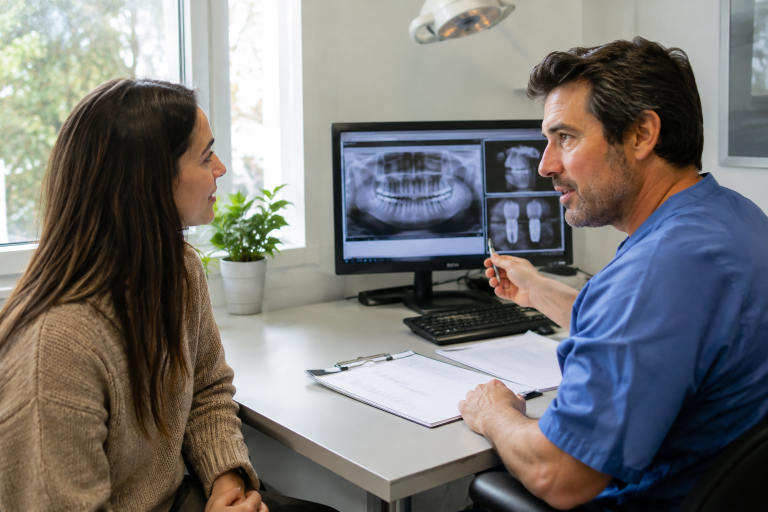
After a tooth is lost, the jawbone in that area can gradually change because it no longer receives stimulation from a tooth root. Active gum disease and infection should also be addressed before implant treatment moves forward. Depending on the findings, a provider may recommend periodontal care, tooth removal, bone grafting, or additional healing time. Ask how digital X-rays or three-dimensional scans will be used to evaluate bone width, height, nearby nerves, and sinus spaces. It is also reasonable to ask, “What dental problems need treatment before my implant is placed?” A careful answer should connect the surgical plan to the final crown, bridge, or denture, not only to the implant post itself.
Which Implant Option Fits Your Situation?
- Single-tooth implant: May be considered when one tooth is missing, and a crown will replace it.
- Implant-supported bridge: May help replace several adjacent missing teeth with implants supporting multiple replacement teeth.
- Implant-supported denture: May be an option for people with many missing teeth or a denture that moves during eating or speaking.
- Full-arch implant treatment: May be considered when an entire upper or lower arch needs replacement because of multiple missing or failing teeth.
The number of implants, type of restoration, and whether the final teeth are removable or fixed vary by case. Ask why a particular option is being recommended and whether there are reasonable alternatives.
What Happens During Treatment?
- Consultation and planning: Your provider reviews your health history, concerns, goals, examination findings, and imaging.
- Preparation: This can include treating infection, managing gum disease, removing damaged teeth, or grafting bone when appropriate.
- Implant placement: The implant post is placed in the jawbone using local anesthesia and, when offered and appropriate, additional comfort options.
- Healing: Bone bonds with the implant through a process called osseointegration.
- Final restoration: After stability is confirmed, a crown, bridge, or denture is attached.
Healing and restoration schedules differ. As noted in the Cleveland Clinic’s dental implant treatment guidance, the overall process can involve more than one procedure and several months of healing. Some patients may receive a temporary tooth or temporary denture during this period, while others follow a different plan.
How to Prepare for an Implant Consultation
- Write down which teeth are missing, loose, painful, or difficult to chew with.
- Bring a list of medicines, allergies, health conditions, and recent dental records when available.
- Ask how smoking, vaping, diabetes, or other health concerns could affect healing.
- Request a written treatment plan with each expected stage.
- Ask for an itemized estimate that identifies imaging, extractions, grafting, temporary teeth, surgery, final restorations, and follow-up care.
- Find out how the office handles urgent concerns after surgery.
Questions About Cost and Long-Term Care
Implant costs vary because treatment may include different procedures, materials, and types of restorations. A low advertised price may not represent the complete plan. Compare complete written proposals, ask what is included, and ask about insurance, payment plans, health savings accounts, or flexible spending accounts when applicable. Implants require daily care. Although implant restorations do not develop cavities like natural teeth, the surrounding gums and tissues can become inflamed. Brush as instructed, clean around the restoration, attend regular dental visits, and promptly report any bleeding, swelling, tenderness, bite changes, or a loose implant.
Risks and Warning Signs to Discuss
Like other surgical procedures, implant treatment has possible risks. Ask about infection, delayed healing, gum inflammation, implant movement, nerve irritation, and damage to a restoration. You should also ask which symptoms are expected after surgery and which require a call to the dental office. Ongoing pain, fever, increasing swelling, persistent bleeding, pus, or a loose implant should not be ignored.
Final Thoughts
Dental implants may be a long-term option for replacing missing teeth, but a successful decision starts with careful planning and realistic expectations. In Thayer, MO, take time to compare available options, review the full treatment sequence, and ask direct questions about healing, costs, maintenance, and alternatives. Factors such as gum health, jawbone support, medical history, and the number of teeth being replaced can all influence the recommended approach. During a consultation, ask whether preparatory procedures, temporary teeth, or additional appointments may be needed and what the final restoration will include. It is also important to understand the daily cleaning routine, potential complications, and ongoing professional care required to maintain the implants and surrounding tissues. Requesting a detailed written estimate can help you understand the overall financial commitment and plan accordingly. A thorough consultation with a qualified dental professional can help you choose treatment that fits your oral health needs, personal preferences, budget, and everyday life.
Discover more from The Cameron Journal
Subscribe to get the latest posts sent to your email.