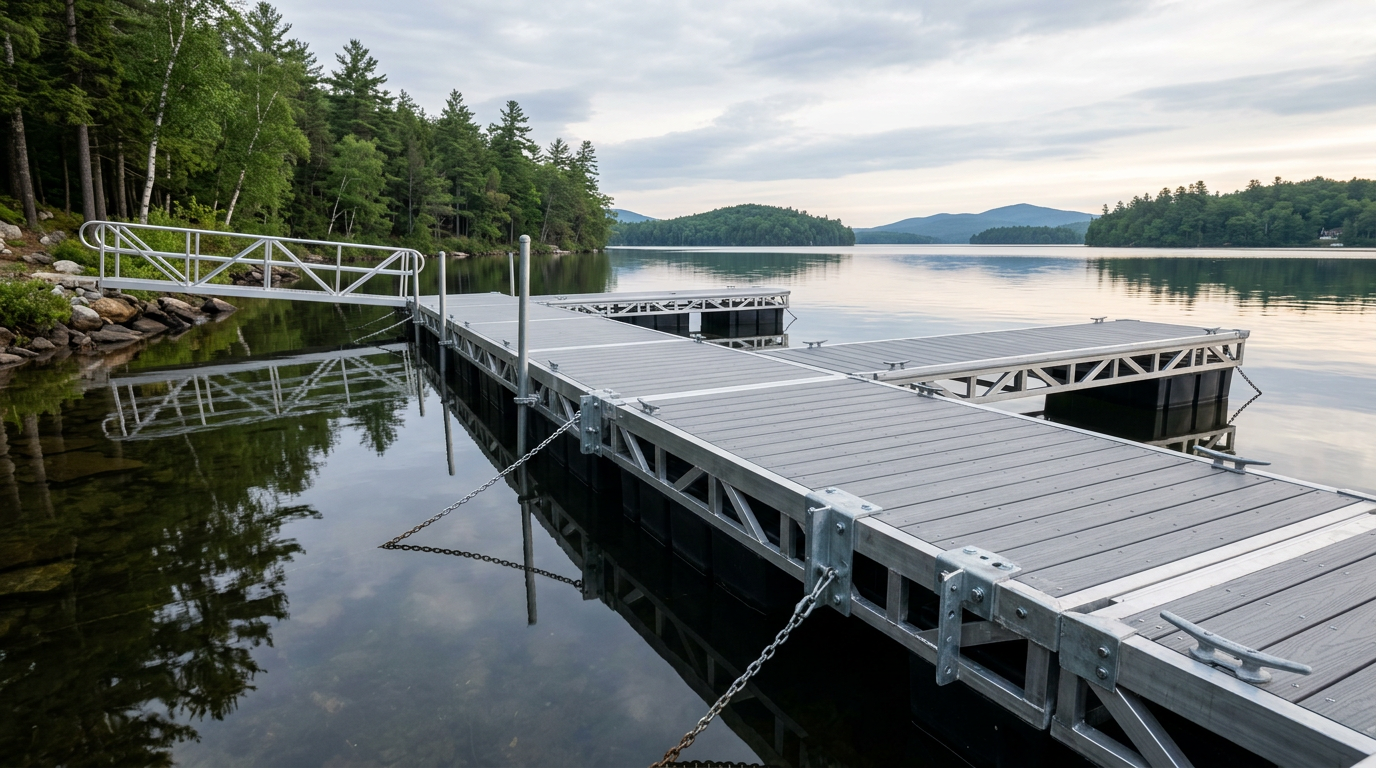
Two aluminum docks can look almost identical from the shoreline but perform very differently once people start using them. A sturdy frame means little if the connections loosen, the platform feels unstable, or the anchoring system cannot handle changing water levels. Understanding what goes into a properly built dock helps waterfront owners avoid costly repairs and choose a structure that suits their property.
A Strong Frame Needs More Than Thick Aluminum
Structural strength starts with how builders arrange and connect the dock’s framing members. A well-designed frame distributes weight across supporting beams instead of concentrating pressure in a few spots. Engineers consider the combined weight of people, equipment, decking, and other expected loads, along with the forces created by waves and wind.
Thicker aluminum does not automatically make a dock stronger. Beam shape, spacing, alloy grade, and connection design all affect how much weight the structure can safely carry. Poorly supported sections may bend or flex excessively even when the material itself appears substantial.
Buyers comparing aluminum boat docks for sale should ask about the frame’s rated load capacity and intended use. A small swimming platform has different structural requirements from a covered dock with boat slips, storage compartments, and an upper deck. Good manufacturers account for those differences rather than applying one standard frame design to every project.
Why Do Some Floating Docks Feel Unstable Underfoot?
A floating dock should move with the water, but excessive rocking or uneven movement can indicate problems with its design. Flotation units must provide enough buoyancy to support the structure and its expected loads while maintaining suitable freeboard, the distance between the water’s surface and the dock deck.
Placement matters as much as flotation capacity. Units positioned too close to the center may provide less resistance to tipping when people gather along the edges. Uneven weight distribution can also cause one side to sit lower, making boarding uncomfortable and potentially unsafe.
Experienced floating dock builders calculate buoyancy and arrange flotation units around the expected weight distribution. They also account for shifting loads, such as passengers stepping onto the dock from a boat. A properly designed aluminum floating dock should offer predictable movement without feeling excessively unstable during normal use.
Small Construction Details That Reveal Poor Workmanship
Welds, bolts, and brackets may not attract much attention during a dock inspection, yet these components often reveal the quality of construction. Poor welds can develop cracks under repeated stress, while incorrectly sized fasteners may loosen as waves move the structure. Builders need appropriate welding procedures, sound connections, and hardware suited to marine conditions.
Corrosion prevention also deserves attention. Although aluminum docks naturally resist rust, contact with certain metals in wet conditions can cause galvanic corrosion. Properly selected fasteners, insulating materials, and drainage details help protect vulnerable connections.
Decking installation provides another clue. Loose panels, uneven gaps, sharp edges, and unsupported board ends suggest inadequate attention to finishing details. Quality construction allows water to drain, provides secure walking surfaces, and leaves important components accessible for inspections and repairs.
The Right Anchoring Design Depends on the Shoreline
A dock may have excellent framing and flotation but still fail if its anchoring system cannot control movement. Water depth, lakebed composition, shoreline slope, and wave exposure determine which anchoring methods work best. A sheltered cove may require a different arrangement from an exposed waterfront property with heavy boat traffic.
Anchoring systems must balance secure positioning with enough flexibility to accommodate water-level changes. Cables, piles, rigid arms, and other arrangements each have limitations. Improper cable angles can increase loads on attachment points, while poorly placed piles may restrict movement or create damaging contact during storms.
Anyone reviewing aluminum docks for sale should confirm whether the proposed system includes anchoring equipment suited to the installation site. Manufacturers and installers should explain how the dock will behave during high water, low water, and strong winds rather than focusing only on normal conditions.
A Good Dock Design Makes Future Maintenance Easier
Long-term serviceability often separates thoughtful engineering from a design built mainly to reduce initial costs. Damaged flotation units should be accessible for replacement, and owners need reasonable access to connection points, decking supports, and anchoring hardware. Otherwise, a relatively minor repair may require extensive disassembly.
Maintenance access also influences ownership costs. Aluminum boat docks generally avoid the staining and wood replacement associated with traditional timber structures, but inspections remain necessary to catch damaged components before they cause larger problems.
Flotation Systems offers custom aluminum dock systems with different configurations, flotation arrangements, and anchoring options for waterfront properties. Rather than selecting a dock based on appearance alone, owners can use these design options to examine how the structure will support their activities and respond to local water conditions. That comparison helps identify the construction details that matter before a dock becomes a permanent part of the shoreline.
Discover more from The Cameron Journal
Subscribe to get the latest posts sent to your email.