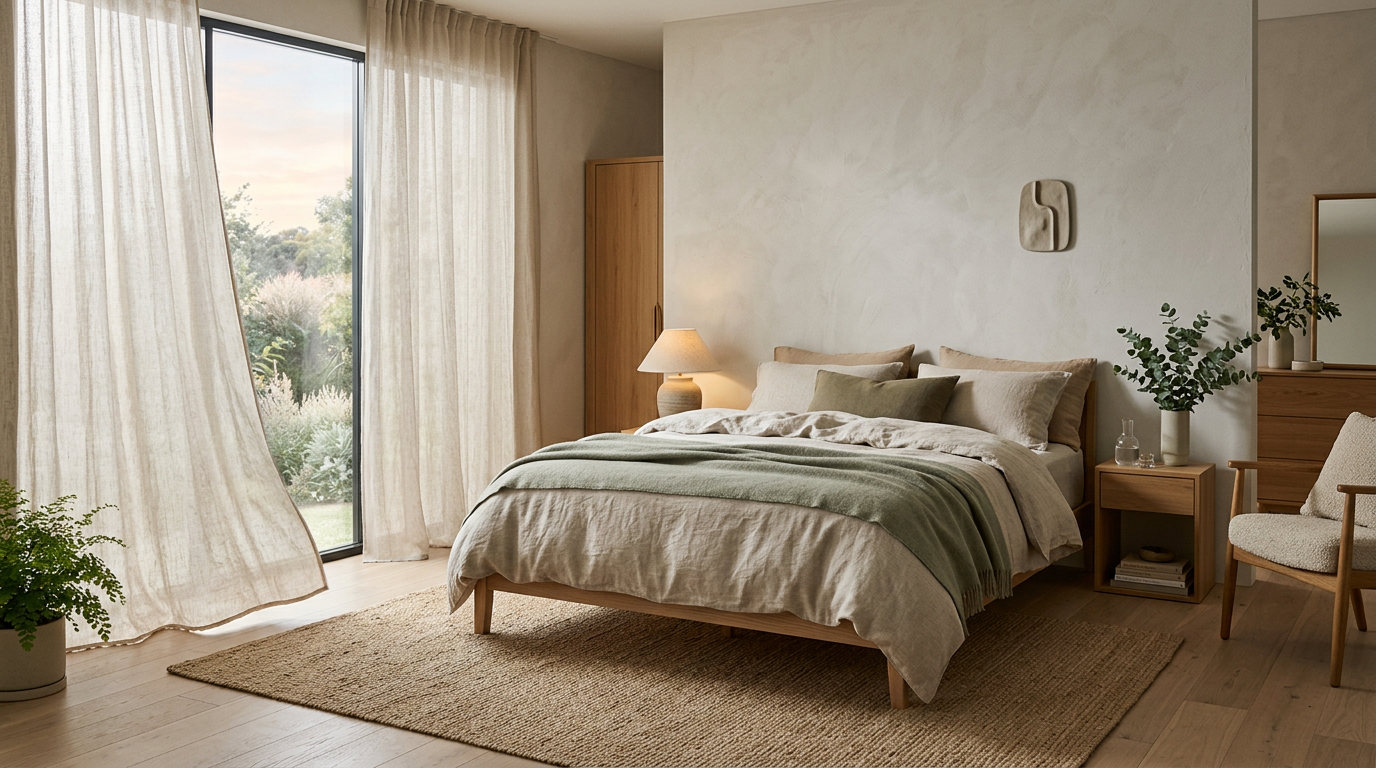
Sleep is the foundation of our physical and mental wellbeing, yet it remains elusive for many. Recent reports commissioned by the Sleep Health Foundation reveal that almost 60 percent of Australian adults regularly experience at least one chronic sleep symptom that affects their daily functioning. Furthermore, the 2025 Australian Sleep Report Card found that 46 percent of adults report poor sleep negatively impacts their work or study commitments. While we often blame stress, long working hours, or excessive screen time for our fatigue, our physical living environments play a massive, controllable role in how well we rest. The design choices we make in our homes directly influence our biology. Styling a bedroom is about much more than making it look beautiful. It is about intentionally creating a biological sanctuary designed for optimal physical recovery and mental rejuvenation.
The Science of the Sleep Microclimate
Our bodies undergo a natural, necessary drop in core temperature as we fall asleep, a process deeply connected to our circadian rhythms. If your room is too warm, this biological transition is interrupted, signalling to your brain that it is not yet time to power down. The Sleep Health Foundation notes that the ideal ambient bedroom temperature for initiating and sustaining deep sleep in adults is between 17 and 19 degrees Celsius. A recent observational study by Griffith University even found that maintaining cooler overnight bedroom temperatures significantly reduced cardiovascular stress responses in sleeping adults. Curating your space is therefore about more than just visual aesthetics. As explored in guides on optimising your bedroom environment for better sleep, choosing breathable, natural-fibre elements for your room is absolutely essential for maintaining the perfect microclimate for physical recovery.
Choosing Bedding for Thermoregulation
A significant part of your bedroom’s microclimate exists directly under the covers, a zone commonly referred to as the bed climate. An industry survey called the Clean Sleep Report highlighted a prominent awareness-behaviour gap among consumers, where 83 percent of adults acknowledge the importance of a restorative sleep environment, but most fail to optimise their beds with suitable materials. Many people continue to sleep under synthetic fabrics like polyester, which stubbornly trap body heat and sweat. Upgrading your bedding to high-quality Quilts made from natural fibres like wool, cotton, or alpaca allows moisture to wick away from the skin seamlessly. Clinical sleep research shows that natural materials actively regulate body temperature by absorbing moisture vapour and releasing it into the air, effectively preventing the sleep-disrupting humid heat that causes restlessness throughout the night.
Why Humidity is the Enemy of Rest
Trapped heat does more than just make you toss and turn in discomfort. It fundamentally alters the architecture of your entire sleep cycle. According to research published by the National Institutes of Health, excessive heat and trapped humidity under your covers actively suppress your core temperature drop, directly decreasing restorative Slow Wave and Rapid Eye Movement (REM) sleep. These are the critical stages where your body repairs tissues and consolidates memories. By opting for highly breathable textiles, you allow evaporative heat dissipation to occur naturally. A 2026 environmental psychology study revealed that night-to-night increases in a bedroom’s indoor heat are directly linked to fragmented sleep patterns and measurable dips in the sleeper’s next-day cognitive focus. Proper thermoregulation means you spend more uninterrupted time in the deep sleep stages required for robust cognitive repair.
Biophilic Styling Tips for a Restorative Sanctuary
Beyond temperature, the visual and tactile elements of your bedroom significantly influence your central nervous system. Integrating biophilic design (a popular architectural concept that actively connects indoor spaces with nature) can help lower daytime cortisol levels and reduce anxiety before bed. Consider these foundational styling adjustments to promote better, more consistent rest:
- Incorporate organic textures: Use solid timber furniture, raw linen throws, and hand-woven woollen rugs. Tactile natural elements provide essential aesthetic grounding and have been clinically shown to help lower blood pressure.
- Maximise natural light access: Keep window treatments minimal and open during the day. Consistent exposure to morning sunlight is an essential component for regulating circadian rhythms and encouraging evening melatonin production.
- Introduce bedroom greenery: Certain indoor plants not only soften the aesthetic lines of the room but can also help purify the air and create a calming, natural focal point for the eye.
- Select a grounded colour palette: Opt for muted sage greens, soft natural clays, and warm neutrals over stark whites or high-energy colours to visually signal to the brain that it is time to wind down.
Beautiful bedroom design and advanced sleep science are not mutually exclusive disciplines. By prioritising natural materials, regulating your sleep microclimate, and embracing organic styling principles, you can transform your everyday bedroom into a highly functional wellness sanctuary. Ultimately, a well-styled room should look inviting and elegant while working seamlessly in the background to ensure you wake up feeling completely restored each morning.
Discover more from The Cameron Journal
Subscribe to get the latest posts sent to your email.