
Image Credit: Unsplash
The right tires can improve traction, protect your vehicle and make an outdoor trip far more comfortable. Yet tire shopping gets confusing quickly once you encounter unfamiliar size codes, tread patterns and load ratings.
Start with the vehicle manufacturer’s specifications, then consider where you actually drive. A truck that spends weekdays on pavement and occasional weekends on forest roads has different needs from one regularly crossing deep mud or rocky trails. Matching the tire to that real-world use will help you avoid excess noise, poor handling and premature wear.
Start With Your Vehicle’s Requirements
Check the tire information label inside the driver’s door before comparing models. It lists the recommended tire size, load capacity and inflation pressure for the original setup. Your owner’s manual may provide acceptable alternatives, but any major size change can affect braking, steering clearance and speedometer accuracy.
A typical size such as 265/70R17 identifies the tire’s width, sidewall proportions, construction and wheel diameter. This tire buying guide from Nationwide offers a helpful explanation of these markings.
Pay close attention to load ratings if you carry camping supplies, recovery equipment, or a rooftop tent. The tires must support the loaded vehicle, not simply its empty curb weight.
Match the Tread to the Terrain
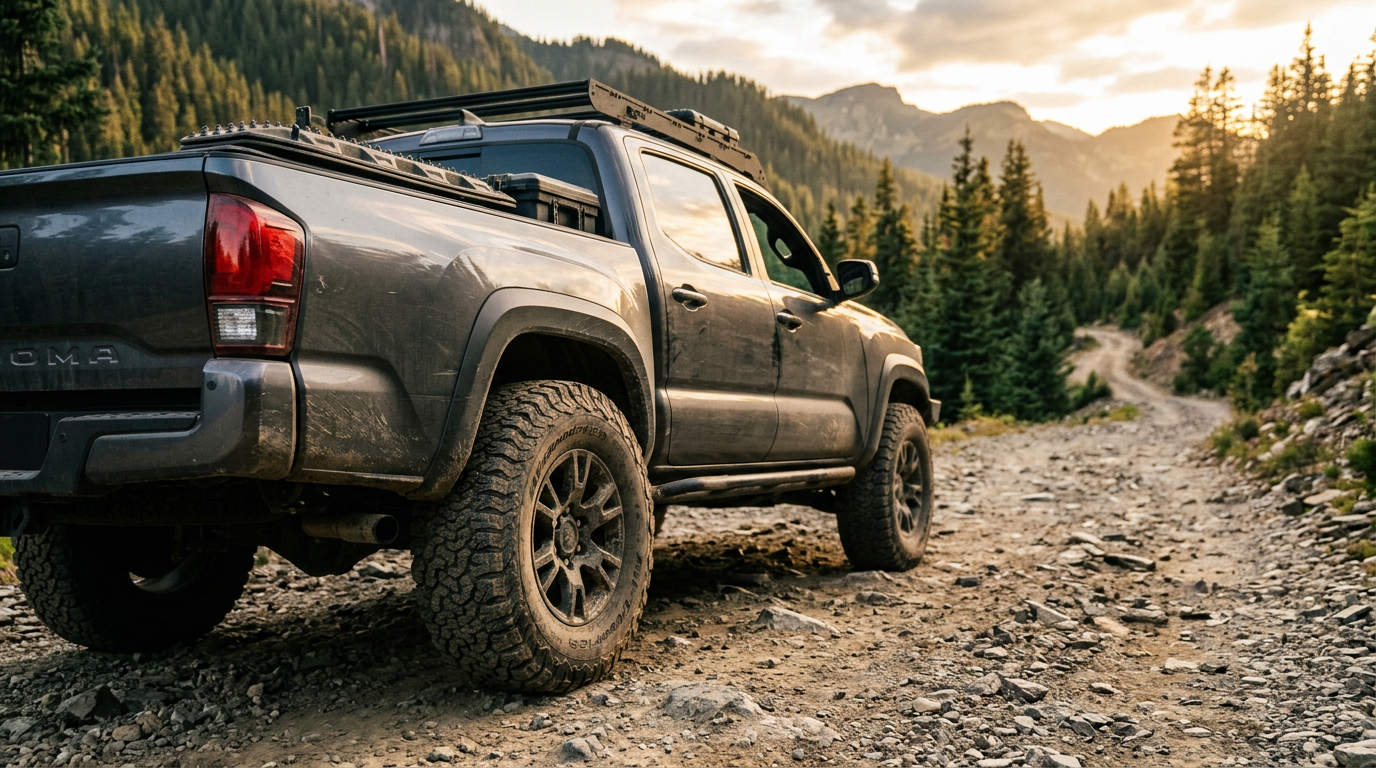
Tread design determines how a tire handles pavement, gravel, loose soil and mud. All-terrain tires are a practical choice for drivers who split their time between highways and maintained trails. Their tread blocks provide useful off-pavement grip while keeping road noise and vibration manageable.
Mud-terrain designs use larger tread blocks and wider gaps to clear soft material. They work well in demanding conditions, though they may produce more highway noise and wear faster during daily commuting. Drivers building vehicles for especially difficult trails may compare specialized options such as super swamper tires after confirming the correct size, load rating and clearance.
Be honest about your routine. Occasional gravel-road travel rarely requires the most aggressive tread available.
Understand Size and Clearance
Larger tires can increase ground clearance, but they also require enough room inside the wheel wells. A tire that rubs against suspension parts or body panels during a tight turn can suffer damage. Remember that clearance may change as the suspension compresses over a dip or rock.
Changing the overall diameter can also alter acceleration, fuel economy and indicated speed. Heavier tires place more demand on brakes and suspension components. Before moving beyond the manufacturer’s listed sizes, ask a qualified tire shop to check wheel width, offset and full steering clearance.
Small changes may fit without modification. Bigger jumps can require suspension adjustments, different wheels and recalibration, which makes the total cost much higher than the price of four tires.
Consider Weather and Road Manners
Outdoor adventures still involve plenty of pavement. Think about wet braking, highway stability and temperature changes alongside trail traction. A tire that performs well in loose dirt may feel less precise during heavy rain or emergency braking on a paved road.
Look for the three-peak mountain snowflake symbol if you expect severe winter conditions. The M+S marking alone indicates a tread pattern intended for mud and snow, but it doesn’t represent the same tested winter performance. Dedicated winter tires may remain the safer seasonal option in areas with regular ice and prolonged cold.
Independent tire selection advice can help you compare braking, handling, noise and expected tread life across different tire categories.
Budget Beyond the Purchase Price
The lowest initial price may not deliver the lowest cost per mile. Compare treadwear warranties, expected service life, and replacement availability before ordering. An uncommon size could be difficult to find quickly if a tire is damaged far from home.
Include installation, balancing, valve stems, and alignment in your budget. A poor alignment can create uneven wear within a few thousand miles, wasting much of your investment. Rotating the tires at the vehicle or tire manufacturer’s recommended interval also helps the tread wear evenly.
Check pressure when the tires are cold and before carrying a heavy load. Use the vehicle label as your baseline unless a qualified professional recommends an adjustment for a modified setup.
Inspect Before Every Trip
A quick inspection can catch small problems before they interrupt a weekend away. Look for cuts, bulges, exposed material and objects lodged in the tread. Check that every tire has usable tread depth, including the spare and confirm that your pressure gauge and inflation equipment work.
After driving on rough surfaces, inspect the sidewalls again and watch for new vibration on the trip home. A steering wheel that suddenly shakes may point to packed debris, a lost wheel weight or tire damage.
Once you’ve narrowed the choices, write down your vehicle’s size and load requirements plus the surfaces you drive most often. Those details will keep the final decision focused on fit and performance instead of appearance alone.
Discover more from The Cameron Journal
Subscribe to get the latest posts sent to your email.