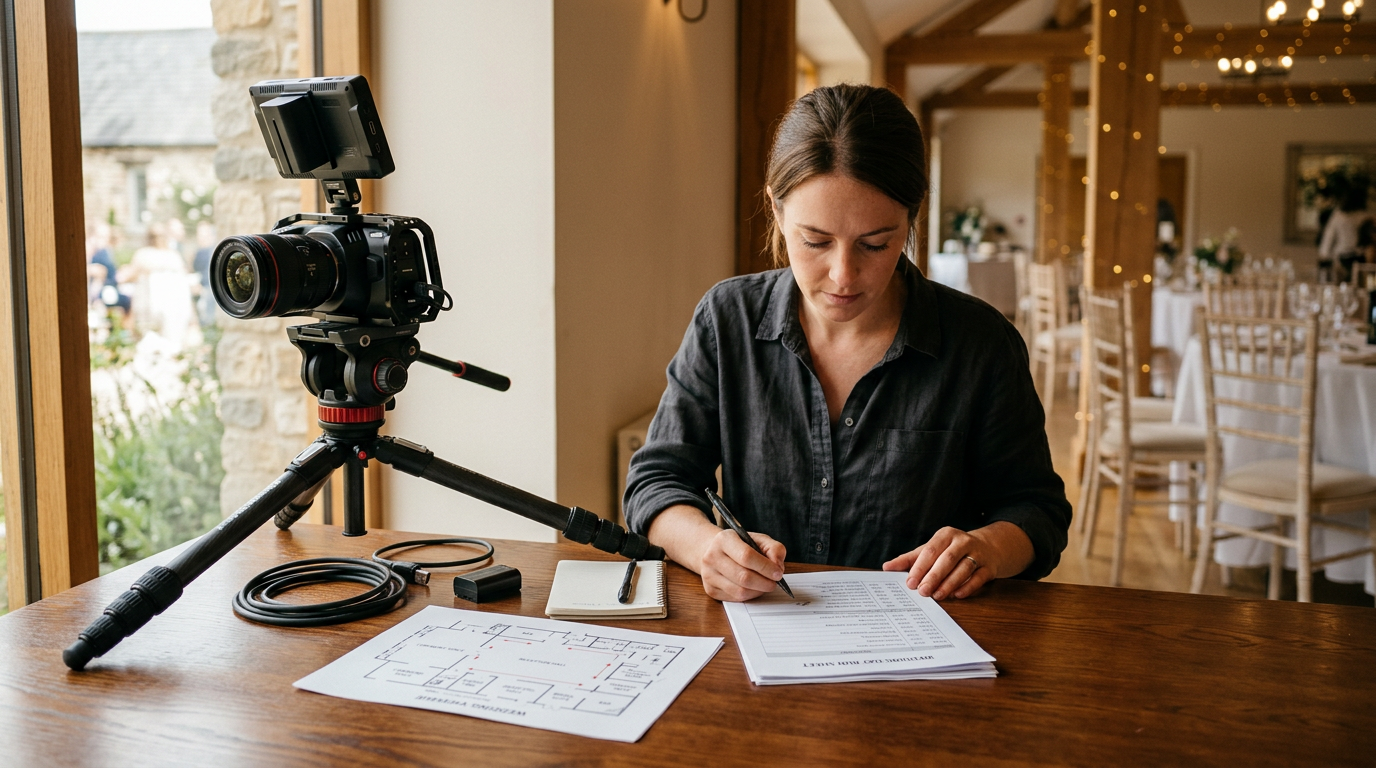
Booking a videographer and planning filming time work best as one decision, not two. Once the date and venue are set, bring the videographer into the planning so there’s time to work out light and sound.
Book once the date and venue are set
A confirmed venue gives the videographer a location and date to plan around. Contact potential photographers and videographers at the same stage so both teams can discuss availability and how they would work together.
No single deadline fits all seasons. The safer move is to send inquiries as soon as the date and venue are confirmed. Share the estimated guest count and planned hours, then ask about availability before other details get fixed.
Keep that first message simple. State the date and venue. Include the ceremony time if it’s set, along with the kind of film wanted, such as a short highlight film or a full ceremony edit.
Ask how many hours that coverage usually takes and whether filming is by a solo videographer or with a second shooter. An engagement shoot can help too. It’s a low-pressure session that lets the couple get used to being filmed and gives the videographer a feel for their pace and personality before the wedding day.
Agree on one run sheet with the photographer
Film time is hard to manage without a shared timeline. The videographer and photographer should work from the same run sheet so neither one pulls the couple in opposite directions.
Ceremony start is the anchor. Venue curfew and access set the other limits.
Couples comparing local options often learn the most by asking how timeline help works and watching full films before making a choice. A clear answer about planning calls and day-of coordination says more than a showreel alone. If the videographer talks through access times and handoff points with the photographer, that’s a good sign.
Decide who directs the couple session and how family portraits fit around it so groups move quickly and light is not lost on the day. Agree where each person stands during the ceremony so cameras don’t block each other. Don’t lock this in and forget it. Reconfirm the run sheet in the wedding week when times and addresses are final.
Protect time for light
The direction and quality of daylight affect how a scene looks on film. Direct midday sun can create strong shadows on faces, while light near sunset can suit softer portraits. Ask the videographer what timing works for the venue and season.
For example, couples comparing wedding videography melbourne options might discuss placing that session 30 to 45 minutes before sunset for soft portraits and wide scenic views. Treat that window as a starting point to adjust with the videographer, not a rule. Sunset shifts by season, and venues with tall trees or city blocks lose light sooner.
Light won’t wait for anyone.
A first look changes the shape of the day. It moves portraits earlier and frees cocktail hour for guests and candid clips. Without a first look, allow enough time for travel between venues, since traffic can quickly eat into filming time.
Sync filming with wedding entertainment
Wedding entertainment sets the pace after dark. The band or DJ controls volume and timing, while the MC handles microphones and transitions. The videographer needs that sequence to be in the right place when each moment happens.
Share the entertainment schedule early. Flag entrances and the first dance cue, plus where speeches and cake cutting sit in the night. Let the videographer know whether speeches run together or are split across courses so there’s time to prepare microphones and check the recording setup before each speaker.
Reception lighting matters too. Ask what the DJ plans for dance floor lighting and share that plan with the videographer before the wedding week. The two teams can discuss how to preserve the atmosphere while keeping faces visible on camera during the first dance.
Don’t let a surprise performance catch the videographer off guard. Tell the film team privately when it starts, where it happens and whose reactions matter most. That gives them time to choose camera positions without spoiling the surprise for guests.
Block coverage and ask about editing
Plan coverage around the moments that matter most to the couple rather than assuming every part of the day needs equal time. Getting ready can add quiet details, while ceremony coverage preserves vows. Reception coverage might focus on speeches, the first dance or guests enjoying the band.
For an initial run sheet, allow separate blocks for preparation, ceremony, portraits and reception. Ask the team how much setup time each location needs and build in travel between them. Confirm whether booked hours run continuously, and check the proposed finish time against the last must-have moment. A first dance scheduled after coverage ends is easier to address during planning than on the night.
Ask what the edit includes. Highlight films need different moments than full edits. Social edits or previews may arrive sooner and are handy for sharing while the long film is cut. Post-production timing shifts with season and workload, so ask for a current estimate in writing.
If booking close to the date, ask about availability first, then discuss coverage options that prioritize the ceremony and speeches. A preview edit is a separate delivery question, not a substitute for filming time. Confirm both the coverage hours and delivery expectations before committing.
Book early and plan light and sound together. Give the videographer room to film the day as it happens.
Discover more from The Cameron Journal
Subscribe to get the latest posts sent to your email.