I had a moment last week that stopped me cold.
I was watching an interview with a tech policy analyst who casually mentioned that everything Trump has done in his second term—the Iran strikes, the Venezuela pressure, the Cuba positioning, even the Panama Canal rhetoric—is essentially fighting China.
Not Russia. Not terrorism. China.
And suddenly, everything clicked into place.
The semiconductor export controls. The military drills around Taiwan. The energy chokepoints. The hemisphere security moves. All of it connects when you stop treating these as separate crises and start seeing them as chapters in the same book.
We’re in a cold war with China. We’re just calling it something else.
Why We Don’t Call It What It Is
The term “Cold War” makes people uncomfortable. I get it. The original Cold War meant nuclear standoffs, ideological warfare, and a world divided into rigid blocs. This doesn’t look like that.
China isn’t the Soviet Union. They’re not trying to export communist revolution or build a rival military alliance system. They’re competing for centrality in four critical networks: infrastructure, digital systems, production capacity, and finance.
More importantly, China is deeply integrated into the global economy in ways the USSR never was. We handed them access to capital, technology, and markets without demanding reciprocal norms. That creates a paradox: we’re competing with a rival we’ve made rich and powerful through trade.
But here’s what people miss when they say “this isn’t a cold war”—China thinks in generations and centuries. We think in election cycles and quarterly earnings.
The Generational Thinking Gap
During my conversation with that analyst, I kept coming back to one point: China is a 5,000-year-old civilization. They plan in timeframes that make Western strategic thinking look like day trading.
Take Taiwan. China has been trying to take Taiwan since 1949. Seventy-five years. Most countries would have moved on. For China, this is unfinished business that multiple generations of leaders have worked toward.
Mao couldn’t do it. Deng Xiaoping wasn’t that concerned. Jiang Zemin couldn’t pull it off. But Xi Jinping is standing on the shoulders of everyone who came before him, and only now is he in position to potentially finish what they started.
The same logic applies to the South China Sea island building, the maritime claims that violate international treaties, the fights over the Senkaku Islands. None of it pays off immediately. It’s all for the future.
Nobody in the West really understands that.
Semiconductors: The New Strategic Weapon
If the first Cold War was defined by nuclear weapons, this one is defined by something we all carry in our pockets: semiconductors.
Biden’s chip restrictions were the most aggressive economic warfare move of the last decade, and most people didn’t even notice. The administration restricted the tooling and forced American experts to leave China, taking their software and equipment with them.
It effectively kneecapped Chinese semiconductor production overnight. They’re stuck with the technology they’ve already perfected, but cut off from the newest advances under U.S. export controls. Biden set them back several years with that move.
Now look at Taiwan through that lens. Beyond the historical claim and national pride, Taiwan represents something strategically critical: semiconductor dominance.
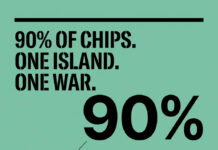
If China takes Taiwan, they control roughly 90% of the world’s advanced semiconductor production. That’s not just a military victory or the end of their civil war. That’s control over the global economy. That’s the ability to set technological standards for the entire world.
That’s a superpower move.
And Congress knows it. In April 2025, the House Foreign Affairs Committee passed 20 new export control measures—described as the “largest significant export control mark-up in the history of Congress”—all targeting China’s access to advanced chip manufacturing.
The stakes are massive. Chinese tech companies reportedly placed orders for more than 2 million H200 chips for 2025, and Nvidia’s CEO has estimated the China market could be worth $50 billion annually.
If that’s not cold war positioning, I don’t know what is.
Energy Control: The Real Game
Here’s where it gets interesting. And by interesting, I mean geopolitically terrifying.
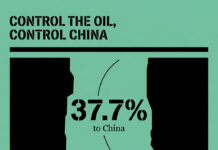
China has very little oil. They import most of it, and much of it comes from Iran and the Middle East. About 38% of crude oil shipped through the Strait of Hormuz heads directly to Chinese ports. In 2025, those flows accounted for 45% of China’s total crude imports.
Now think about what Trump has been doing with Iran. The strikes. The pressure. The demonstration of American military capability in the region.
That analyst I mentioned earlier said something that stuck with me: the Iran operation was a display of American power mostly for a Chinese audience.
We’ve expended half of our armaments on Iran. That’s an expensive demonstration. But despite the bombings of bases in the Gulf states, American operations haven’t stopped. Every mission still went off. That’s resilience on a level that should give Beijing pause.
And here’s the kicker: if the U.S. controls Venezuela and the Strait of Hormuz, we essentially control the flow of energy globally. We become a leading oil exporter and energy producer. We set the price. We control who gets it.
That’s power.
Securing the Hemisphere
Venezuela isn’t just about regime change or democracy promotion. Venezuela has oil. Lots of it.
Taking out Maduro and running the country keeps China from securing that oil for themselves. We’re pushing China out of North and South America, securing our own hemisphere.
The same logic applies to Cuba. Cuba is poor and needs help. China could show up with a lot of help, and that would put Chinese influence 90 miles from Key West and about 150 miles from Miami.
We learned our lesson from the Cuban Missile Crisis. That’s not going to be allowed to happen again.
Even the Panama Canal rhetoric fits this pattern. Control over critical infrastructure in our hemisphere matters when you’re trying to limit a rival’s reach.
It all seems disconnected until you think about it as a cold war against China. Then it starts to make sense.
The Taiwan Pressure Cooker
China has been escalating around Taiwan in ways that should alarm anyone paying attention.
The December 2025 Justice Mission drills brought together the PLA Navy, Air Force, Rocket Force, and other branches to rehearse a full maritime blockade of Taiwan. The exercise covered a larger area than any of the six major war games conducted since August 2022.
More concerning: on December 30, the Chinese military fired 27 rockets from Fujian. Ten of them landed in the waters southwest of Taiwan, directly inside the 24-nautical-mile contiguous zone.
A Chinese attempt at blockading or invading Taiwan in 2025 remains unlikely. But Beijing is persisting with coercive actions designed to erode Taiwan’s will and narrow its strategic options over time.
Remember: they think in generations. They don’t need to invade tomorrow. They just need to make it inevitable.
The FDR-Japan Parallel
There’s a historical parallel here that keeps nagging at me.
In the 1930s, FDR fought Japan through trade restrictions. He banned scrap exports. He cut off oil. Japan responded by seizing islands to expand their Pacific empire.
They attacked Hawaii because it was as far as their ships could get, but it was the next logical place to seize. The Philippines fell as soon as the war started.
U.S. involvement in World War II started as a trade war.
Now, the positions are somewhat reversed. China has been a massive exporter to the U.S., not the other way around. And we live in a post-nuclear world, which changes the calculus entirely.
But the pattern of trade restrictions escalating into armed conflict is worth watching.
What This Means for You
If you’re a politically homeless professional trying to make sense of the headlines, here’s what you need to understand:
We are going through a tremendous change right now.
The stability we’ve been used to was an anomaly. Those don’t last very long. Global chaos is historically normal, and we’re transitioning from a world where we had two superpowers, down to one hegemon, and now into a multipolar world the U.S. wants to run on its own terms.
It’s going to be chaotic, dangerous, and volatile compared to what we’re used to.
Reset your priors.
The news will make more sense when you stop treating each crisis as isolated and start seeing the pattern. Semiconductors, Taiwan, Iran, Venezuela, Cuba, energy chokepoints—they’re all connected.
We’re in a cold war with China. The sooner we admit that, the better we can navigate what comes next.
The Uncomfortable Truth
The United States is not in a traditional cold war with China, and that’s precisely the problem.
Unlike the Soviet Union, the Chinese Communist Party has no interest in a stable, rules-based standoff. They’re preparing for something far more dangerous: the possibility of hot conflict while maintaining economic integration that makes traditional cold war strategies obsolete.
We’ve handed them a strategic gift—access to capital, technology, and markets—without demanding adherence to reciprocal norms.
The competition is unfolding on every continent, at both poles, in cyberspace, and in outer space. Neither country believes it can create a unipolar world, but each is determined to maximize its own influence and prevent the other’s dominance.
That’s the world we live in now.
The question isn’t whether we’re in a cold war with China. The question is whether we’re willing to fight it with the clarity and strategic coherence it demands.
Right now, the answer isn’t clear.
But the pattern is.
Discover more from The Cameron Journal
Subscribe to get the latest posts sent to your email.