Image credit: Unsplash
The hidden framework of a house gives it strength, but an unseen force can silently chip away at that very foundation. Termites cause billions of dollars in property damage every year, often working out of sight within walls, floors, and foundations. To protect your home from the significant harm they can cause, you first need to understand these insects. They live in complex societies, often going unnoticed until the damage is already severe.
Spotting the Warning Signs
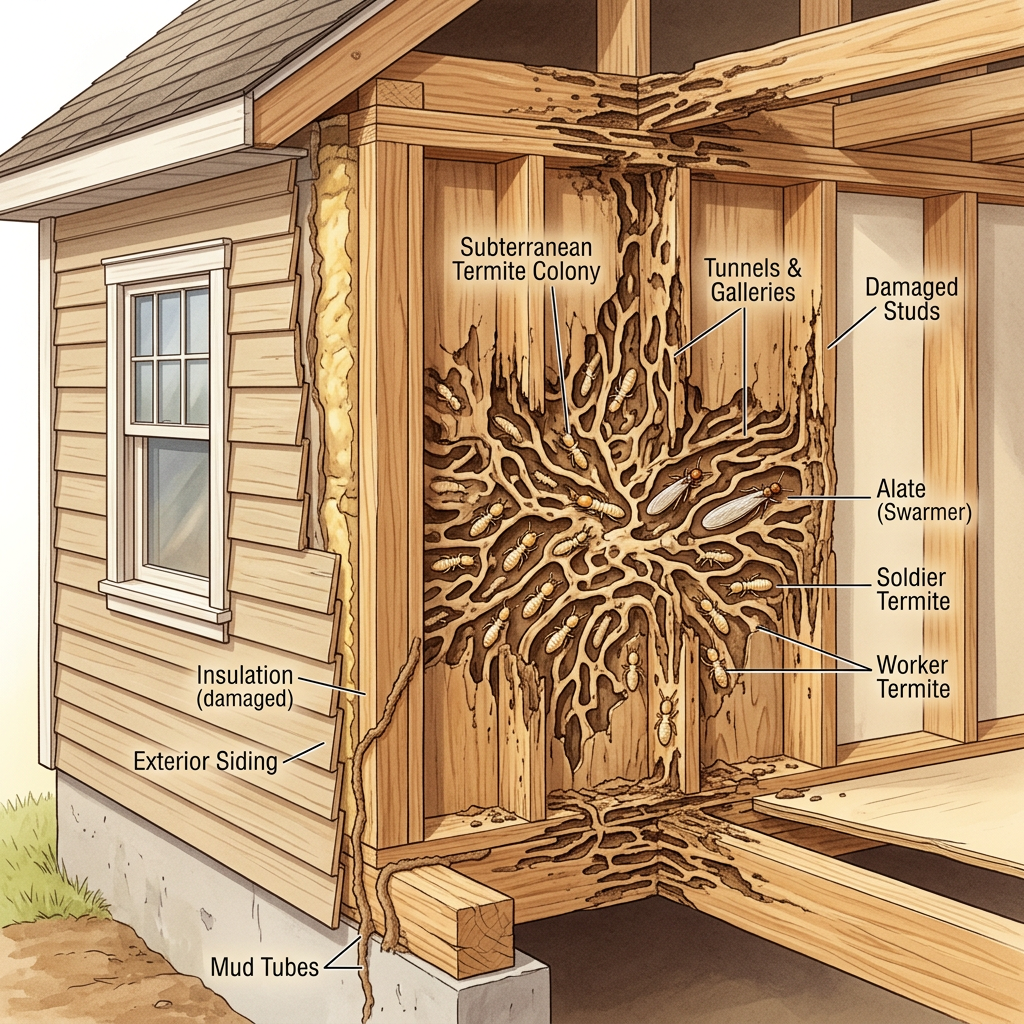
Since termites operate behind the scenes, catching an infestation early means knowing what to look for. The most obvious sign is the appearance of swarmers, winged termites that emerge to start new colonies. You might spot them near windows and lights, or find their discarded wings on sills and floors. Another key indicator is mud tubes. Subterranean termites build these pencil-sized tunnels on foundation walls, floor joists, or other surfaces to travel from their soil colonies to the wood in your home. Other signs include wood that sounds hollow when tapped, bubbling or peeling paint that looks like water damage, and tiny holes in drywall.
Effective Solutions for Control
If you suspect a termite issue, you need to act fast to limit the damage. The main ways to control them involve either liquid treatments or baiting systems. Liquid treatments create a protective barrier in the soil around your home’s foundation. Modern professional-grade termiticide products are designed to be undetectable, so termites pass through the treated zone and carry the substance back to the colony, helping to eliminate it at the source.
Baiting systems work differently. They use strategically placed stations that contain a slow-acting bait. Worker termites eat the bait and share it with the rest of the colony, leading to its gradual decline. The best method for you often depends on the type of termite, your home’s construction, and how bad the infestation is. For any large-scale problem, getting effective termite control might require a professional assessment to figure out the best approach.
Life in the Colony
Termites are highly social insects that live in structured colonies, which can hold anywhere from several thousand to millions of individuals. Each colony has a distinct caste system with specific roles. The queen and king handle reproduction, with a single queen capable of laying thousands of eggs daily. Workers, who are sterile and blind, make up the vast majority of the colony. They find food, care for the young, and build and maintain the nest. Soldiers, with their large mandibles, defend the colony from threats like ants. This complex biology and behavior of termites allows them to function like a superorganism, working together to ensure collective survival.
Silent Destroyers at Work
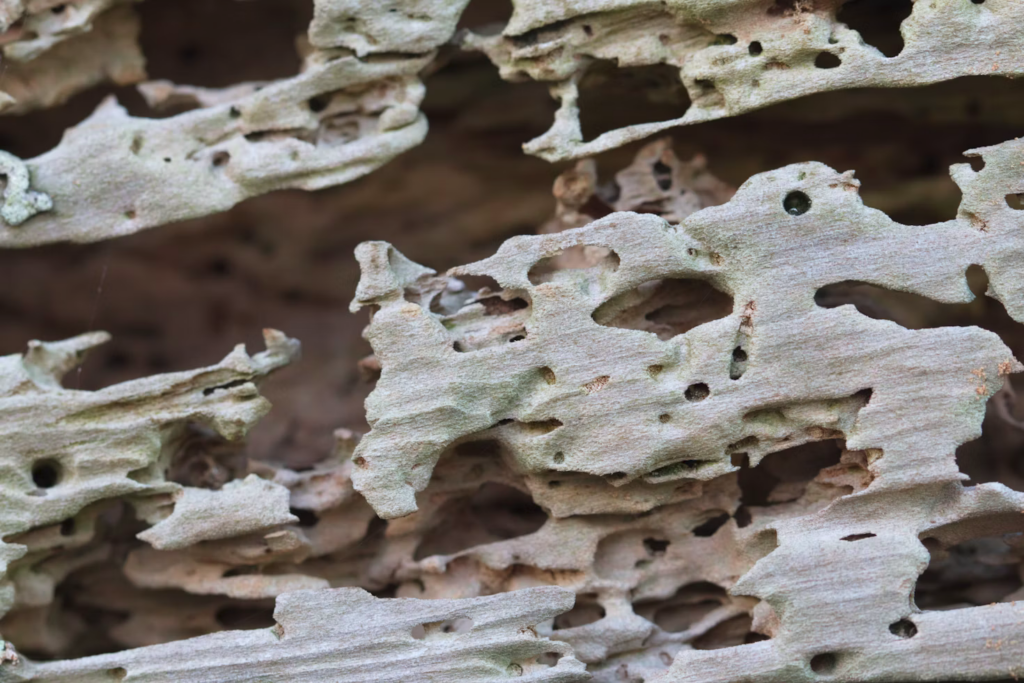
Termites cause damage because of what they eat. They feed on cellulose, an organic compound found in wood, paper, cardboard, and other plant-based materials. Worker termites chew through wood from the inside out, leaving only a thin layer of wood or paint on the surface. This is why infestations can go unnoticed for years. As they consume a home’s structural timbers, they weaken its integrity, leading to sagging floors, compromised support beams, and extensive damage that can be incredibly costly to repair. They also need moisture to survive, so they’re often drawn to areas with leaks, poor drainage, or high humidity.
Long-Term Prevention Strategies
Preventing a termite infestation is much easier than getting rid of an existing one. A few proactive steps can make your home far less appealing to these pests.
- Make sure siding, wooden posts, and other structural elements are at least six inches above the ground.
- Fix leaky faucets, pipes, and air conditioning units. Ensure gutters and downspouts direct water away from the foundation.
- Keep firewood, lumber, and other wood debris away from your house and off the ground.
- Fill cracks in the foundation and seal any gaps around water and utility lines where they enter the home.
- Having a professional inspect your home annually can help you catch signs of termite activity before a major infestation takes hold.
Taking these preventative steps helps you create a less hospitable environment for termites and better protect your property. A little vigilance goes a long way in keeping these unseen architects of damage at bay.
Discover more from The Cameron Journal
Subscribe to get the latest posts sent to your email.