

One of the most powerful things about a story is how good storytelling uses familiar archetypes to explain things in the world around us. Storytelling was the first science, it was a clever way to explain the world around us and how things are the way they are. The book religions are full of stories that helped ancient people understand the world around them. Even pagan religions that have been lost to time, had stories to explain natural phenomena that mankind did not yet have the technology or science to fully understand.
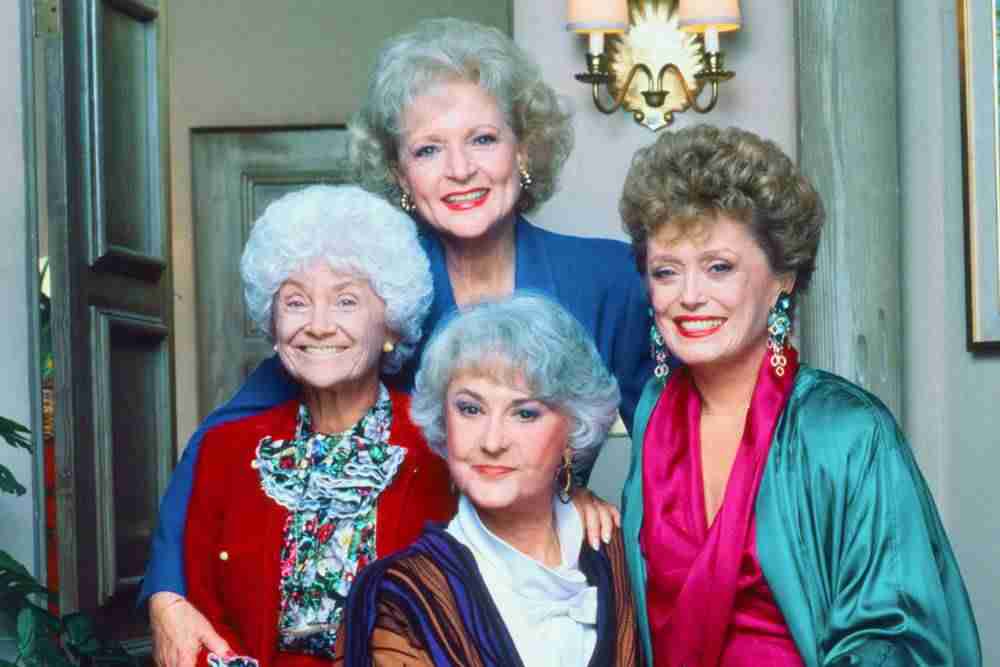
This was also true for people. Parables and allegory have been used to help people understand human relations and what kind of people there are around us. In this post, I wanted to talk about the archetypes within one of my favorite TV shows: The Golden Girls. From 1986-1992, Betty White, Rue McClanahan, Estelle Getty, and Bea Arthur brought feminity into our living rooms in a way that hadn’t been on TV before.
Blanche: Sensuality
Men have spent centuries suppressing the sex and sexuality of women. That is one of the areas where we can certainly claim #patriarchy. Women had to live with the reputation of being “a good girl” (someone who didn’t have a lot of sex) or “a bad girl” (someone who had a lot of sex). The TV show pits all three women against these stereotypes but within Blanche Devereaux, the sexuality of women comes into sharp focus. Blanche spends most of the show having multiple dates and relationships with multitudes of her “many, many, many, many men.” She is female sexuality unleashed, she is sensuality revealed in its raw form. She is forward with her sexuality in other ways that the other women are not. She dresses in a flashy style and is on display while also embracing the male gaze but on her terms. She at once in control of the beast of sexuality while also setting boundaries. Take for example, in season 2 when she is attending night courses and the professor promises her a passing grade in exchange for sex. Not only is she not believed when she tries to take the case to the dean, but she rebuffs the advance and passes the class anyway. She is the sensual side of woman and fully in control of her boundaries to choose when, where and how, her sexuality may or may not deployed.
Rose: Home and Hearth
Rose is a bit of a trope but expresses her archetype in a really fun way. She optimizes the “blonde bimbo” stereotype of being a simple housewife from a rural area with no brains of her own. However, that is not where her talent lay. Instead, her talent was in the keeping of the home and hearth, an important part of the primal human existence. In Season 1, the home where the women live suffers a robbery. Of all three women, Rose is the most affected because, for her archetype, a violation of the home is a form of rape. It is the most serious of violations. She is the one who cooks, hosts, and cares for others. The home is her safe place.
She makes it so the home is always the safe landing pad that the girls can return to, no matter what. 3 times in the show she is presented with chances to leave with various men, but the safety and stability of the home are too important to leave behind. Over and over she expresses the love for the environment she has and how that she is grateful for having such a place to live. The one time she does move out, in season 4, her new condo is less like a home and more like a boarding house. It doesn’t work and she returns to the security and stability of a stable home with caring people who she can have a real relationship with and care about in a deep way. She is the keeper of home and hearth.
Dorothy: Knowledge and the Mind
One of the great crimes of our time is how women have been suppressed from knowledge and knowledge work. Only the last 50 years have women begun to excel at these things en masse. It’s hard to think that just 50 years ago, women were deemed to be too stupid to do most tasks or take on a leadership role. However, Dorothy proves what women can do when they are educated and empowered. Despite getting pregnant at a young age, she managed to go to college and become a teacher while raising children and being married to her philandering, puerile husband. Dorothy is the smart one of the group. She is practical and pragmatic and endlessly cynical about the broken world around her. It’s easy to be cynical when you understand the problems that the world faces. While Blanche is unconcerned about the world around her and Rose is endlessly optimistic, Dorothy shows us what it is like when you possess the knowledge and can point out the problems and challenges faced by people and the world around us. She digs deep into mind often to a fault, like when she ends up addicted to gambling in season 6. She also expresses the unique perspective and intelligence that women can offer in every circumstance. She is an expression of the power of the mind.
Archetypes
I always enjoy looking at different archetypes and how they get expressed through
Discover more from The Cameron Journal
Subscribe to get the latest posts sent to your email.


