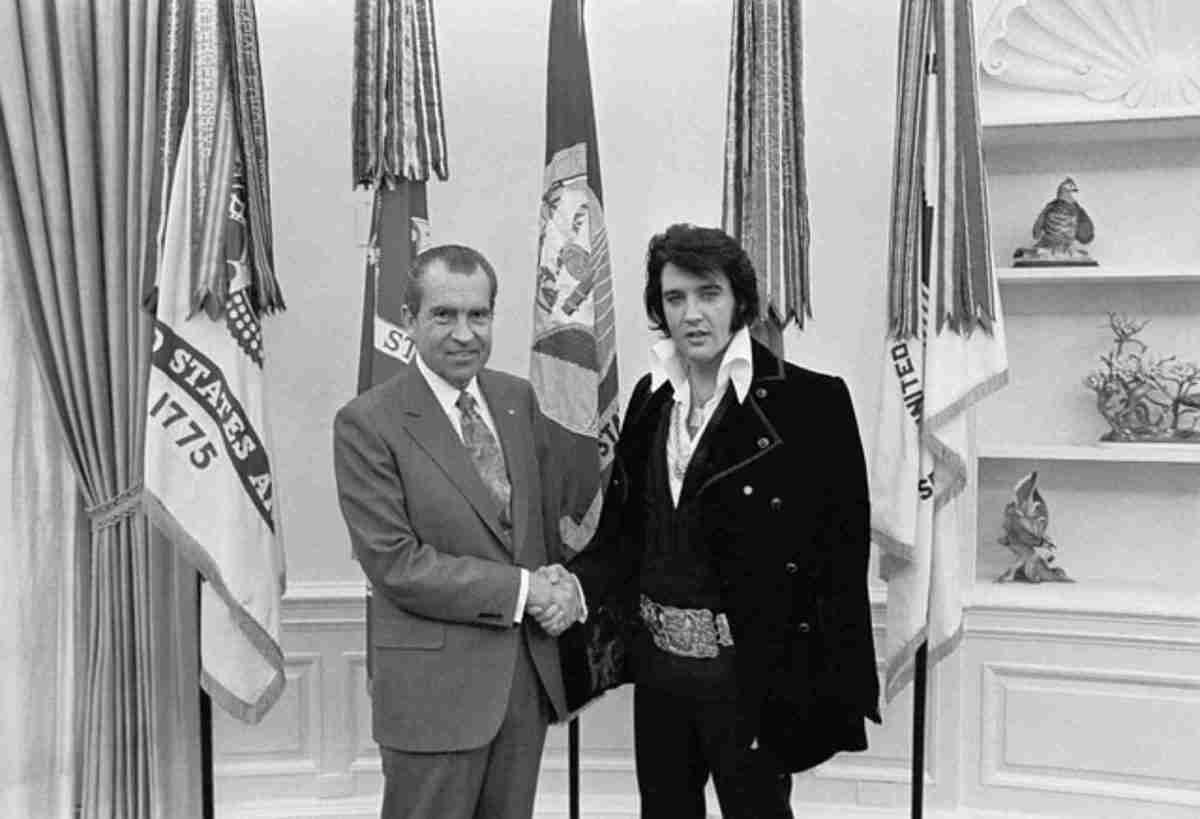
Most everyone reading this will not have been alive to remember Richard Nixon. Nixon was in politics along time before he was president. He started out in Washington working in the Pentagon and then went on to be Vice President. He ran against JFK in 1960 and lost but roared back to political life in 1968 winning the Republican nomination and ultimately the Presidency. He was elected to a second term in 1972 and is most often remembered for resigning in disgrace in 1974 after the Watergate scandal became known. He is the father of the phrase, “The great silent majority.” He began the war on drugs and was a proponent of universal healthcare and pioneered the HMO. He also pioneered what would be called “the Southern Strategy.”
Vote Racism 1972
The Southern Strategy was a way for Nixon to find new voters. Nixon had won by a narrow margin in 1968. For 1972, Nixon and his advisers were looking for a new voting bloc. Until that time, the south had been solidly democrat voting and the democrats controlled most state offices. Nixon saw the upheaval of the 1960s and they figured that if they could uncover racist sentiments and move those racial sentiments to the republican side, they would have a group of fresh new voters, pick up new electoral college votes and make change at the state level as well. Alongside this, Nixon also worked to activate church going voters which would go on to be called Evangelical voters. They used abortion and gay rights as dividing issues and by 1972 and beyond, both groups were voting republican. Although, Nixon would resign and Gerald Ford would lose in 1976 to a young democrat governor from Georgia: Jimmy Carter, just 6 years after Nixon’s resignation, the same strategy was used to elevate a new republican player to the national field: Ronald Reagan. Using the same coalition, they were able to thrust Reagan into the White house in 1980 and they were able to demolish Mondale in 1984 with a 49 state win. The country has never been the same. The long arm of Richard Nixon reach right up to today.
Post-Nixon
There are many republican operatives that emerged from the ashes of the Nixon White House but no two people have had greater impact on our world than Roger Ailes and Roger Stone. Roger Stone worshipped Nixon. He has a full back tattoo of Nixon’s face. Roger Stone is really into the legacy of Nixon. Roger Stone’s own political career began because his name was mentioned in the Watergate investigation. Indeed that investigation and how it was handled by some of the best journalists of the 20th century would give a great deal of inspiration to these central characters.
In the days after Watergate, one thing was clear, Watergate was lost in the media. Although it took 2 years to make Watergate a real scandal that could take down a president, it only became a scandal because reporters kept pushing the story and kept looking for sources. They stayed on top of the story. If there was another entity that could have countered that narrative or presented Nixon as still a good guy, public opinion might have never changed. What if there was some part of the media that could be co-opted or created to push certain narratives? While Roger Stone was out creating a K-street lobbying firm with Paul Manafort that would go on to sell access to the Reagan White House, Roger Ailes went to work in media. Cable came out in the late 70s and early 80s and cable news arrived shortly thereafter offering 24/7 news rather than just the evening news reports of the big three networks. New networks and new content came along with cable news and by 1996, Fox News was born. With this entity in place, Roger Ailes could do on television what Talk Radio had done for Reagan: create an alternative narrative to the daily news papers and networks which were ran by people who were mostly progressive and tended to be educated in big East Coast schools where progressive/liberal ideas flourished.
Conservative Backlash & Progress
From 1933 to 1968, the US created a variety of progressive policies to help improve the country and society. It wasn’t just welfare either. Social changes swept the nation and American society was re-made in a progressive image. The backlash was bound to come and while it started somewhat with the return to normalcy of the 1950s, the social progress of the 1960s sparked a backlash that we are still living through. What the group of people in the aftermath of the Nixon administration did was create a scenario where public opinion could forever be divided along ideological lines, through wedge issues, and through alternative narratives. This would allow anyone, like a prominent TV reality star, to align themselves with that narrative and take power simply by garnering the support of anyone believing that narrative. Scandals could be downplayed, personal problems mollified (or never addressed) and a solid and consistent narrative created so that support for a party and candidate could be assured. This method is not concerned with facts or reality. It is concerned only with doing whatever is necessary to keep and maintain power. This has allowed issues like gun control (a wedge issue), abortion (wedge issue), and other social problems to continue to be up for debate rather than allowing these issues to be solved in common-sense policy changes that most Americans agree with. If abortion were put to a vote, it would pass. 90% of American believe that you should have a background check to buy a gun. There should no longer be a debate on either of these issues. There continues to be a debate because there is an entire media ecosystem focused on using these issues to keep and maintain power. That is the long-arm of the Southern Strategy and it is a way in which Richard Nixon haunts us to this day.
Life after Nixon
Roger Stone and Roger Ailes aren’t the only people who made it out of the Nixon years with bigger plans. Reagan attracted many bright young (at the time) folks to Washington. Many of them would go on to create the conservative media brands that we know today: Laura Ingram, Sean Hannity, and others all came from the Reagan administration. Reagan would have never been elected without the Southern Strategy and the new GOP voters that had been created just 8 years before. We often think about this sort of thing taking along time. It did not. In just 25 years, Fox News has gone from a weird cable news channel to a cultural force that supports a view for 40% of the country. Talk radio allows people like Dennis Prager and Michael Savage huge time slots lasting 3-4 hours to talk about promote conservative values that not everyone might share. When the country might be ready to move forward, these daily talkers give people a reason to double down on candidates who don’t even work in their interest. They don’t have to be right, they don’t have to have facts. They just have to create doubt. How far ahead might the country be if the conservative news media didn’t exist? How different might have the election of 1980 turned out if Nixon hadn’t used racism and wedge issues to assure his continuance of power? What might have happened if Bob Woodward hadn’t dogged Watergate so hard? Nixon helped divide America and we are living in the result of a 40 year old story. It’s time to finally shift the narrative.
Discover more from The Cameron Journal
Subscribe to get the latest posts sent to your email.