
Table Of Contents
- Why Refrigeration Maintenance Matters
- Daily Checks That Catch Small Problems
- Building A Practical Maintenance Schedule
- Ways To Reduce Refrigeration Energy Use
- How Monitoring Tools Improve Response Time
- Refrigerants And 2026 Planning
- When To Repair, Retrofit, Or Replace
- Training Staff To Protect Equipment And Inventory
- Creating A Refrigeration Emergency Plan
Commercial refrigeration is easy to overlook when it is working properly, but its performance affects inventory, food quality, energy costs, and daily operations. Restaurants, markets, wineries, produce facilities, and food processors can protect those priorities by treating maintenance as a routine business process rather than an emergency expense. Businesses that need professional support can use this website to connect with commercial refrigeration specialists.
Smart maintenance combines staff awareness, scheduled service, temperature records, and practical replacement planning. It does not require every facility to install complex technology immediately. The goal is to notice small changes early, act before the product is at risk, and make informed decisions when equipment begins to cost more to operate or repair.
Why Refrigeration Maintenance Matters
Temperature control is central to safe storage and consistent product quality. For general food-safety guidance, refrigerated foods should be kept at 40 degrees Fahrenheit or below, while freezers should remain at 0 degrees Fahrenheit or below, as explained in USDA refrigeration and food safety guidance. Individual products and local health requirements may call for tighter controls.
Minor issues can become expensive quickly. A loose door gasket, dirty condenser, failing fan motor, or blocked air vent may force a system to run longer than necessary. At first, a walk-in cooler may only drift a few degrees warmer during busy periods. Left unaddressed, the same problem can lead to spoiled stock, an after-hours service call, and disruption for staff and customers. Planned maintenance is usually less costly and less stressful than waiting for a complete failure.
Daily Checks That Catch Small Problems
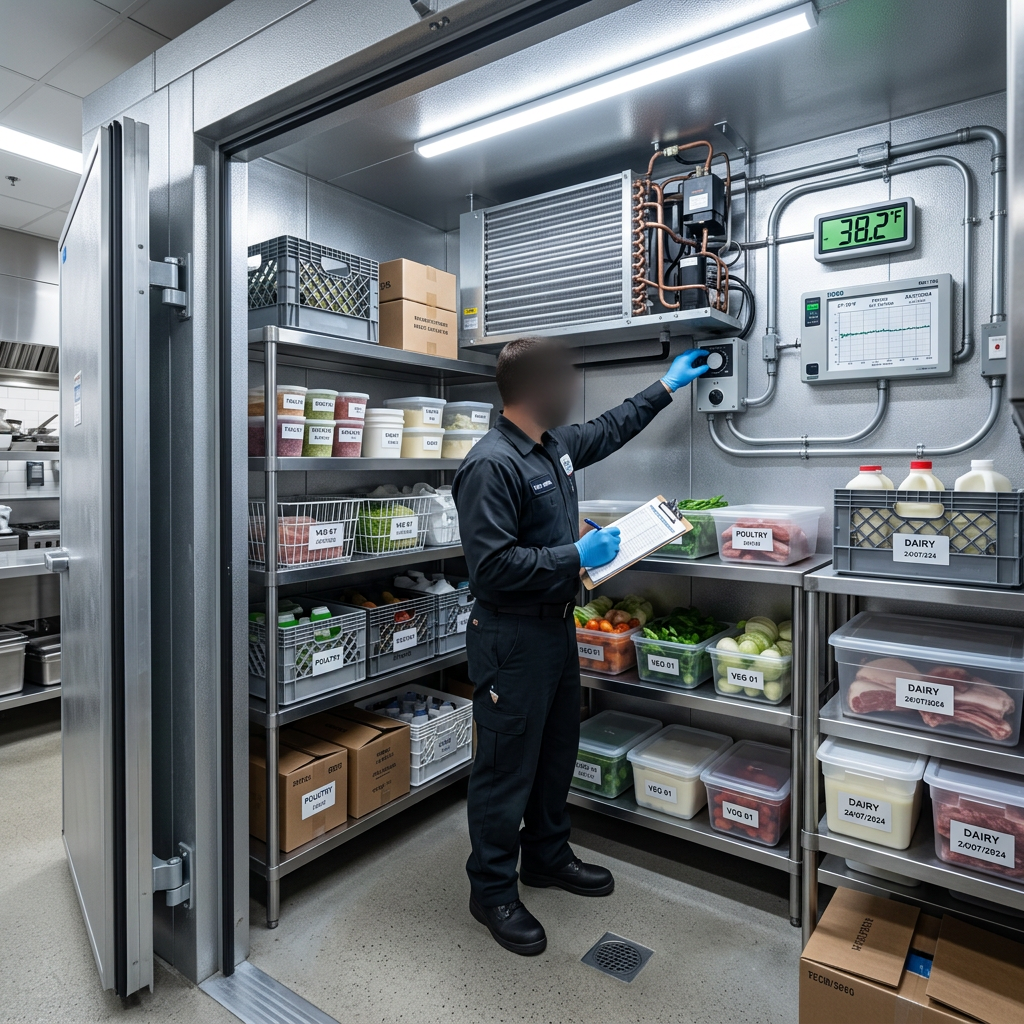
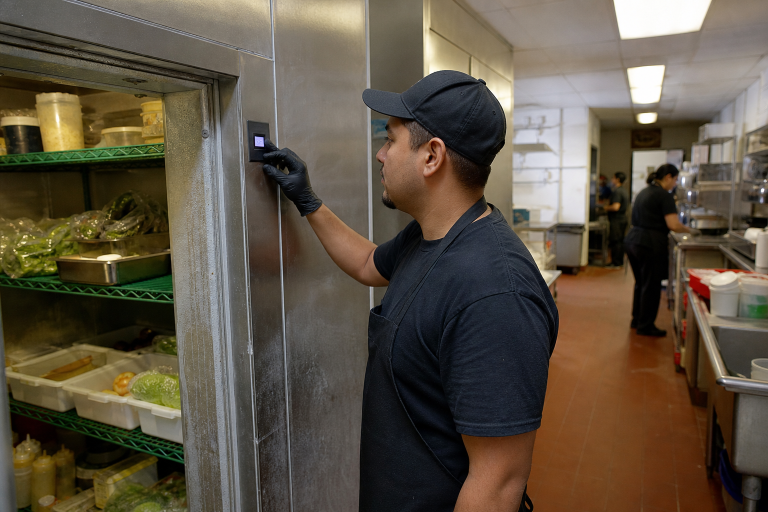
Employees do not need to open electrical panels or handle refrigerant to contribute to equipment reliability. A short opening and closing checklist can reveal developing problems while they are still manageable.
- Review and record displayed temperatures at consistent times each day.
- Look for frost buildup, water on the floor, excessive condensation, unusual noises, or weak airflow.
- Confirm doors close fully, hinges work smoothly, and gaskets sit flat without tears.
- Keep food, boxes, and shelving clear of evaporator fans and supply vents.
- Record alarms, temperature swings, and repeated resets instead of dismissing them as isolated events.
These checks support, but never replace, professional inspection and repair. Staff should report concerns promptly, especially when product temperatures are rising or equipment is cycling more frequently than usual.
Building A Practical Maintenance Schedule
A written schedule prevents important tasks from being forgotten during busy seasons. It should cover walk-ins, reach-ins, display cases, ice machines, condensing units, and any related HVAC equipment that affects equipment rooms or product areas.
A Simple Maintenance Rhythm
- Daily: Check temperatures, doors, alarms, airflow, and visible signs of trouble.
- Weekly: Review product loading, clean accessible surfaces, and examine temperature logs.
- Monthly: Review alarm history, drains, filters, lighting, and recurring service notes.
- Seasonally: Schedule inspections before hot weather, harvest periods, holidays, or other peak demand.
- Annually: Arrange a detailed professional inspection and evaluate repair history, operating costs, and replacement options.
Ways To Reduce Refrigeration Energy Use
Energy efficiency begins with basic housekeeping and sound operating habits. Keep the condenser area clean and free from stored materials, repair damaged gaskets and hinges, reduce unnecessary door openings, and avoid loading product in ways that block airflow. Review lighting, control settings, and defrost cycles as well, since default settings are not always ideal for every facility or season.
Track utility use before and after meaningful repairs or upgrades. A lower purchase price does not necessarily mean lower lifetime cost. Equipment efficiency, parts availability, technician access, expected service life, and downtime risk all belong in the decision. Equipment that is oversized, underloaded, or placed near excess heat may also consume more energy than its nameplate rating suggests.
How Monitoring Tools Improve Response Time
Connected temperature sensors, alarm systems, remote dashboards, and data logs help managers see problems that a single manual reading can miss. A system may maintain an acceptable temperature at 8:00 a.m. but struggle overnight, during defrost cycles, or when doors are repeatedly opened for deliveries.
Set alerts for high temperatures, extended door openings, power interruptions, and repeated compressor cycling. Trend data can help identify slow performance loss, unusual defrost behavior, or a cooler that takes too long to recover after loading. When technicians receive clear alarm history and temperature data before arriving, they can often diagnose the problem more efficiently and prioritize the inventory at greatest risk.
Refrigerants And 2026 Planning
Refrigerant selection now affects equipment design, maintenance procedures, technician training, operating costs, and long-term replacement planning. Traditional HFC equipment and lower-global-warming-potential alternatives can differ in pressure, flammability classification, compatibility, and service requirements. Facilities should confirm applicable federal, state, local, and manufacturer requirements before making a change.
Only trained professionals should recover, charge, or repair refrigerant circuits. The EPA’s stationary refrigeration requirements outline important federal rules involving refrigerant handling, recovery, certification, and emissions prevention. An organized equipment plan gives owners time to evaluate suitable options instead of making a rushed choice after an unexpected failure.
When To Repair, Retrofit, Or Replace
Not every breakdown calls for replacement, but repeated repairs deserve a wider review. Start by identifying the failed component and the likely cause. Then consider the unit’s age, condition, service history, repair cost, expected downtime, energy use, parts availability, and whether a safe, practical retrofit is possible.
For example, a single fan motor failure may be a straightforward repair. However, repeated problems with the fan, control, and compressor on an older unit can indicate broader wear or declining reliability. Compare the total cost of ongoing repairs with the cost of a modern replacement that may offer better controls, easier servicing, and a more durable long-term path.
Training Staff To Protect Equipment And Inventory
Simple habits reduce equipment strain. Train employees to load shelves without blocking airflow, to close doors promptly, to respond to alarms, and to document recurring issues. During an outage, staff should know which products to check first, where backup cold storage is located, and who has the authority to move or dispose of inventory. Keep instructions short, visible, and easy to follow during a busy shift.
Creating A Refrigeration Emergency Plan
An emergency plan should be easy to find and practical under pressure. Include preferred service contacts, backup storage options, thermometer locations, product labels, cleaning supplies, temperature documentation rules, and approval steps for repairs or disposal. After every significant incident, review what happened, update the plan, and correct gaps before the next emergency.
Final Takeaway
Smart refrigeration maintenance is more than fixing equipment after it fails. It is an operating system for protecting inventory, controlling energy use, supporting food safety, and avoiding preventable downtime. Daily awareness, scheduled service, useful monitoring data, trained employees, and thoughtful replacement planning can help any commercial facility stay ready for routine demand and unexpected failures.
Discover more from The Cameron Journal
Subscribe to get the latest posts sent to your email.




