Key Takeaways
- The right vehicle should support your normal routine, not just occasional plans.
- Comfort, passenger access, cargo space, safety, and operating costs all matter.
- A low monthly payment can still lead to high long-term ownership expenses.
- Gasoline, hybrid, plug-in hybrid, and electric vehicles work best for different driving patterns.
- A realistic test drive and written scorecard can make the final choice clearer.
Table of Contents
- Start With Your Daily Routine
- Match the Vehicle Type to the Job
- Check Space, Comfort, and Access
- Calculate Full Ownership Costs
- Choose the Right Powertrain
- Compare Safety and Driver Assistance
- Use the Test Drive as a Real-World Test
- Complete a Final Vehicle Checklist
Choosing a vehicle is easier when you start with the way you actually live. A stylish truck, roomy SUV, efficient sedan, or electric hatchback may all be appealing, but the best option is the one that fits your commute, passengers, parking situation, budget, and regular responsibilities. Before shopping, learn more about the types of vehicles available and the features that may suit your needs.
Try to separate must-haves from nice-to-haves. A vehicle should make daily life simpler, whether that means easier school drop-offs, better fuel efficiency, extra room for equipment, confident winter driving, or a more comfortable highway commute. Focusing on practical use first can prevent an expensive decision based only on appearance or a short test drive.
Start With Your Daily Routine
Your regular driving habits should shape the search. Estimate your average daily mileage, how often you drive on highways, and whether you deal with city congestion, narrow streets, gravel roads, steep hills, snow, or heavy rain. Also consider how many people ride with you most often and what items need to come along.
For example, a solo commuter may prioritize fuel use, easy parking, and a quiet cabin. A household with children may need wide rear doors, easy child-seat access, flexible seating, and space for strollers, backpacks, groceries, or sports gear. Occasional needs, such as towing a trailer or taking a long vacation, matter, but they should not outweigh the needs you have five or six days each week.
Match the Vehicle Type to the Job
Each body style has strengths and tradeoffs. The goal is not to find the best category overall. It is to find the category that handles your most common tasks without creating unnecessary costs or inconvenience.
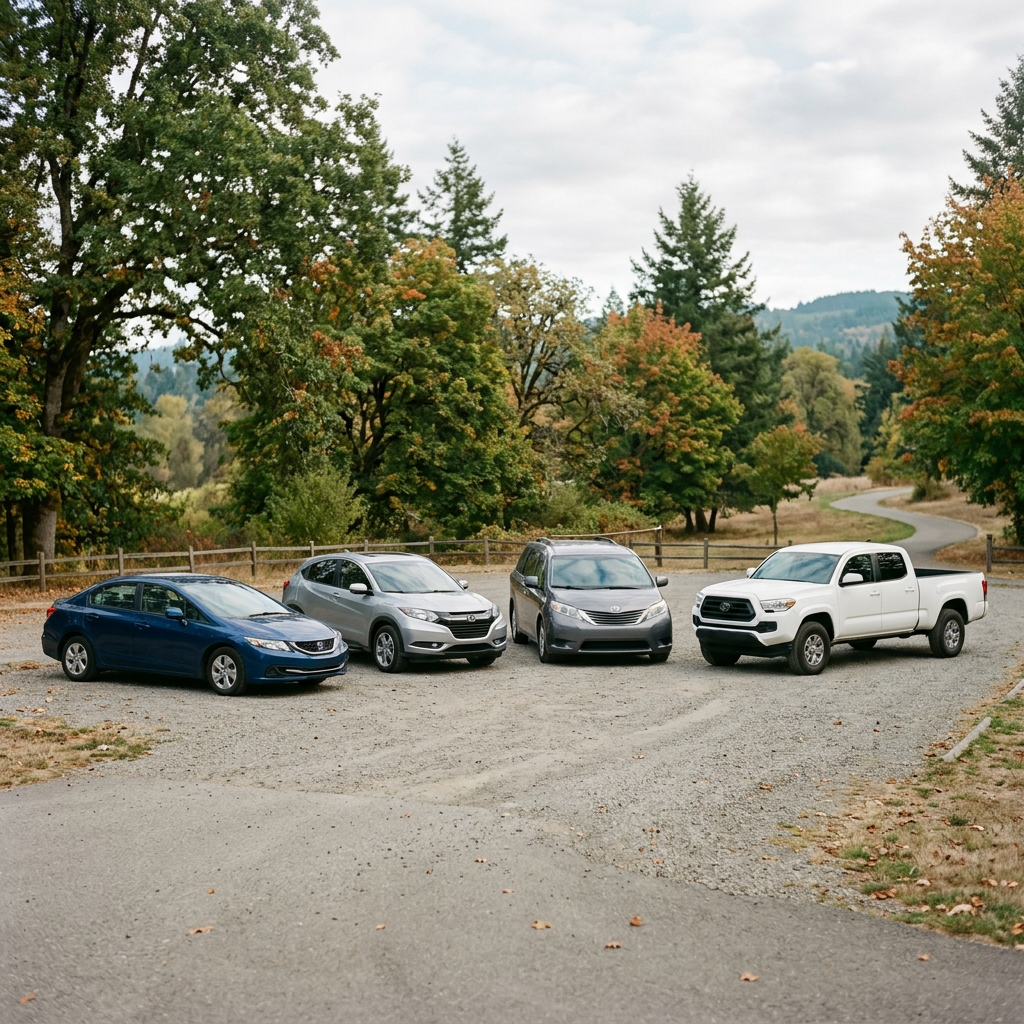
- Sedans: Often efficient, comfortable, and easy to maneuver for commuting and city parking.
- Hatchbacks: Combine small-car handling with a more flexible rear cargo area.
- Compact SUVs: Offer a higher seating position and useful cargo room in a manageable footprint.
- Midsize SUVs: Can provide more passenger capacity, luggage room, and road-trip comfort.
- Minivans: Often excel at family access, flexible seating, and practical storage.
- Pickup trucks: Make sense for frequent hauling, towing, job-site use, or outdoor equipment.
Check Space, Comfort, and Access
Published seating capacity does not reveal how usable a cabin really is. Sit in every row, adjust the driver’s seat, check sightlines, and inspect the amount of room left after passengers are seated. If you carry children, bring a child safety seat to see how it fits and whether loading it feels manageable.

What to inspect in person
- Rear-door opening width and step-in height.
- Legroom, headroom, and shoulder room for regular passengers.
- Cargo access, seat-folding controls, and usable floor space.
- Storage for phones, water bottles, bags, tools, and charging cords.
- Driver reach to climate controls, screens, mirrors, and visibility aids.
Calculate Full Ownership Costs
Do not evaluate a vehicle only by its sticker price or advertised payment. Build a simple monthly estimate that includes your down payment, trade-in value, financing, insurance, fuel or electricity, routine maintenance, registration, parking, and likely repairs. Resale value also matters if you expect to trade or sell within a few years.
Use the same assumptions for every vehicle you compare. For fuel-cost estimates, the tools that let you compare cars by mileage, price, and body style can help turn broad efficiency claims into a more useful household budget.
Choose the Right Powertrain
The right powertrain depends on where, how far, and how predictably you drive. No option is automatically better for every household.
- Gasoline: A practical choice for drivers who want familiar refueling and a wide vehicle selection.
- Hybrid: Can reduce fuel use without requiring regular external charging.
- Plug-in hybrid: May suit short daily trips when home or workplace charging is available.
- Electric: Can be a strong fit for predictable routes, reliable charging access, and drivers comfortable planning longer trips.
Consider charging availability, utility rates, cold-weather driving, towing needs, road-trip frequency, and the amount of time the vehicle sits parked. A powertrain that sounds ideal on paper may be less convenient if it does not match your routine.
Compare Safety and Driver Assistance Features
Safety involves both crash protection and technologies designed to help avoid a collision. Review crash-test information, visibility, braking feel, child-seat fit, and the availability of automatic emergency braking, blind-spot monitoring, adaptive cruise control, and lane-support features. You can use vehicle safety ratings to compare crash performance and recall information before narrowing your list.
Driver assistance features are supports, not replacements for attention. During the test drive, make sure alerts are clear, controls are easy to adjust, and the systems are included on the exact trim level you are considering.
Use the Test Drive as a Real-World Test
- Drive in stop-and-go traffic and at highway speed when possible.
- Test turning, parking, reversing, and visibility around the vehicle.
- Listen for wind noise, tire noise, rattles, and harsh impacts over rough pavement.
- Check seat comfort after at least 20 to 30 minutes.
- Try the infotainment system, climate controls, cameras, and safety features.
Drive more than one vehicle on the same day when possible. Direct comparison makes differences in ride quality, steering weight, seat support, cabin noise, and cargo access much easier to notice.
Complete a Final Vehicle Checklist
Before signing anything, score each finalist from one to five in the areas that matter most to your household:
- Daily comfort and ease of driving
- Passenger space and rear-seat access
- Cargo flexibility
- Fuel or energy efficiency
- Safety equipment and visibility
- Technology usability
- Purchase price and estimated ownership cost
- Expected usefulness over the next several years
The right vehicle is not always the widest, newest, or most powerful choice. It is the one that fits your routine, stays within budget, handles your normal driving conditions, and remains practical as your needs change.
Discover more from The Cameron Journal
Subscribe to get the latest posts sent to your email.