
Key Takeaways
- Proactive cybersecurity strategies help prevent breaches before they occur.
- Implementing continuous monitoring and threat intelligence enhances defense mechanisms.
- Employee training and awareness are crucial components of a robust cybersecurity posture.
Table of Contents
- Understanding the Current Threat Landscape
- Implementing Continuous Monitoring
- Leveraging Threat Intelligence
- Conducting Regular Penetration Testing
- Fostering a Security-Conscious Culture
- Engaging with Managed Security Service Providers
- Conclusion
In a digital era where threats are persistent and adaptive, modern businesses can no longer afford to wait until a cyberattack happens before taking action. Proactive cybersecurity is now the gold standard for safeguarding both sensitive information and organizational reputation. Adopting a cyber incident response service helps businesses prepare and respond rapidly when any suspicious activity is detected, minimizing risk and potential damage.
Proactive measures help companies build resilience, protect data, and keep operations running. As cyberattacks grow more complex, organizations need continuous vigilance and quick detection and response. These strategies are essential for customer trust and regulatory compliance. Modern cybersecurity goes beyond firewalls and alerts; with distributed environments and expanding endpoints, proactive approaches are crucial for threat mitigation and enabling innovation without persistent risk. By anticipating attacker tactics, organizations can focus on high-risk assets and allocate resources efficiently. A clear strategy, supported by policies and technology, integrates security throughout the business instead of being an afterthought.
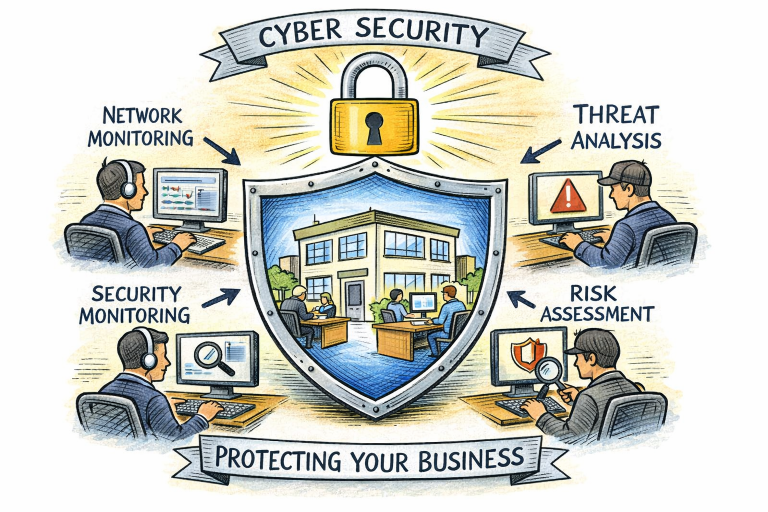
Understanding the Current Threat Landscape
Cyber threats are constantly evolving as bad actors adopt more advanced, automated tactics. Tools like “Phishing as a Service” are now commodifying attacks, making it easier for less-skilled attackers to launch sophisticated campaigns at scale. This shift has resulted in a surge in phishing attempts and the emergence of ransomware groups organized like legitimate businesses, making defense significantly more challenging. Security teams must keep pace with these changes by proactively monitoring trends and attack patterns.
Implementing Continuous Monitoring
Continuous monitoring forms a cornerstone of a proactive cybersecurity program. By leveraging real-time telemetry and advanced analytics, businesses can instantly detect irregular network or user activities that signal a breach or attempted intrusion. This vigilance enables rapid containment of threats before they can cause harm.
Modern solutions employ artificial intelligence and machine learning to create baseline behaviors for users and systems. Any deviation from this norm triggers alerts that allow security teams to take informed, timely action. Incorporating continuous monitoring reduces dwell time and boosts the overall resilience of IT infrastructure.
Furthermore, by integrating automation with monitoring systems, organizations can scale their capacity to respond to thousands of security events daily, reducing human error and oversight. Organizations can also benefit from integrating monitoring outputs into broader security orchestration, automation, and response (SOAR) platforms. By centralizing and automating routine responses, these measures enable security professionals to focus on more complex analysis and higher-impact threats, thereby strengthening and making the overall security posture more adaptive.
Leveraging Threat Intelligence
Operationalizing threat intelligence is crucial for modern cybersecurity teams. By ingesting up-to-date threat feeds and attacker indicators of compromise, organizations can better understand and anticipate what methods are most likely to be used against them. This knowledge empowers teams to proactively adjust defenses, patch vulnerabilities, and block malicious payloads before the attack cycle progresses.
Threat intelligence also plays a pivotal role in supply chain and third-party risk management. Reviewing intelligence reports about vendors, partners, or the industries in which a business operates enables organizations to tailor their protections and alert mechanisms to new and specific threats on an ongoing basis.
Conducting Regular Penetration Testing
Routine penetration testing simulates real-world attacks, providing direct evidence of exploitable vulnerabilities within an organization’s environment. These controlled exercises identify weaknesses before adversaries do. Recommendations from penetration test reports not only address technical flaws, but they also often influence broader security policy and procedures across the organization.
This approach is especially useful for organizations navigating complex compliance requirements or those handling sensitive data. Validating incident response plans via simulated attacks ensures playbooks remain effective and staff can act decisively under pressure.
Fostering a Security-Conscious Culture
Even with advanced tools, human error remains a leading cause of breaches. Embedding security awareness into company culture is essential. Regular training sessions, simulated phishing campaigns, and clear communication of best practices empower staff to recognize and report suspicious activities. Team members at all levels become active participants in defending the organization, reducing the risk associated with inadvertent mistakes.
Cultural transformation also involves transparent leadership and persistent messaging about cyber hygiene, policy updates, and real-world threat scenarios relevant to the business. Enhanced security culture can even encourage greater collaboration across departments, breaking down silos and reinforcing vigilance throughout the company. Employees who are well-informed and regularly updated on threats are much more likely to respond swiftly to suspicious behavior and report potential risks, providing an extra layer of defense that complements technological solutions.
Engaging with Managed Security Service Providers
Many organizations lack the resources for round-the-clock security operations or struggle to keep talent in-house. By working with Managed Security Service Providers (MSSPs), businesses gain access to highly-skilled professionals, advanced threat detection technologies, and incident response expertise. MSSPs can supplement existing internal security, providing continuous monitoring, threat hunting, and rapid response services tailored to organizational needs.
Partnering with these providers is a cost-effective way to maintain robust defenses without overextending internal teams. MSSPs also help keep organizations up to date as attackers and compliance requirements evolve. Leveraging such third-party expertise can also improve regulatory compliance and documentation, offering peace of mind during audits and reducing the complexity of adhering to changing standards.
Conclusion
Adopting proactive cybersecurity response tactics positions modern businesses ahead of the threat curve, enabling sustained growth, operational integrity, and customer confidence. Leveraging a blend of continuous monitoring, threat intelligence, regular penetration testing, organization-wide education, and managed security services gives businesses a proven edge in today’s dynamic cyber landscape.
Discover more from The Cameron Journal
Subscribe to get the latest posts sent to your email.