
Key Takeaways
- Rodents can enter through surprisingly small gaps around rooflines, vents, pipes, and utility connections.
- In Jupiter, FL, warm weather, dense landscaping, and storm-related roof damage can make accessing the attic easier.
- Durable exclusion repairs work best when food, water, clutter, and nesting opportunities are also reduced.
- Fresh droppings, scratching noises, chewed materials, and disturbed insulation may indicate active activity.
- Safe cleanup matters because dry sweeping or vacuuming rodent waste can spread contaminated particles.
For Jupiter homeowners, attic rodent prevention is about more than setting a few traps. Palm Beach County’s warm, humid climate gives mice and rats fewer reasons to go dormant, while heavy rain, tropical storms, and overgrown vegetation can expose weak points in roofs. Early attention to small gaps can prevent a quiet attic problem from becoming damaged insulation, chewed wiring, odors, and costly repairs.
When entry points are difficult to locate, or activity continues after basic repairs, rodent exclusion and proofing services in Jupiter, FL can help homeowners address the structural side of the problem. The goal is not simply to remove an animal, but to close off the routes that would allow more rodents to reach the attic later.
Why Attics Attract Rodents in Jupiter
An attic provides shade, warmth during cooler nights, protection from rain, and quiet areas for nesting. Cardboard boxes, stored fabrics, loose paper, and damaged insulation can all become nesting material. In Jupiter, branches that hang near roofs, vines climbing exterior walls, and gaps created by wind-driven rain may give rodents an easy route from the yard to the eaves or soffits.
Rodents may remain unseen for weeks. Homeowners often first notice faint scratching after dark, a musty odor near an attic hatch, or insulation that looks flattened or pulled apart. Taking these early signals seriously helps limit damage before an infestation expands.
If insulation has been contaminated, compressed, or damaged by nesting, homeowners may also need insulation services in Jupiter, FL, after the exclusion work is complete. Replacing material before the access points are sealed can leave the new insulation vulnerable to the same issue.
Start With a Full Home Inspection
Begin outside and work toward the attic. Walk the entire perimeter during daylight, then use a flashlight to inspect dark corners, roof connections, and utility penetrations. A gap that appears minor at ground level can be a direct route into wall cavities or attic spaces.
Photorealistic candid documentary-style photo of a Jupiter, Florida homeowner inspecting the roofline and soffit of a suburban house with a flashlight during natural daylight, surrounded by lush tropical landscaping, with a small damaged vent screen visible.
Inspection Checklist
- Check roofline vents, gable vents, soffits, eaves, and loose flashing.
- Look for torn screens, missing vent covers, holes, and gnaw marks.
- Inspect where plumbing pipes, cables, electrical lines, and air-conditioning lines enter the home.
- Test door sweeps, garage door seals, attic hatches, and weather stripping.
- Look for droppings, grease marks, shredded nesting material, and disturbed insulation.
- Trim branches and vines that provide a bridge to the roof.
Seal Entry Points With Durable Materials
Soft patching materials alone often fail because rodents can chew through them. Small openings may need steel wool secured with caulk, while larger gaps usually require hardware cloth, metal flashing, metal sheeting, or another chew-resistant repair. Repair loose soffits and cover attic vents without blocking the airflow the attic needs.
Small gaps and holes around a home deserve close attention because mice can fit through an opening about one-quarter inch wide. Inspecting rafters, eaves, doors, foundations, vents, and utility lines helps identify the routes rodents are most likely to use.
Remove Food, Water, and Nesting Sources
Exclusion works better when the property is less inviting. Store pantry items and pet food in durable containers with tight lids, keep trash cans closed, and avoid leaving pet food or water bowls outdoors overnight. Clean grills, pick up fallen fruit, and avoid placing bird feeders close to the house during an active rodent issue.
Outdoor storage also matters. Keep wood, boxes, lawn debris, and unused materials away from exterior walls. In Jupiter’s rainy season, wet leaf piles and thick ground cover can create protected travel paths close to the home. A homeowner may seal one roof gap but still see activity if overflowing trash or outdoor pet food remains readily available.
Use Traps and Bait Carefully
Traps can help manage active rodent activity, but they do not replace repairs. Place them only where children, pets, and non-target wildlife cannot reach them, and follow product directions carefully. Avoid placing poison loosely in an attic, wall void, or accessible outdoor area. A rodent that dies inside a wall or ceiling can create a difficult odor and cleanup problem.
If activity is widespread, rodents are inaccessible, or wiring appears to have been chewed, stop and seek qualified assistance. It is especially important not to seal every opening until you have considered whether animals may still be inside the attic or wall system.
Know the Signs of an Active Infestation
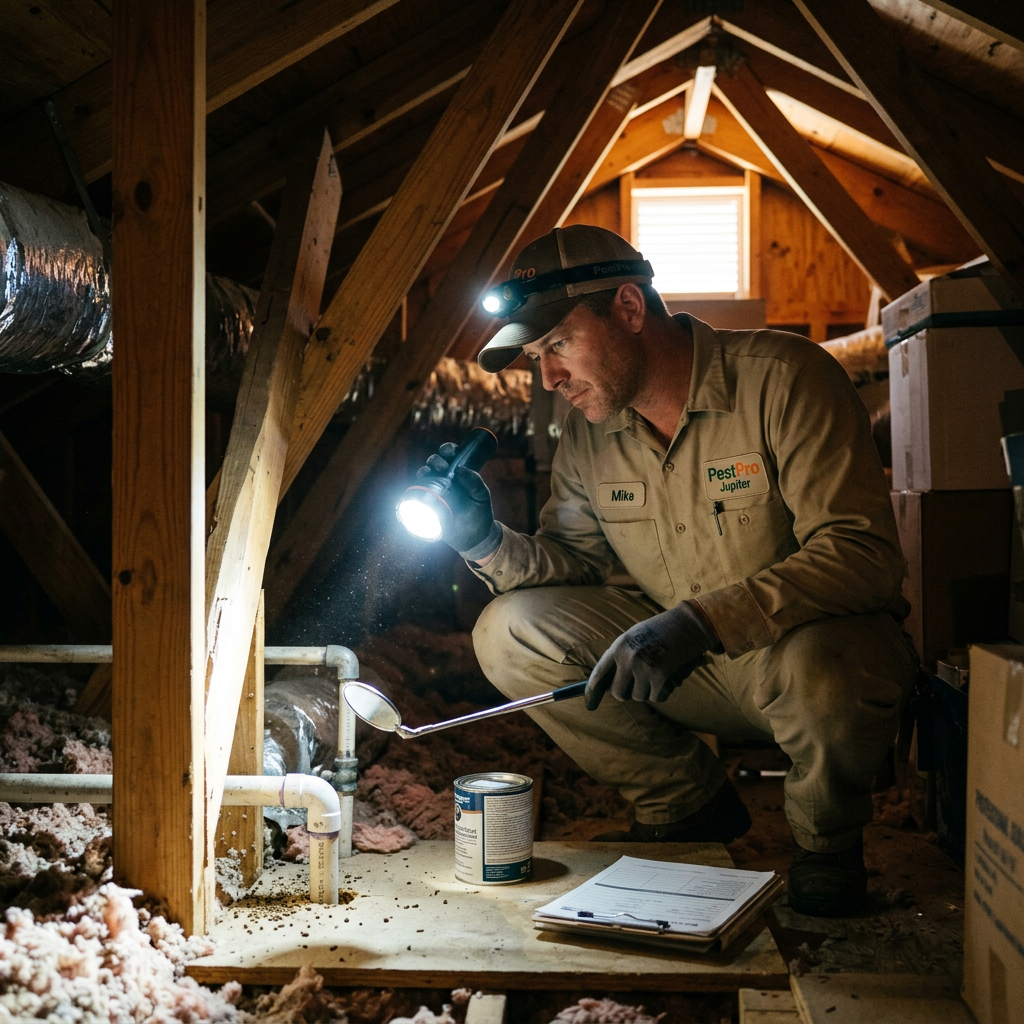
Old evidence may remain after rodents are gone, so look for signs that are new or increasing. Fresh droppings often appear darker and softer than older droppings. New chew marks, scratching sounds at night, recently shredded insulation, strong odors, and fresh nesting material can point to ongoing activity.
Common warning signs include droppings, nesting material, chewed packaging, holes, and stale odors. Photograph damage before removing it, especially if insulation, ducts, or electrical components may need later evaluation.
Clean Rodent Waste Without Spreading Contamination
Do not dry-sweep or vacuum up droppings and nesting debris. Keep children and pets out of the area, ventilate the attic when practical, wear gloves, and wet contaminated material before lifting it. Place waste in sealed bags, disinfect nearby hard surfaces, wash reusable tools, and wash hands thoroughly when finished.
Use extra caution around insulation and wiring. Wet, contaminated, or heavily damaged insulation may need assessment before it is removed or replaced. Never handle exposed electrical wiring without appropriate training.
Common Mistakes To Avoid
- Relying only on scents, repellents, or ultrasonic devices.
- Using expanding foam alone where rodents can chew through it.
- Ignoring roof-level gaps while sealing only ground-level openings.
- Using poison where pets, children, or wildlife may reach it.
- Sealing openings without checking whether animals remain inside.
- Cleaning waste without gloves, ventilation, and wet-cleaning methods.
Create a Seasonal Prevention Routine
Jupiter homeowners benefit from a quick exterior review in spring and fall, plus another inspection after a major storm. Check vent screens, roof edges, seals around garage doors, and any new damage near utility lines. Each month, walk around the home, confirm trash lids close tightly, remove outdoor food sources, and listen for new attic noises.
When To Call for Professional Help
Professional help is appropriate when there is a strong odor, widespread droppings, damaged wiring, repeated activity after repairs, inaccessible nesting areas, or uncertainty about whether the animal is a rodent or protected wildlife. A steady prevention routine, durable repairs, and careful cleanup can keep a Jupiter attic safer, cleaner, and far less appealing to rodents.
Discover more from The Cameron Journal
Subscribe to get the latest posts sent to your email.




