Key Takeaways
- AI and ML are streamlining dispatch processes, reducing manual oversight requirements, and enhancing decision-making.
- IoT devices offer real-time data for actionable insights on fleet performance and safety management.
- Cloud-based platforms enable seamless, remote coordination among all stakeholders in the dispatch process.
- Predictive analytics drive proactive problem-solving and smarter route planning for optimal efficiency.
Table of Contents
- AI and ML in Dispatching
- IoT Enhancing Fleet Management
- Cloud-Based Communication Platforms
- Predictive Analytics for Route Optimization
- Automation of Administrative Tasks
- Improved Safety and Compliance
- Challenges and Considerations
- Conclusion
In the rapidly changing landscape of logistics, technological evolution is ushering in a new era for truck dispatch services. Companies are leveraging digital innovations to enhance efficiency, accuracy, and overall operational effectiveness. For a more comprehensive look at technology-driven dispatch solutions, you can visit our website. The shift toward integrated, data-driven dispatching is not only streamlining workflow but also setting new standards for industry best practices.
This wave of technological transformation is enabling dispatchers to manage fleets more effectively, minimize human error, improve safety, and optimize routes in ways previously unimaginable. The increasing reliance on artificial intelligence, machine learning, IoT, and cloud platforms is shaping the future of logistics, delivering exponential benefits to carriers, shippers, and drivers alike.
AI and ML in Dispatching
Artificial Intelligence (AI) and Machine Learning (ML) are two of the most impactful technologies improving truck dispatching. By analyzing vast data sets in real time, these systems optimize load assignments and match the best trucks to available loads. AI algorithms consider route efficiency, driver preferences, load weights, and historical traffic data to enable precise, prompt decision-making. Automated load-matching not only reduces driver downtime but also increases overall fleet profitability. This technological advancement has revolutionized logistics, enabling faster delivery times and lower operational costs. Companies adopting AI and ML gain a competitive edge by enhancing efficiency and customer satisfaction.
IoT Enhancing Fleet Management
The integration of Internet of Things (IoT) devices within commercial fleets has become a game-changer. Sensors and telematics devices provide continuous, real-time monitoring of vehicle location, engine performance, fuel consumption, cargo temperature, and even driver behavior. This wealth of data provides dispatchers and fleet managers with vital visibility, empowering them to detect problems such as engine faults or unsafe driving habits before they escalate. Proactive vehicle maintenance based on sensor data ultimately helps to boost safety, minimize costly breakdowns, and optimize fuel usage.
Cloud-Based Communication Platforms
Cloud-based technology is breaking down traditional communication barriers between dispatchers, drivers, shippers, and clients. With cloud platforms, everyone involved in the shipping process can access and update job statuses, delivery times, and route information from anywhere with an internet connection. This not only increases transparency but also enables immediate adjustments in the event of unexpected changes or disruptions. Moreover, seamless integration with tools like customer relationship management (CRM) and inventory software ensures both operational efficiency and stronger client relationships.
Predictive Analytics for Route Optimization
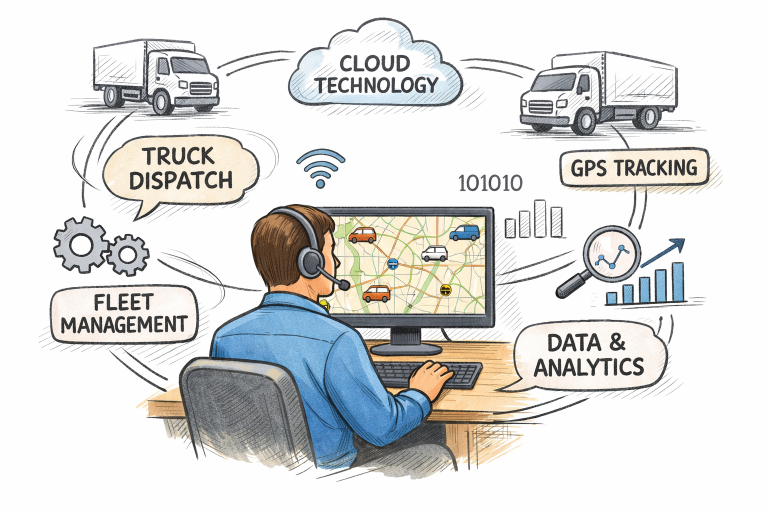
Route planning in modern dispatch services has become increasingly sophisticated, thanks to predictive analytics. By analyzing historical delivery data, real-time traffic updates, weather conditions, and delivery windows, predictive tools recommend the best routes for every shipment. These recommendations help reduce fuel consumption, minimize delays due to road closures or traffic congestion, and improve on-time delivery rates. As a result, companies can optimize their resources more effectively and enhance overall efficiency. Additionally, improved routing can reduce environmental impact by lowering emissions. Carriers using advanced route optimization tools are seeing measurable savings on fuel and labor costs, as well as higher satisfaction levels from clients and drivers.
Automation of Administrative Tasks
The automation of paperwork and compliance-related processes is dramatically reducing the administrative burden on dispatchers. Tasks such as invoicing, documentation management, and compliance reporting can now be processed with minimal human involvement. Electronic logging devices (ELDs), for example, automatically record drivers’ hours of service, ensuring compliance with industry regulations. This automation greatly lowers the risk of errors and penalties while freeing up staff to focus on higher-value activities. Additionally, these technological advancements streamline communication between drivers and management, thereby improving operational efficiency. As a result, companies can greatly improve overall productivity and compliance outcomes.
Improved Safety and Compliance
The rise of technology-driven oversight in dispatch services is also improving road safety. AI-powered monitoring systems analyze driving patterns, issue real-time warnings or recommendations, and alert teams to risky behavior or potential violations. Fleet managers can quickly identify drivers who may benefit from additional training, while compliance features ensure that all documentation is up to date and regulatory requirements are consistently met. These technologies also enable proactive maintenance scheduling, reducing unexpected breakdowns. Furthermore, data collected can be used to refine training programs and improve overall fleet performance. This helps reduce accident rates, liability, and costly fines, benefiting the entire industry and improving public safety.
Challenges and Considerations
Despite the advantages, several hurdles accompany technological transformation. Upfront investments can be substantial, which may deter smaller operators. Resistance to change from employees accustomed to traditional dispatching is another common roadblock. There’s also increased risk as operations become more digitized, especially regarding data security and privacy. Companies must take a strategic approach, combining thorough staff training with robust cybersecurity protocols. The rewards, however, for those who navigate these barriers, include improved efficiency, operational resilience, and staying ahead in a highly competitive market.
Conclusion
Technology is ushering in a new standard of efficiency, collaboration, and safety for truck dispatch services. By adopting AI, IoT, cloud solutions, and predictive analytics, logistics providers are better positioned to deliver consistent, high-quality service. As operations continue to evolve, those who embrace technology and adapt to digital tools will enjoy a competitive edge, improved customer satisfaction, and a safer, more sustainable future for their business.
Discover more from The Cameron Journal
Subscribe to get the latest posts sent to your email.