

Table of Contents
- Smart and AI-Driven HVAC Systems
- Energy Efficiency and Net-Zero Goals
- Electrification and Alternative Energy Integration
- Improved Indoor Air Quality (IAQ) Solutions
- Modular and Prefabricated HVAC Components
- Low-GWP Refrigerants and Regulatory Compliance
- Data-Driven Predictive Maintenance
- Human-Centered HVAC Design
Modern commercial environments increasingly depend on innovative heating, ventilation, and air conditioning (HVAC) solutions. As workplaces demand greater energy efficiency and occupant comfort, advanced HVAC technologies have quickly become indispensable to building success. These new systems also support larger goals, promoting sustainability while lowering operating costs. To learn more about custom commercial HVAC options, visit https://www.tsshvac.com/commercial-services/ for detailed information and tailored solutions.
In recent years, HVAC advancements have influenced every aspect of facility management. Buildings are now equipped to provide healthier indoor air, adapt to evolving energy benchmarks, and comply with regulatory requirements as eco-friendly standards evolve. Facilities managers and business owners are embracing intelligent HVAC designs that go far beyond traditional heating and cooling. The result is a new generation of workspaces that are efficient, resilient, and comfortable by design.
Smart and AI-Driven HVAC Systems
Artificial Intelligence (AI) and the Internet of Things (IoT) are reshaping the way commercial facilities approach climate control. These advanced HVAC systems collect and analyze real-time data, using occupancy sensors, weather predictions, and historical usage patterns to intelligently regulate airflow and temperature throughout the building. As a result, commercial spaces benefit from dynamic adjustments that maximize comfort while conserving energy. Integration with Building Management Systems (BMS) enables facility managers to optimize settings remotely and automatically schedule capital-saving maintenance interventions.
Energy Efficiency and Net-Zero Goals
Pursuing energy efficiency is no longer optional for commercial spaces. The adoption of high-efficiency heat pumps, energy recovery ventilators, and variable refrigerant flow systems demonstrates a commitment to net-zero targets and reduced carbon footprints. These leading technologies lower operating costs and drive sustainability in line with the latest international standards. Not only do businesses save on utility bills, but these advancements support corporate social responsibility goals and appeal to eco-conscious tenants and employees.
Electrification and Alternative Energy Integration
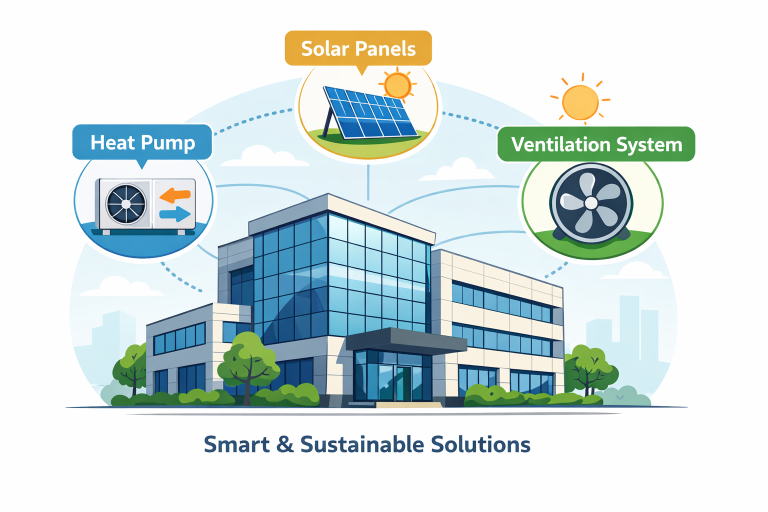
The trend toward electrification is making HVAC systems cleaner and more versatile. Heat pump retrofits provide both heating and cooling with a single, highly efficient unit, ideal for renovations and new commercial installations alike. Integrating solar or other renewable energy sources directly into HVAC operations further reduces dependence on the electrical grid and exposure to rising utility costs. As energy supply becomes more volatile, these integrated solutions offer future-ready stability and long-term savings for property owners.
Improved Indoor Air Quality (IAQ) Solutions
Indoor air quality remains central in the post-pandemic design of modern commercial spaces. Innovations such as advanced filtration, ultraviolet (UV-C) light purification, and demand-controlled ventilation enhance air cleanliness and safety. Components like HEPA filters, MERV-13 or higher filters, and active ionization help mitigate airborne contaminants and allergens, while adaptive ventilation systems automatically increase fresh air based on occupancy levels or rising CO2 concentrations. These upgrades significantly support occupant health and satisfaction while boosting property value.
Modular and Prefabricated HVAC Components
Modular and prefabricated HVAC solutions enable faster project completion, reduced labor costs, and scalable system expansion. These components are built off-site and then assembled on location, minimizing workplace disruption and ensuring quality control. For rapidly changing commercial real estate needs, such flexibility is invaluable. It allows businesses to adjust their climate control infrastructure as they grow or repurpose their spaces without major delays or downtime.
Low-GWP Refrigerants and Regulatory Compliance
Upcoming regulations, such as the American Innovation and Manufacturing (AIM) Act, require commercial systems to transition toward low-GWP refrigerants by January 2025. These environmentally friendly refrigerants help reduce greenhouse gas emissions from HVAC operations. Early adoption ensures compliance with emerging standards and demonstrates industry leadership, while also positioning businesses ahead of possible future regulatory changes.
Data-Driven Predictive Maintenance
Maintenance schedules for older HVAC systems often resulted in unnecessary service calls or equipment failures due to overlooked warning signs. Data-driven predictive maintenance uses sensors to monitor pressure changes, temperature variations, and suspicious system behavior, alerting facilities managers before small problems grow into major malfunctions. This approach extends equipment life, reduces costly downtime, and leads to more efficient budgeting for ongoing operations.
Human-Centered HVAC Design
Placing the occupant at the center of HVAC design has led to innovations such as customized zoning and adaptive controls. Zoning directs temperature and airflow to match actual usage patterns, eliminating hot and cold spots in large facilities. Adaptive comfort settings provide personalized temperature and humidity adjustments for employees, creating an environment that feels more welcoming and helps boost productivity. These changes underscore the larger movement toward creating healthier, more comfortable, and more productive commercial spaces.
Final Thoughts
Modern HVAC solutions are not just technical upgrades but are central to reimagining what commercial spaces can achieve. Businesses that invest in smart, sustainable, and people-focused climate control will realize benefits not only in cost savings and compliance but also in occupant well-being and operational resilience. As these technologies become the new standard, commercial properties have a unique opportunity to build environments that work smarter and support their communities for decades to come.
Discover more from The Cameron Journal
Subscribe to get the latest posts sent to your email.




