

Key Takeaways
- AI streamlines candidate sourcing and screening, reducing time-to-hire.
- Predictive analytics enable proactive talent forecasting and skills-based hiring.
- AI tools help mitigate unconscious bias, promoting fairer recruitment practices.
- The integration of AI into recruitment requires balancing technology with human judgment.
Table of Contents
- AI in Candidate Sourcing and Screening
- Predictive Analytics for Proactive Recruitment
- Reducing Bias in Hiring
- Enhancing Candidate Experience
- Challenges and Considerations
- Future Trends in AI-Driven Recruitment
Artificial Intelligence (AI) is revolutionizing the recruitment landscape, unlocking new levels of efficiency, precision, and fairness. Traditional hiring methods often struggle to keep up with the fast pace and increasing complexity of finding the right talent. However, AI streamlines these processes, providing smarter, data-driven solutions to some of the most pressing challenges in talent acquisition. With tools like AI recruiting, companies can automate routine tasks and gain deeper insights into both candidates and hiring strategies.
The integration of AI into hiring is not just about cost reduction or speed. It promises a fundamental rethinking of how organizations source, evaluate, and engage with talent. From the first job post to final onboarding, AI helps recruiters navigate vast pools of applicants and enables more informed decisions. As companies adapt to this changing environment, understanding the practical and ethical implications of AI-powered talent acquisition has become essential.
Relying on AI for hiring also brings greater consistency to the evaluation process, helping eliminate subjectivity and minimize human error. These digital solutions take recruitment beyond guesswork, turning hiring into a strategic, predictive, and highly responsive function. In addition to transforming internal HR operations, AI enhances the candidate experience by personalizing communication and offering real-time engagement throughout the recruitment journey.
As a result, businesses leveraging AI can build more robust talent pipelines and foster deeper connections with top prospects. Organizations ready to embrace this evolution will be better positioned to compete for scarce skills and navigate an unpredictable labor market. For a closer look at recent advancements and potential ethical considerations, see this Harvard Business Review resource.
AI in Candidate Sourcing and Screening
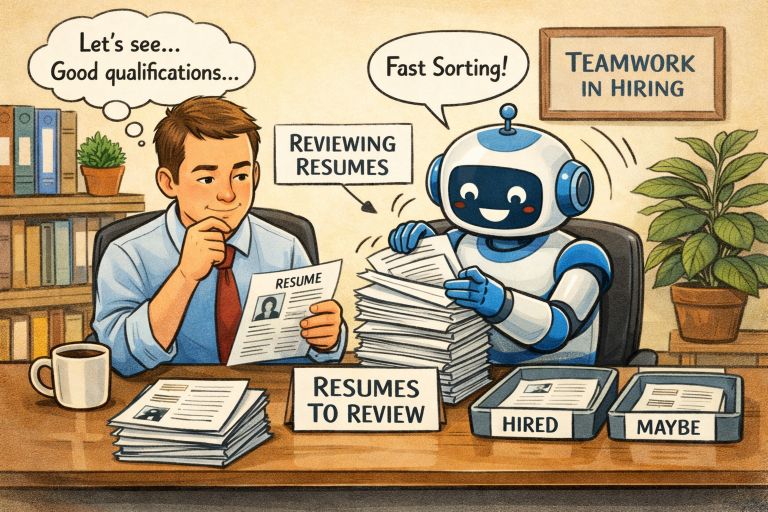
AI-powered platforms are transforming how recruiters identify and evaluate talent. Instead of manually filtering through countless resumes, these tools analyze large datasets to rapidly match job requirements with candidate profiles. Machine learning algorithms can assess experience, education, skills, and even subtle cues in online digital footprints. This allows recruiters to confidently build a shortlist of high-potential candidates in a fraction of the time previously required.
Beyond simple keyword matching, more advanced AI systems examine applicant history and online presence. They uncover passive candidates who may not actively be applying for new roles yet possess the skills a company needs. With these capabilities, AI dramatically improves sourcing accuracy while freeing recruiters to focus on personal engagement and strategic planning.
Predictive Analytics for Proactive Recruitment
AI-driven predictive analytics give organizations the tools to stay ahead of their hiring needs. By evaluating historical talent flows, workforce trends, and industry patterns, these solutions forecast upcoming vacancies and skill shortages. Businesses can then develop proactive hiring pipelines, connecting with qualified candidates before a position is even posted.
This ability to anticipate workforce changes means recruiters are better equipped to fill roles quickly with well-matched candidates. Predictive analytics also encourages a shift from reactive hiring to a skills-based, forward-looking recruitment strategy. As highlighted by the Forbes Human Resources Council, organizations that leverage AI for forecasting can minimize talent gaps and drive overall workforce agility.
Reducing Bias in Hiring
Addressing unconscious bias is one of the most promising benefits of AI in talent acquisition. Human decision-making, even when well-intentioned, can introduce subjectivity that affects diversity and equity in hiring. AI offers a data-driven framework that standardizes candidate evaluation, relying on job-relevant criteria rather than personal factors, to match job requirements with candidates rapidly and to monitor and audit AI systems for potential embedded biases. If not carefully managed, these models could replicate prejudices found in their training datasets. Solutions that are regularly reviewed for fairness, accuracy, and ethical rigor will best enable organizations to build inclusive, balanced teams. Transparency and oversight must remain central to any AI-driven recruitment operation.
Enhancing Candidate Experience
AI technologies play a crucial role in shaping how candidates perceive and interact with employers during the hiring journey. Chatbots and virtual assistants provide instant feedback, scheduling assistance, and personalized communication, making the process smooth and informative for applicants. This results in higher engagement, reduced frustration, and a more positive overall impression of the organization.
By leveraging natural language processing and adaptive algorithms, AI can tailor messages to each candidate’s interests and accomplishments. This degree of personalization ensures that every candidate feels seen and valued, even in high-volume recruitment settings. The result is greater transparency and trust, attracting top talent and improving employer branding in competitive markets.
Challenges and Considerations
Despite its many advantages, AI in talent acquisition also introduces new complexities. Data privacy is a primary concern, and candidates expect their personal information to be handled securely. Organizations must be transparent about data usage and compliant with evolving regulations. Another challenge is ensuring that AI-driven decisions are explainable and auditable, so candidates and hiring managers can trust the process.
The automation of certain HR tasks may lead to fears of job displacement among recruiters and candidates alike. Maintaining a balanced approach that values human insight and emotional intelligence remains crucial. Ultimately, organizations must strive to integrate AI as a complement to, rather than a replacement for, human expertise.
Future Trends in AI-Driven Recruitment
The recruitment sector is poised for further transformation as AI technology evolves. Upcoming innovations include AI-led interviews, deeper analytics for soft skill assessments, and the exploration of blockchain for candidate verification and credentialing. As these tools become more integrated, their ability to drive strategic workforce planning will only expand.
Keeping up with these advances will be essential for organizations seeking a competitive edge. Staying informed and adaptable enables HR teams to continually enhance their hiring strategies, improve outcomes, and meet the changing expectations of both candidates and employers.
AI is rewriting the rules of talent acquisition. By deploying intelligent, responsible solutions, businesses can thrive in a dynamic marketplace, deliver superior candidate experiences, and secure their future with the best possible talent.
Discover more from The Cameron Journal
Subscribe to get the latest posts sent to your email.




