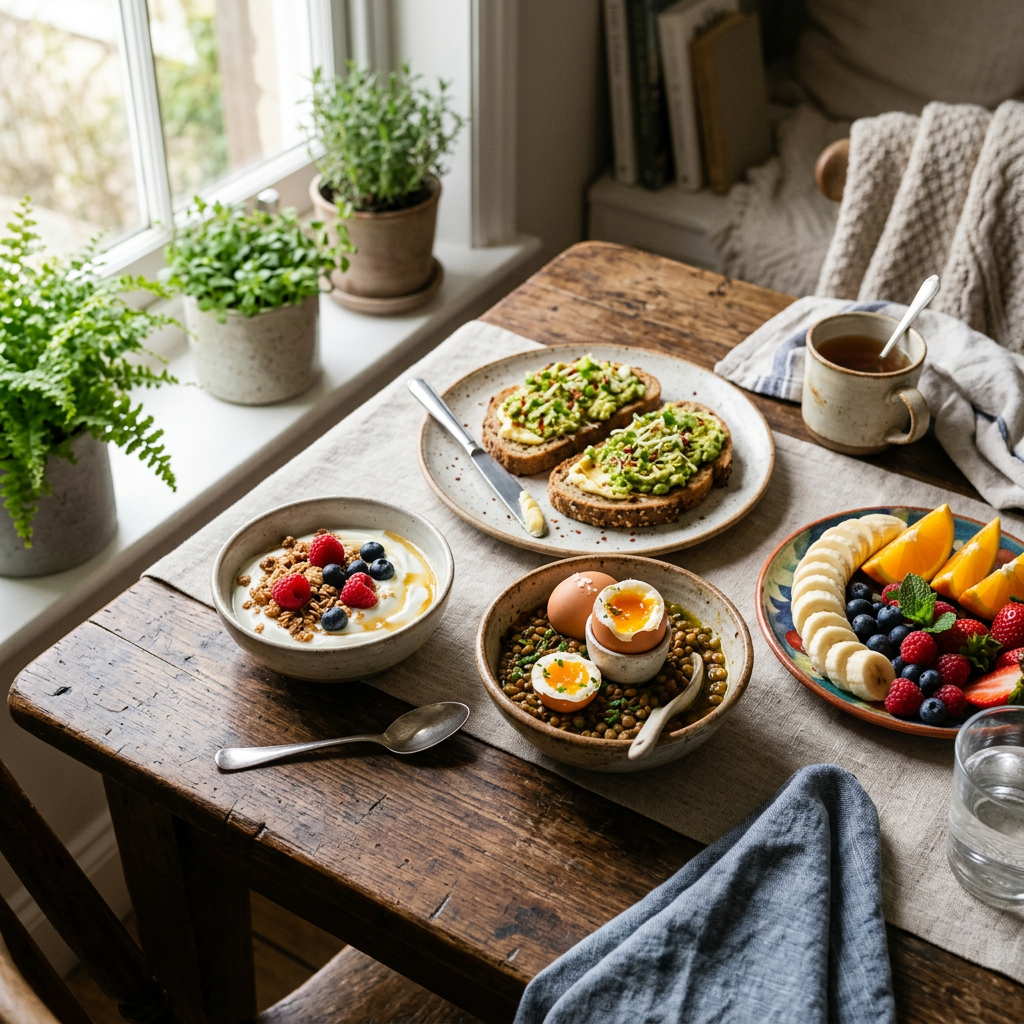
Make room for protein earlier in the day by adding a protein-containing ingredient to the breakfast and lunch you already enjoy. Eggs beside toast, yoghurt with porridge or beans stirred into soup are practical starting points. If you are wondering how to meet your daily protein needs (this is commonly referred to as กินโปรตีนยังไงให้ถึง in Thai), begin with your ordinary routine rather than an elaborate new menu. Dinner can still be delicious without carrying the whole day’s nutritional expectations.
Give Breakfast a Supporting Ingredient
Breakfast often happens somewhere between finding your keys and remembering that the washing is still in the machine. Asking it to become a carefully plated feast is unlikely to help.
Instead, keep its familiar shape and change one component. If you like toast, try eggs, cottage cheese or mashed beans. If you prefer something sweet, pair porridge with milk or serve fruit alongside plain Greek yoghurt.
You do not have to become a savoury-breakfast person overnight. The useful choice is one you enjoy enough to repeat on a wet Wednesday, not just during an enthusiastic Sunday food shop.
Stop Treating Lunch as an Afterthought
Lunch has a habit of becoming whatever requires the least negotiation: a few crackers, yesterday’s vegetables or a sandwich assembled while answering messages.
Give it one clear protein ingredient before choosing the extras. That could be chickpeas, fish, tofu, chicken or lentils. Then add the foods that make it feel like a meal, including bread, rice, vegetables and a dressing you actually like.
A bowl of leftover roasted vegetables becomes a different proposition with butter beans and lemon dressing. A plain jacket potato becomes lunch with tuna or baked beans. Neither requires a fresh culinary identity.
Plan Around the Day You Actually Have
Some mornings allow ten peaceful minutes at the table. Others involve eating with one shoe on. Prepare for both.
Keep a small selection of options that match your habits:
- A tub of yoghurt for mornings when cooking is unrealistic.
- Tinned pulses for quick lunches.
- Eggs for a simple meal when plans change.
- Portions of cooked lentils, stored appropriately, for adding to familiar dishes.
This is not an instruction to buy everything. Choose two or three ingredients you already use, then make them easier to reach. Convenience is often less about buying special products and more about remembering what is available.
Let Flavour Keep the Habit Going
Repetition becomes tiresome when every meal tastes like a task. Change the seasoning before abandoning the ingredient.
Chickpeas can meet lemon and parsley one day, then cumin and roasted peppers the next. Yoghurt can accompany fruit at breakfast or become a savoury herb dressing at lunch.
Think in combinations rather than isolated “protein foods”. Enjoyment matters because a realistic eating pattern needs to survive busy weeks, changing appetites and the occasional forgotten shopping list.
Give Dinner Some Breathing Space
Moving some attention towards breakfast and lunch is a planning choice, not a competition to eat the most protein. Individual needs vary, and anyone following a medically prescribed diet should seek personalised advice before making changes. For more guidance on fitting protein into your routine, explore Thai Otsuka Nutrition’s protein timing guide and choose one manageable breakfast or lunch change to try tomorrow.
Discover more from The Cameron Journal
Subscribe to get the latest posts sent to your email.