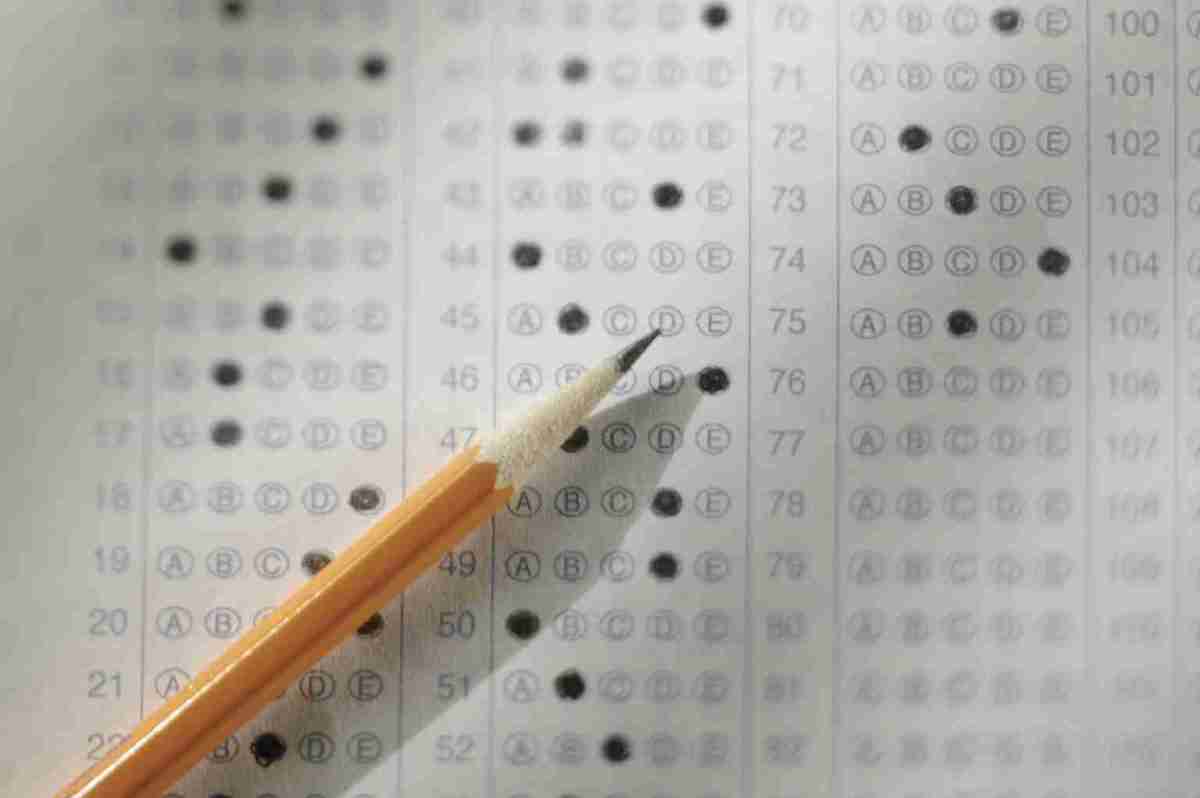
I always enjoy when a reader writes in with a question that I can turn into an article! This reader has contacted me a few times about standardized tests. They are taking some tests in the near future and wanted to know how I handled the perils of standardized test taking. Being homeschooled as I was, I had it easier than most. I was spared the constant testing that regular school kids went through. My first big standardized tests came in grade school but I really didn’t have to revisit testing again until high school when I had to take the ACT to get into college. I then had to revisit the standardized test to get my GED (my college was uptight) and once more for the GRE to get into graduate school. I only every studied for the GRE and I didn’t study as much as many of my friends. I bought a book, I read it, worked with a few friends and passed with an excellent score.
I’ve taken these exams, scored well, and survived the rigor of twice-a-semester testing in Political Science and I have a few secrets I’m willing to share.
1. Relax
This is the first rule because it is the most important. Too often nerves cause people to just go blank. The first thing to do is relax. When I was taking the GRE to get in grad school, I knew I needed to do well. My GPA wasn’t the greatest and so I needed a good score to prove I would be a successful student. The first time I went to the testing center I could not find the building and I was late. You can’t be late for this test (like airplanes their don’t wait) and so I had to reschedule and pay again. The next time I went I scheduled it in the afternoon and I spent the morning getting a massage and a facial. I was loose and relaxed and did much better. I’m not saying you need hit the spa before your test, but you do need to relax. Wear easy clothing, comfy shoes and make sure you’re feeling great. You might want to keep Advil/Tylenol/Aleve nearby and keep a bottle of water handy. You want to feel the absolute best that you can. This also includes a great night’s sleep which goes into my next point.
2. Prepare
I had a college professor who always reminded us that the harder we worked the luckier we got; he was absolutely right (shout it out Dr. Blair!). While I like to think that my classical music mixes that I made for him helped me pass his class, I also made sure that when test day came (and there were only 2 a semester so you had to get it right) that I had read up on the material, knew what I needed, and that I had my ducks in a row so to speak. I’m a big fan of making study plans and planning out what you’re going to study on what days. Most standardized tests have books and other materials that help you understand the material. Buy one and start by understanding the parts of the test, what they are called and then plan on how you intend to study over however long you might need to learn the test and the knowledge required. This is crucial in large tests. They often take hours, have multiple parts, and often need months to prepare. Don’t get overwhelmed by how much you need to know: break it down and have a study plan. That will get you through. I did not find joining a group to be terribly helpful but many people find those helpful. I had a few friends that I studied with from time to time. If being a group is helpful, then engage in one and be a participant who shows up, talks about the material and has a plan. If anything, you might help others.
3. Start with what you know
It’s test taking day! Congratulations, you’re here. The simple fact that you’ve showed up is significant. Now, to the test. In each section that you’re doing get a lay of the land. Look at all the questions they allow you to (each test has different rules) and see what you’re up against. Start by answering each question you know the answer to and eliminate those first. This also helps with time management. Many tests are designed not to be entirely completed in the time allotted. You can get farther by starting in this way. Then, focus on the next tier of questions, the ones you think you might know, these will require brain power but less than the ones that you really have no clue about. Save those for last. That way, even if you run out of time you’ve answered the bulk of the questions and you’ll get scored on at least that. If you are so fortunate as to have completed the section and you have some time to kill, check back on your answers starting in reverse order. Start with those gnarly ones you didn’t know. See if anything new comes to you and then proceed to make sure that you’ve done the best you can. Once you’ve completed a section, let it go, there is nothing more you can do about it. Focus on the next section.
4. Use all your resources
Many people don’t use the little things that they give you like the extra sheets of paper or margins of the paper on which you can work things out, write down quotes and formulas you need to know and other important data. Use all your resources! I can’t stress that enough! Even if you just outline what you’re writing in an essay or writing down every formula you remember for a math section, use those resources. Whatever you can use that is allowable, make use of it however you can. You can even do a little quick planning on what questions you intend to answer and in what order. If you need to try out ideas and deduce an answer, use your resources to do that. The worst thing a test proctor can do is collect unused extra paper. Don’t be that test-taker.
I hope this helps for all of those who are looking at taking big tests in the coming months. Have questions? Comment below or catch me on social media!
Discover more from The Cameron Journal
Subscribe to get the latest posts sent to your email.