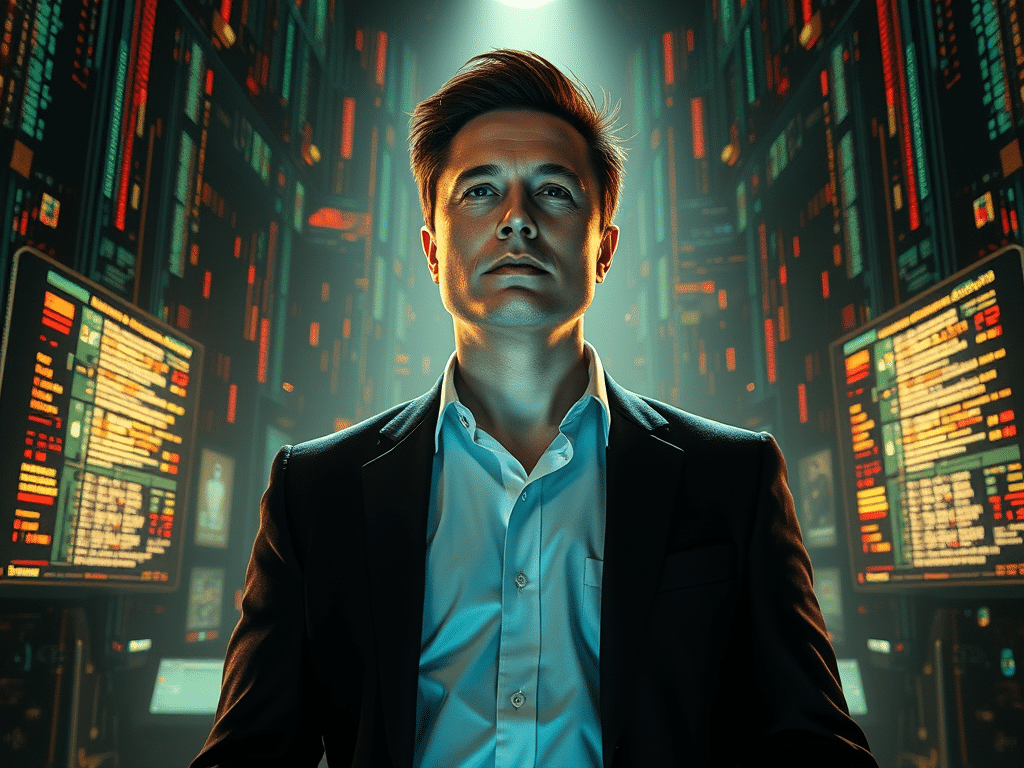
We have a certain view of Silicon Valley: the air buzzing with innovation and dreams of changing the world through lines of code. Fast forward two decades, and I’m watching those same dreamy-eyed coders morph into would-be rulers of our digital destiny. None embody this transformation more than Elon Musk.
Musk isn’t just another tech mogul with delusions of grandeur. He’s a force of nature, reshaping our societal landscape with the same relentless drive he used to revolutionize electric cars and private space flight. But here’s the rub: his vision for society isn’t a gentle nudge towards progress. It’s a sledgehammer to the foundations of democracy as we know it.
From Code to Control: The Tech Titan’s Playbook
Silicon Valley has always had a God complex. I’ve lost count of the times I’ve heard a startup founder claim they’re “making the world a better place” while hawking yet another food delivery app. But Musk takes this to a whole new level. He doesn’t just want to disrupt industries; he wants to rewrite the rules of society itself.
What sets Musk apart? His South African roots offer a unique lens on societal structures. Add to that a hefty dose of family wealth, and you’ve got a man who’s never really played by the same rules as the rest of us. Unlike many Silicon Valley success stories, Musk didn’t invent groundbreaking tech. His superpower? Muscling into existing organizations and reshaping them in his image.
The Free Speech Paradox
Musk’s takeover of Twitter (now X) wasn’t just a business move. It was a power grab for the control of public discourse. He champions free speech while simultaneously wielding the ban hammer against voices he disagrees with. It’s a masterclass in doublethink that would make Orwell’s head spin.
This contradiction reveals a stark truth about power in our digital age. Those who control the flow of information shape reality itself. Musk has more influence over public opinion than newspaper tycoons of old could have ever dreamed. He’s not just changing the game; he’s rewriting the rulebook.
The Illusion of Tech Salvation
I’ve watched as the public’s perception of tech leaders has shifted over the years. Once seen as quirky innovators, they’re now revered as potential saviors of society. It’s a dangerous illusion. Tech can’t (and won’t) solve all our problems. But Musk has tapped into this collective delusion, positioning himself as the visionary who can fix everything from traffic jams to interplanetary travel.
This messianic tech-bro image is a smokescreen. Behind it lies a blueprint for a society that looks suspiciously like a technocratic oligarchy. Musk’s version of democracy? It’s only as democratic as it needs to be to keep the masses placated while he and his ilk pull the strings.
The MAGA-Tech Alliance: A Marriage of Convenience
One of the most fascinating aspects of the Musk phenomenon is how he’s managed to unite two seemingly disparate groups: tech enthusiasts and political conservatives. It’s a coalition that would have been unthinkable a decade ago.
Musk is accomplishing what the GOP has long dreamed of but could never push through Congress: a wholesale dismantling of the administrative state. To his MAGA supporters, he’s a crusader redirecting government resources to “real Americans.” To his critics, he’s dismantling crucial public institutions. The truth, as always, is messier and more nuanced than either side admits.
Echoes of the Past, Shadows of the Future
As I watch Musk’s machinations, I can’t help but draw parallels to other moments in history when media control shaped public discourse. It reminds me of Roger Ailes and the rise of Fox News, but with a global, digital twist. There are even echoes of state media control in the late Soviet era, albeit draped in the flag of corporate capitalism.
The implications for future generations are profound and unsettling. Musk isn’t instituting outright censorship. That would be too obvious, too easy to resist. Instead, he’s creating an environment where certain opinions and worldviews are subtly amplified, while others are quietly smothered. It’s mind control for the 21st century, and it’s happening right under our noses.
The Road Ahead: Vigilance in the Face of Technocracy
As I reflect on Musk’s grand plan, I’m struck by the enormity of the challenge we face. How do we preserve the core tenets of democracy in an age where a tweet can move markets and shape global policy? How do we ensure that the promise of technology serves all of society, not just the privileged few?
There are no easy answers. But the first step is awareness. We must see Musk and his fellow tech titans for what they are: not infallible visionaries, but flawed human beings wielding unprecedented power. We must question their motives, challenge their decisions, and hold them accountable.
The future of our democracy may well depend on our ability to resist the siren song of technocratic utopianism. Musk’s vision for society is seductive in its simplicity. But real progress, real democracy, is messy, complicated, and hard-won. As we navigate this brave new world, let’s not forget the values that got us here: equality, justice, and the radical idea that every voice matters – not just the loudest or the richest.
The battle for the soul of our digital democracy is just beginning. And make no mistake, it’s a battle we can’t afford to lose.
Discover more from The Cameron Journal
Subscribe to get the latest posts sent to your email.