Most people assume nightlife means bars, clubs, or a restaurant that takes too long to get a table. But the hours between 8 PM and midnight belong to something else entirely: the city stripped of its daytime noise, its landmarks lit differently, its hidden spaces suddenly accessible. Here are five ways to use those hours properly.
Book a Heritage Landmark Experience
Reclaimed industrial sites provide an experience that most night-time venues cannot and that is history that you can physically feel. After everybody goes home for the night, they stop being what they are supposed to be and transform instead into something more like a stage set. The lights go down and the scale of the building is laid bare. The tiny, intricate aspects of engineering that you’d absentmindedly walk straight past at midday suddenly take your breath away.
A battersea power station tour is a good example of how this works when it’s done well: you’re moving through original 1950s engineering infrastructure with a glass of champagne in hand, getting the kind of access that simply doesn’t exist during peak hours. It’s not a museum visit and it’s not a bar night. It sits somewhere in between, and that’s exactly why it works.
This model has expanded across most major cities. Power stations, waterworks, printing houses, old exchange buildings, the ones that got through demolition are now some of the most interesting venues available for evening experiences.
Go to a Museum “Lates” Event
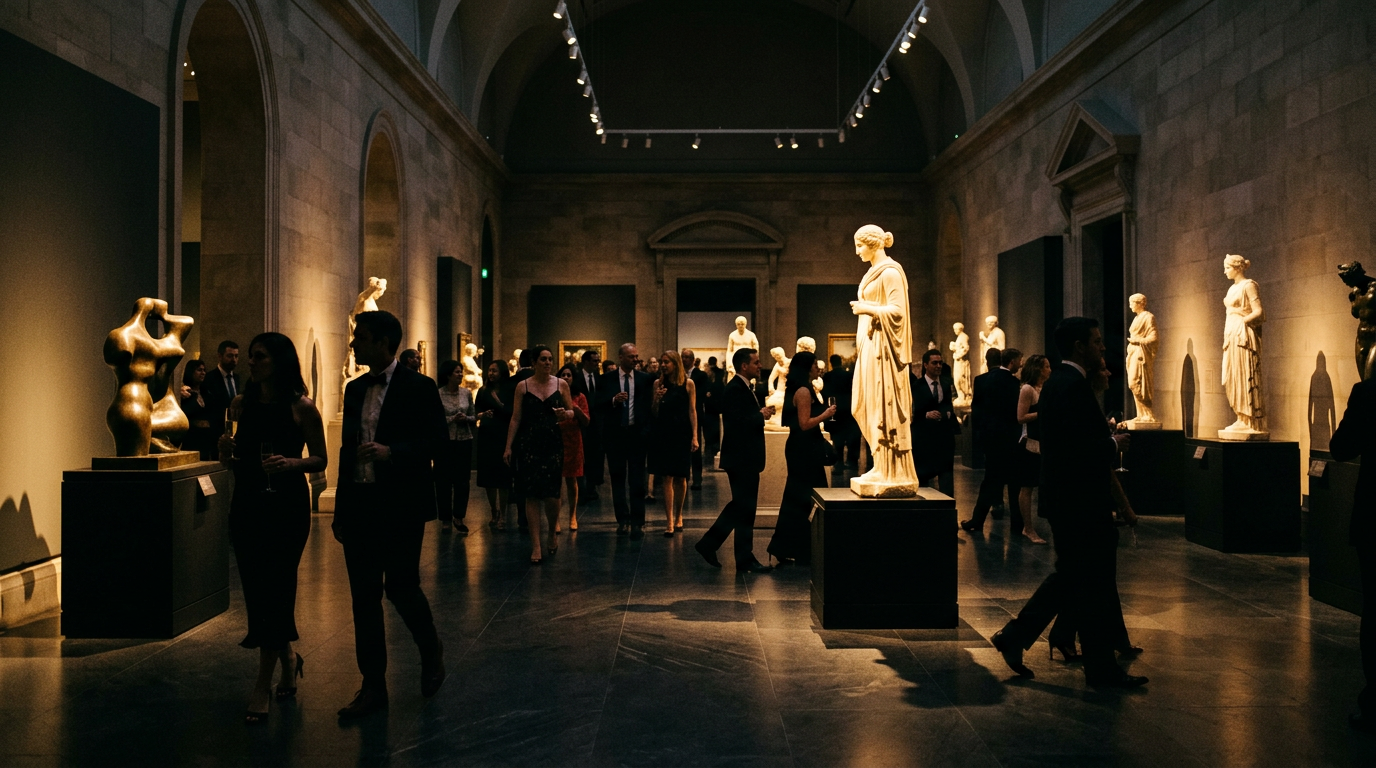
Most major museums and galleries organize late-night events, where one evening a week or month, the doors are left open, a DJ is invited to play somewhere in the corner, and the permanent collection remains open to visitors. The format has evolved a lot in the last ten years.
These are not a simple “museum, but open later” type event. The better ones are programmed properly, with specially designed drinks, soundtracks adapted for specific exhibitions or artworks, and sometimes even performances brought in or commissioned in response to what is on the walls. You get the cultural experience and the social one without the sensory overload of a club or the expense of a formal event.
The night-time economy is now worth about £66 billion to the UK, and the most rapidly growing element of that is exactly this kind of non-dance cultural experience (Night Time Industries Association). You can see the effects of that on how the institutions are using the space.
Take an Architectural Tour After Sunset
Guided architectural tours run in daylight hours by default, which is a genuine waste. Harsh afternoon light flattens facades and washes out detail. After dark, the same buildings look completely different, dramatic uplighting, long shadows, the city’s grid suddenly readable in a way it isn’t when you’re just trying to get somewhere.
Art Deco in particular rewards this treatment. The stepped profiles, the metalwork, the bas-relief panels above doorways that nobody looks at in the daytime, all of it reads differently at 9 PM than it does at 2 PM. Several cities now run specific night architecture walks with guides who know which buildings are lit well and why.
This is also a genuinely social format. You’re walking, you’re talking, you’re stopping at specific points. It’s structured enough to feel like an event but relaxed enough that conversation happens naturally.
Join an Evening Workshop in a Historic Setting
A cocktail masterclass is an easy example, but really, the concept applies to far more than mixed drinks. For example, evening classes in heritage locations now constitute a mini-industry of their own, with offerings ranging from letterpress workshops and glassblowing classes to wine schools. And the venue does a lot of heavy lifting here, there’s something fundamentally different about mastering a new skill in a 19th-century warehouse or a converted Victorian schoolroom that’s difficult to describe until you’ve tried it for yourself.
The social aspect is different, too, from a bar. You’re engaged in a bit of physical activity, you’re all involved in the same task, and the chat is usually better because there’s no need to compete with background music. It’s far easier to engage with a group of strangers when you can gather round and watch each other screw up every once in a while.
Book these for the evening and treat them as a lead-in though, and you miss the point. They’re far more enjoyable when taken as your main event for the night.
Walk the Waterfront Late
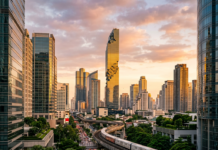
You don’t have to book anything for this one. Most cities with a major river or harbour will have a waterfront path, and they’re genuinely a new experience after dark, the lit bridges, skylines reflecting in the water, the near-empty promenades that are heaving with tourists and joggers during the day. The pace of a late riverside walk is its own recommendation.
Pair it with a viewpoint, if there’s one that’s open late – rooftops, an elevated walkway, high-floor bars with serious views. “Look at the skyline from on high at night” sounds like a generic tourist thing to do, but looking down at a city’s layout with the streets practically magnified by all the lights gives you a sense of orientation that day visits don’t.
It’s not that the city’s real self is hidden. It’s just that it surfaces when the people who are only there to get something done have gone home. These five are a good place to start.
Discover more from The Cameron Journal
Subscribe to get the latest posts sent to your email.