
Table of Contents
- How Much Hair Shedding Is Normal?
- Common Triggers Behind Extra Shedding
- How Stress and Sleep May Affect Hair
- Hormonal Shifts Across Different Life Stages
- Nutrition and Hair Health
- Hair-Care Habits That May Add Strain
- Hair-Loss Patterns to Watch
- A Simple Hair-Health Routine for 2026
- When to Speak With a Health Professional
- Final Thoughts
Finding more strands in the shower, on a pillowcase, or wrapped around a brush can be unsettling. Hair shedding is often a normal part of the growth cycle, but a clear change in volume or scalp coverage is worth noticing. Products such as Nutrafol for women may be part of a broader hair-wellness routine for some people, but understanding the possible reasons behind shedding is the most useful first step.
Women can experience hair changes for many reasons, including stress, illness, hormonal shifts, nutrition changes, inherited patterns, medication, and repeated tension from styling. This guide can help you recognize patterns, reduce avoidable strain, and know when it is time to speak with a healthcare professional.
How Much Hair Shedding Is Normal?
Hair naturally moves through growth, transition, resting, and shedding phases. Losing some hair each day does not automatically mean something is wrong, especially if new hairs are growing in and your overall density looks unchanged. A busy wash day can also make normal shedding seem more dramatic when several days of loose strands come out at once.
What matters more is a noticeable shift. Pay attention if your ponytail feels thinner, your part appears wider, the scalp is more visible, or shedding seems sudden and persistent. Taking photos of your part and hairline once a month, in the same lighting and from the same angle, can make gradual changes easier to identify.
For a helpful overview of signs, causes, and care considerations, see the Mayo Clinic’s guide to hair loss. It notes that hair loss may be temporary or permanent and may be linked to genetics, hormonal changes, health conditions, stress, medications, or hairstyling practices.
Common Triggers Behind Extra Shedding
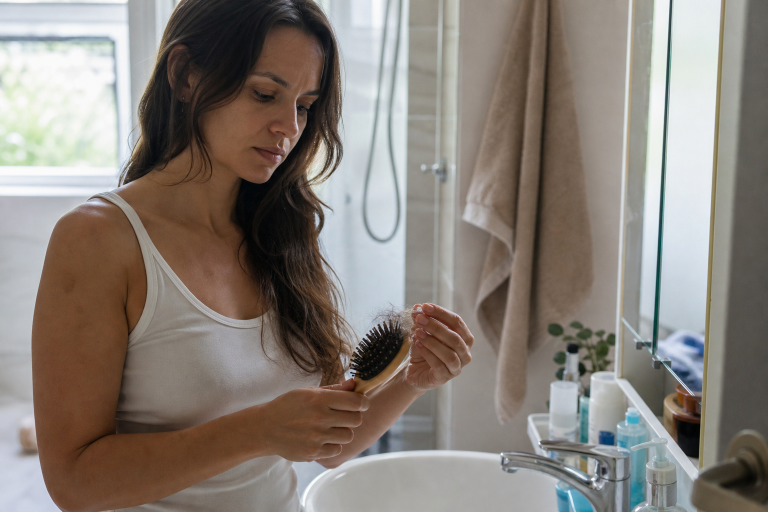
Extra shedding does not always have one simple explanation. Sometimes several changes occur at once, such as a restrictive diet during a stressful period, a new medication after an illness, or postpartum hormone changes combined with disrupted sleep.
- Major emotional stress, grief, work strain, or caregiving pressure.
- Physical stressors, including surgery, illness, high fever, or infection.
- Rapid weight loss or a substantial reduction in calorie intake.
- Pregnancy, childbirth, perimenopause, menopause, or thyroid changes.
- Low intake or absorption of important nutrients.
- Some prescription medicines or supplements.
- Tight hairstyles, extensions, repeated pulling, heat, or chemical processing.
- Inherited female-pattern hair loss.
How Stress and Sleep May Affect Hair
Physical or emotional strain can sometimes push more follicles into a resting phase. The resulting shedding may not show up immediately. Instead, it can become noticeable weeks or months after the stressful event, which makes the connection easy to miss.
Stress is not the only explanation for hair loss, and it should not be used to dismiss ongoing symptoms. Still, regular meals, light movement, relaxation exercises, social support, and a reasonably steady sleep schedule can support overall health during a demanding period. The Cleveland Clinic’s explanation of stress-related hair loss describes why temporary generalized shedding can follow a physical or emotional shock.
Hormonal Shifts Across Different Life Stages
Hormones can influence hair growth, texture, and density. After childbirth, many women notice increased shedding as pregnancy-related hormone levels shift. This commonly improves over time, but persistent or severe loss should be discussed with a clinician.
Perimenopause and menopause may also coincide with a wider part, thinning near the crown, or changes in texture. Polycystic ovary syndrome can be associated with scalp hair thinning in some women. At the same time, thyroid conditions may contribute to shedding alongside symptoms such as fatigue, weight changes, temperature sensitivity, or menstrual changes. A qualified clinician can help determine whether testing is appropriate.
Nutrition and Hair Health
Hair growth depends on adequate overall nutrition, not one “miracle” food or supplement. Build meals around protein sources such as eggs, fish, poultry, tofu, beans, and lentils. Include iron-containing foods, such as leafy greens, legumes, meat, and fortified grains, along with foods that provide zinc, vitamin B12, vitamin D, and healthy fats.
Restrictive diets and rapid calorie reduction can make it harder to meet nutritional needs. Rather than guessing which supplement is needed, ask a healthcare professional whether blood tests make sense for your situation. High-dose supplements can cause side effects or interact with medications, particularly during pregnancy or breastfeeding.
Hair-Care Habits That May Add Strain
Hair-care changes cannot address every cause of thinning, but they can reduce unnecessary breakage and tension. Consider these practical adjustments:
- Choose looser ponytails, buns, braids, and protective styles.
- Limit frequent use of high-heat tools and follow chemical-treatment directions carefully.
- Use a wide-tooth comb and detangling product on wet hair.
- Work through knots gently, beginning at the ends.
- Use shampoo and conditioner that suit your scalp and hair texture.
- Protect hair and scalp from prolonged sun exposure.
Hair-Loss Patterns to Watch
Describing what you see can help a professional assess the issue. Diffuse shedding occurs across the scalp. A widening part or thinning at the crown may suggest a pattern that differs from breakage. Receding edges can occur with repeated tension, while round or sharply defined bald patches need prompt attention. Broken hairs may indicate damage rather than hair shedding from the root.
Make notes about when the change began, recent illnesses or major life events, new medications, and symptoms such as itching, pain, redness, flaking, or scaling.
A Simple Hair-Health Routine for 2026
- Track the pattern. Take consistent photos and note whether shedding is improving, stable, or worsening.
- Review recent changes. Consider illness, stress, childbirth, diet shifts, and medication changes.
- Build balanced meals. Aim for regular meals with protein, produce, whole grains, and healthy fats.
- Reduce mechanical stress. Use gentler styles and cut back on repeated heat and pulling.
- Set a review point. Arrange an evaluation if the issue continues, worsens, or causes concern.
When to Speak With a Health Professional
Seek professional guidance for sudden or rapid loss, visible bald patches, scalp pain, swelling, redness, heavy scaling, eyebrow or eyelash loss, or shedding paired with fatigue, weight changes, irregular periods, or other new symptoms. A primary-care clinician or dermatologist can review your history, examine your scalp, and decide whether blood work or other tests are needed.
Final Thoughts
Hair shedding in women can have many possible causes, and it is rarely helpful to assume the answer right away. Start with a calm review of recent health changes, stress, nutrition, medication, hormones, and styling habits. Small routine changes may reduce avoidable damage, while sudden, persistent, or distressing hair loss deserves timely professional care.
Discover more from The Cameron Journal
Subscribe to get the latest posts sent to your email.