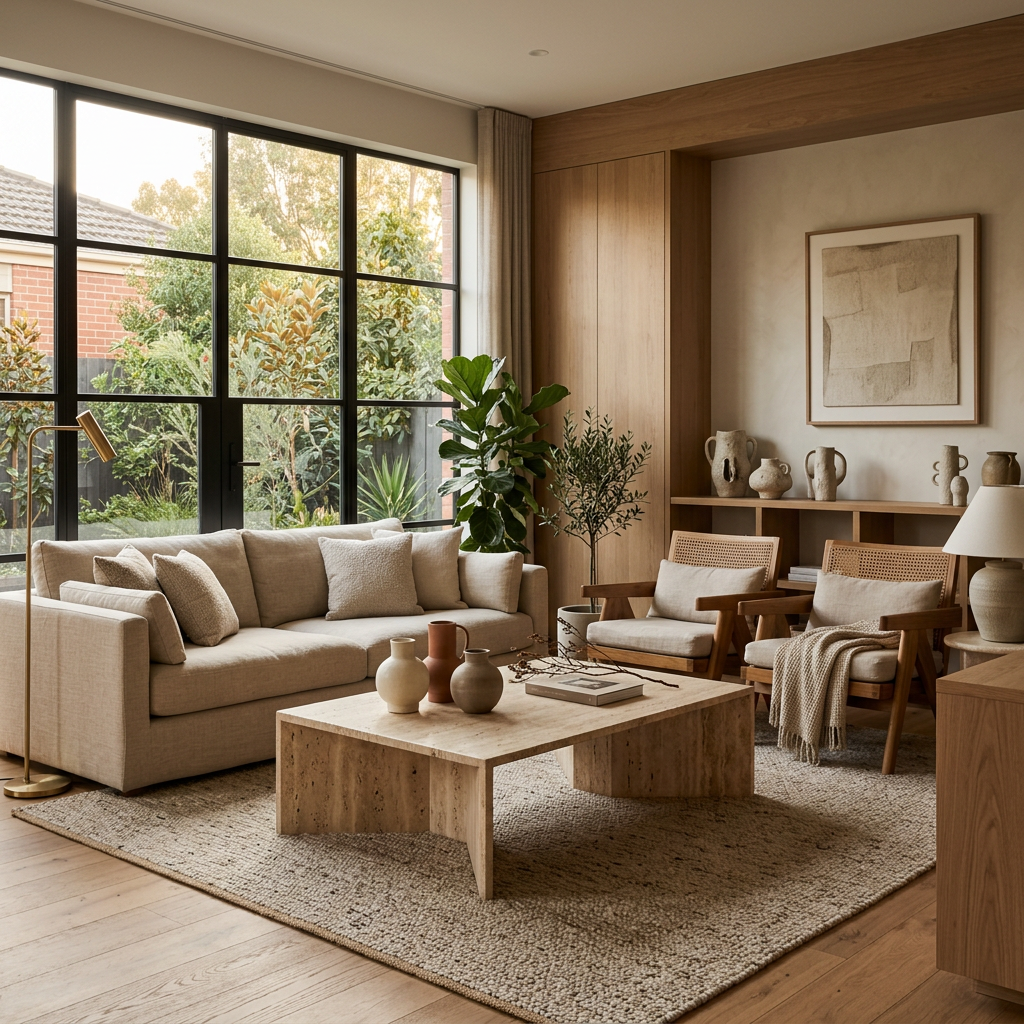
Key Takeaways
- Choose travertine furniture according to the room’s scale, purpose, and daily use.
- Measure carefully, because stone pieces have both visual presence and substantial weight.
- Balance travertine with softer materials such as timber, linen, wool, and textured upholstery.
- Expect tonal variation, small pores, and movement in the stone surface.
- Clean gently, wipe spills promptly, and confirm the maker’s sealing and care advice.
- Use outdoor travertine only where the piece and its finish are suited to local exposure.
Travertine furniture brings a grounded, quietly luxurious quality to interiors in Melbourne, Victoria. Its warm cream, sand, beige, and grey tones sit comfortably beside the timber floors, soft textiles, and natural light found in many contemporary apartments, Victorian renovations, and coastal-inspired homes. A well-proportioned travertine console table can give an entry, living room, or dining area a sculptural focal point without relying on busy decoration.
The appeal lies in character rather than perfect uniformity. Travertine is a form of limestone deposited by mineral springs, and its natural pits, veining, and tonal shifts make every piece slightly different. When selected thoughtfully, it feels enduring rather than trend-led, especially in homes that favor warm neutrals and tactile finishes.
Why Travertine Works in Melbourne Homes
Travertine has enough visual weight to anchor an open-plan room, but its pale, matte-looking surface can still feel calm and approachable. This makes it a natural fit for organic modern, Mediterranean, Japandi, coastal, and contemporary interiors. In a compact inner-city apartment, a small pedestal side table may be all that is needed. In a larger Victorian home, a substantial dining table or low coffee table can help define a generous room.
Melbourne’s changeable light is another reason to view the stone in person, where possible. A piece that appears cool in a bright showroom may look warmer beside oak cabinetry, textured plaster, or afternoon light at home.
How to Choose the Right Piece
Start with the function. A coffee table in a family lounge needs enough clear space around it for movement. A dining table will encounter plates, glassware, and regular cleaning. A console may receive keys, bags, flowers, and framed objects. Consider how the surface will actually be used before deciding on its size, shape, and finish.
Questions to Ask Before Buying
- How frequently will the furniture be used?
- Will drinks, food, cosmetics, or water sit directly on the stone?
- Is the floor level suitable for the piece’s weight?
- Can the item pass through doorways, hallways, stairs, or a lift?
- Is the surface honed, polished, filled, sealed, or more naturally open?
- What care instructions does the maker provide?
Match Furniture to the Room
Stone furniture can look heavier than its measurements suggest, so planning the footprint matters. Before ordering, use painter’s tape or flattened cardboard to mark the proposed size on the floor. Walk around it, open nearby doors and drawers, and imagine carrying laundry, dining chairs, or groceries through the space.
Suggested Planning Steps
- Measure the room, entry points, and delivery route.
- Mark the piece’s footprint and surrounding clearance.
- Check chair movement around dining tables and easy access around coffee tables.
- Review the layout from the doorway and from seated positions.
- Confirm delivery details before finalizing the order.
A large slab table might dominate a narrow living room, whereas a tiny side table can vanish in a spacious open-plan space. The aim is to create a presence with enough breathing room.
Style Travertine with Other Materials
Contrast prevents a stone-centered room from feeling hard or overly formal. Pair the smooth, mineral quality of travertine with materials that introduce warmth, softness, or reflection.
- Timber: Oak, walnut, and darker-stained woods add warmth and depth.
- Linen and wool: Curtains, rugs, and upholstery soften the edges of stone furniture.
- Brushed metal: A lamp or hardware in aged brass, bronze, or black metal adds a clean counterpoint.
- Glass: Clear glass lighting or accessories can make a smaller room feel less crowded.
- Ceramics: Handmade vessels introduce color, shape, and a relaxed, lived-in quality.
- Leather: A leather chair or bench can create a richer, more grounded palette.
Compare Colors, Finishes, and Edges
Not all travertine reads the same. Light tones can feel airy and coastal, while deeper beige or brown tones create a more dramatic, architectural effect. Honed surfaces tend to appear softer and less reflective than polished ones. Filled stone may look more uniform, whereas open pores make the natural texture more visible.
Also consider the edge profile. Rounded or bullnose edges can soften a family room, while square or sharply sculpted edges suit a more minimal setting. Request samples or detailed images and assess them in daylight and evening lighting before committing.
Build a Simple Care Routine
Travertine care is most manageable when it becomes routine. Because calcareous stone can be sensitive to acids, mild, non-acidic cleaners are recommended for natural stone. Always follow the product supplier’s advice, particularly if the stone has been sealed or filled.
Simple Care Steps
- Dust with a soft, dry cloth.
- Blot spills promptly rather than spreading them across the surface.
- Use a soft, damp cloth and a suitable mild cleaner when needed.
- Dry the surface after cleaning.
- Use coasters, placemats, trays, and felt pads for everyday protection.
- Seek professional advice before using sealers, polishes, or stain treatments.
Mistakes to Avoid
- Buying before measuring the room and delivery access.
- Assuming all stone finishes require identical care.
- Using acidic, abrasive, or strongly alkaline household cleaners.
- Leaving citrus, wine, wet glasses, cosmetics, or food residue on the surface.
- Dragging décor, appliances, or heavy objects across the stone.
- Expecting natural color and texture to be completely uniform.
When Outdoor Use Makes Sense
Outdoor travertine can work well in a covered courtyard, a sheltered terrace, or a protected entertaining zone, provided the furniture is specified for outdoor use. In Melbourne, consider rain, wind-driven moisture, direct summer sun, drainage, and the possibility of cold, damp conditions. Avoid placing a stone piece where water regularly pools or where it will remain fully exposed, unless confirmed by the manufacturer.
Final Thoughts
Travertine furniture can make a Melbourne home feel settled, warm, and considered. Choose a scale that suits the room, pair the stone with softer, more personal materials, and adopt simple care habits from the start. With those foundations in place, the piece can become a lasting part of the home rather than a difficult feature to work around.
Discover more from The Cameron Journal
Subscribe to get the latest posts sent to your email.