Image Credit: Unsplash
Walk through any building, and you’ll pass through doorways, lean against walls, and gaze out windows. We interact with these structures daily, yet we rarely consider the materials that make them possible. The story of architecture is not just about design; it’s a story of materials. From the mud bricks of ancient settlements to the smart glass of modern skyscrapers, the substances we use to build our world define how we live, work, and connect.
From Stone to Steel
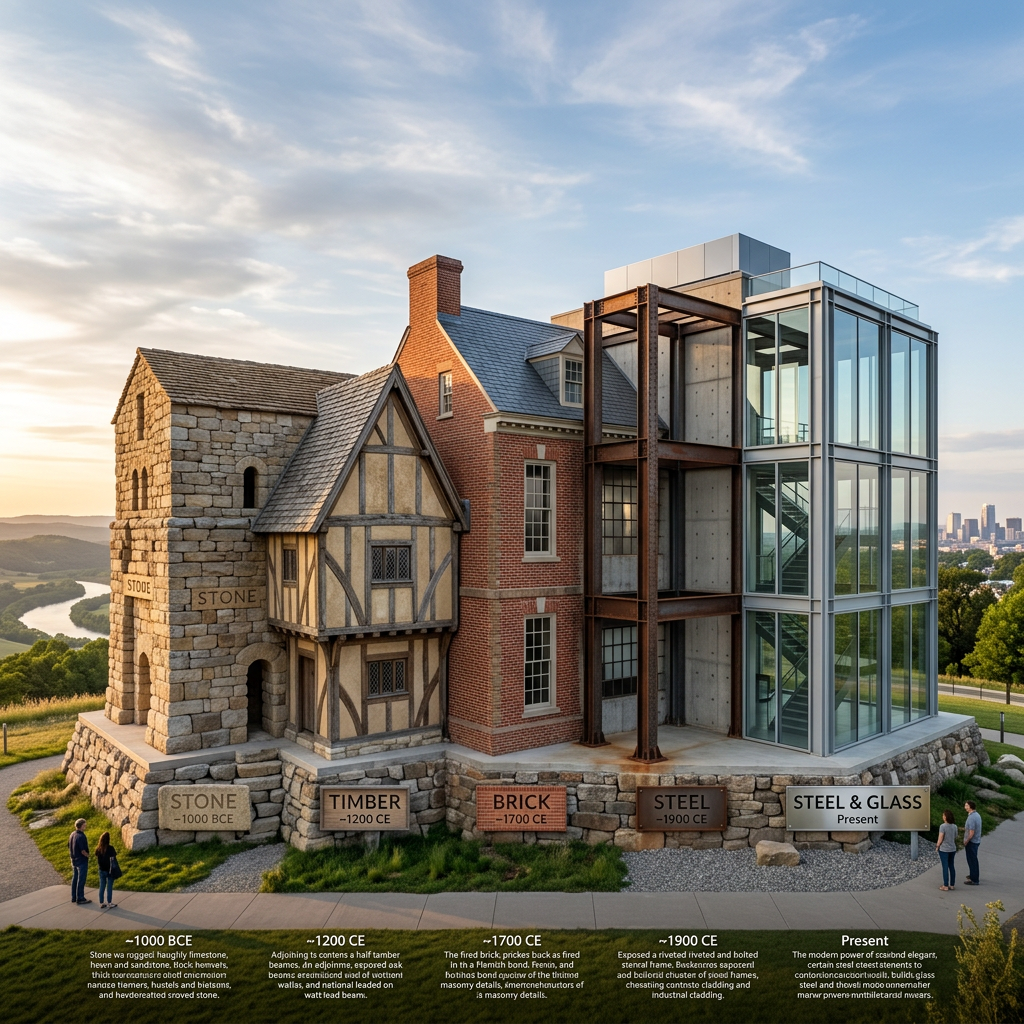
The history of building materials is a direct reflection of human ingenuity. Early civilizations relied on what was readily available: wood, stone, mud, and straw. These simple components created everything from humble huts to monumental pyramids. The Romans revolutionized construction with their invention of concrete, a durable and versatile material that allowed them to build aqueducts and amphitheaters that still stand today.
The next great leap came with the Industrial Revolution. The mass production of iron and later steel transformed the architectural landscape. Suddenly, builders were no longer limited by the compressive strength of stone. Steel frames allowed for structures of unprecedented height and lightness, giving birth to the modern skyscraper and forever changing the skyline of cities across the globe. Each new material, from stone and glass to steel, opened up new possibilities for what a building could be.
Materials and Social Progress
The materials we build with do more than just create shelter; they shape society. The development of plate glass in the 19th century, for example, allowed for large storefront windows that fueled a new culture of consumerism. People could now window-shop, a pastime that simply didn’t exist before. Similarly, the rise of steel-frame construction made it possible to build taller, more densely packed apartment buildings and offices. This enabled urbanization on a massive scale, drawing millions of people into cities for work and opportunity. Even the layout of our homes is a result of material innovation, with drywall making it easy to create individual rooms and private spaces.
The Evolution of Doors and Frames
Doors are one of the most interactive parts of any building, but their complexity is often overlooked. A simple wooden plank on leather hinges has evolved into a sophisticated system of components. Modern doors are made from wood, steel, fiberglass, and aluminum, each chosen for specific qualities like insulation, security, or fire resistance. The frame that holds the door is just as important, providing structural integrity and ensuring a proper seal.
In commercial and public buildings, this system becomes even more critical. It’s not just about the door slab but the entire assembly. The hinges, closers, panic bars, and locking mechanisms all work together to provide safe entry and exit. High-quality commercial doors and their supporting components are essential for ensuring durability and compliance with strict safety codes, especially in high-traffic areas like schools, hospitals, and offices.
Beyond Aesthetics
While we often judge a building by its appearance, the materials used are chosen for reasons that go far beyond aesthetics. Performance is key. Insulation, for instance, is a critical material property that affects a building’s energy efficiency and comfort. Soundproofing materials in walls and floors create quiet, peaceful environments in noisy urban settings.
Durability and maintenance are also major considerations. A material might look beautiful on day one, but how will it hold up after a decade of sun, rain, and use? Architects and builders must balance appearance with practicality, selecting materials that are resilient, easy to clean, and safe for occupants. This unseen science ensures our buildings are not just beautiful but also functional and long-lasting.
Innovation in Modern Construction
The evolution of building materials is far from over. Today, innovators are developing materials that are smarter, more sustainable, and more efficient than ever before. Cross-laminated timber (CLT) offers the strength of steel with the environmental benefits of a renewable resource. Self-healing concrete can automatically repair its own cracks, extending the lifespan of roads and bridges. Researchers are also exploring materials made from recycled plastics and even living organisms like mycelium, the root structure of mushrooms. These advancements promise a future of buildings that are not only better for the planet but also more resilient and responsive to our needs.
The materials we choose to build with tell a story about our values, our aspirations, and the future we hope to create for generations. As we continue to innovate, the very substance of our cities will transform, creating a built environment that is smarter, safer, and more in tune with the natural world.
Discover more from The Cameron Journal
Subscribe to get the latest posts sent to your email.