

Key Takeaways
- Distribution centers are increasingly adopting automation and robotics to enhance efficiency and meet rising consumer expectations.
- Strategic expansion and location selection are crucial for reducing delivery times and improving service levels.
- Despite rising vacancy rates, the demand for high-quality, functional warehouse space remains strong.
- Retail giants are investing heavily in large-scale distribution centers to strengthen their supply chain capabilities.
The logistics landscape is changing rapidly as distribution centers adapt to new challenges and consumer demands. Increasing reliance on technology, advanced automation, and data-driven strategies is reshaping how goods are stored and delivered. Companies are turning to warehouse and distribution facility builders to create spaces that are not only larger but also smarter and more efficient, supporting both speed and reliability in supply chains.
This shift is driven by a need to meet the expectations of today’s consumers who want quick, seamless delivery experiences. As retailers and distributors respond, the integration of automation, robotics, and advanced warehouse management systems has become standard practice across the sector. The ongoing evolution of distribution centers reflects the accelerating pace of e-commerce and the continuous drive for operational excellence.
Embracing Automation and Robotics
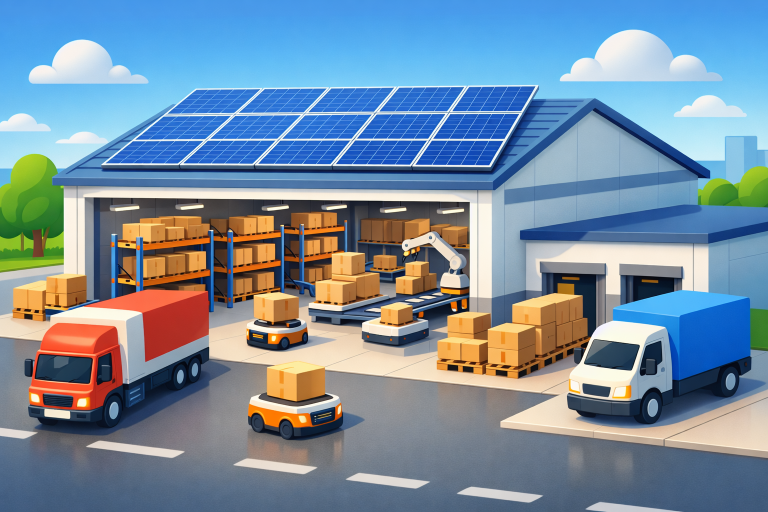
In pursuit of greater productivity and cost control, distribution centers have amplified investments in automation and robotics. Technologies such as Locus Robotics picking systems and AI-driven sorting solutions have become essential tools in the warehouse environment. For example, United Natural Foods Inc. (UNFI) relies on robotic pickers to maintain high service levels, especially during periods of intense demand. Automation helps address workforce shortages by reducing reliance on manual labor, shortening order processing times, and lowering error rates.
According to a Wall Street Journal report, many regional and national warehouse operators plan to double or triple their use of robotics over the next five years. This technological shift is making facilities more resilient and responsive, critical advantages in today’s competitive market.
Strategic Expansion and Location Selection
To keep pace with consumer expectations, distributors are actively expanding their footprints in locations that can reduce shipment times and improve access to key markets. W.W. Grainger’s new 1.2 million-square-foot distribution center in Hockley, Texas, demonstrates how facility growth is centered around serving growing urban hubs and industrial regions. Similarly, Border States has launched a 315,000-square-foot regional hub in Fargo, North Dakota, to enhance service to multiple branch locations in the Upper Midwest.
Selecting facility sites close to transportation networks, customers, and suppliers is vital for keeping logistics costs down and ensuring responsive deliveries. The trend toward regionally distributed warehouses helps companies offset disruptions, adapt to local demand swings, and build more flexible, resilient supply chain networks.
Balancing Vacancy Rates and Functional Space
Even as national warehouse vacancy rates have climbed to 7.1 percent in 2025, the market faces a paradox. Much of the available inventory fails to meet the operational requirements of modern logistics, especially as e-commerce accelerates. Contemporary supply chain operations demand high-ceilinged, technologically equipped facilities that support automation, energy efficiency, and advanced inventory management.
New construction and retrofits are addressing these gaps. Companies prioritize state-of-the-art upgrades, such as automated storage-and-retrieval systems and sustainable energy solutions, to make spaces more adaptable and future-proof. The broader shift toward highly functional, scalable warehouse spaces is reshaping investment priorities throughout the industry. Warehouse design experts also stress the importance of flexibility to adapt to future technology shifts and market conditions.
Investments by Retail Giants
Major national retailers are leading the charge in upgrading and expanding distribution capabilities. Since the beginning of 2025, Amazon has added over 5 million square feet of new distribution center space through at least seven acquisitions. Walmart’s securing of four additional centers across the United States highlights the scale of investment needed to meet rising market expectations and keep large assortments of inventory within immediate reach of consumers.
These infrastructure expansions enable big-box retailers to deliver faster, optimize last-mile logistics, and support omnichannel selling. As companies scale up, attention is shifting to sophisticated tracking, inventory visibility, and integration between physical and digital distribution assets.
Adapting to Consumer Expectations
Meeting the demand for speed is a strategic priority for every leading retailer. Target’s innovative “receive center” in Houston, designed to handle imported seasonal and bulky items, has enabled the company to optimize core distribution space and enhance responsiveness to shifting market trends. By offloading certain product categories to specialized facilities, Target avoids overburdening main warehouses and achieves more agile replenishment across its system.
Adapting quickly to consumer expectations is now table stakes. Retailers are investing in smarter demand forecasting, rapid order picking, and more efficient returns processing, all to provide the seamless shopping experience that today’s shoppers expect.
Overcoming Supply Chain Challenges
Distribution centers continue to face headwinds, including labor constraints, escalating freight costs, and ongoing supply chain shocks. Investment in automation, network flexibility, and data analytics is helping companies mitigate these challenges. Dynamic inventory management, closer supplier relationships, and flexible staffing models are all tools being leveraged to stay competitive.
The resilience of the distribution center sector will depend on its ability to innovate and collaborate across the broader ecosystem. Rapid adoption of new tools and continuous staff upskilling will be essential to weather future uncertainty.
Future Outlook
The future of distribution centers is centered on technological integration, superior site selection, and ongoing investment in high-quality infrastructure. As advanced robotics, artificial intelligence, and real-time data solutions become commonplace, those who prioritize adaptability will gain a critical edge.
Moving forward, organizations that align their physical and digital operations and proactively evolve facility capabilities will be best positioned to succeed amid disruption and growth.
Conclusion
The modern distribution center is evolving into a cornerstone of supply chain resilience and efficiency. By harnessing automation, expanding strategically, and emphasizing high-functionality spaces, logistics leaders are setting new standards for reliability and speed. Keeping a keen eye on industry trends and integrating transformative technologies will be essential for any company that aims to thrive in the fast-moving world of logistics and distribution.
Discover more from The Cameron Journal
Subscribe to get the latest posts sent to your email.




