Table of Contents
- Energy Efficiency and Cost Savings
- Unlimited Hot Water Supply
- Space-Saving Design
- Longer Lifespan and Durability
- Environmental Benefits
- Considerations Before Installation
- Conclusion
Modern homeowners are increasingly turning to tankless water heaters for efficient, reliable, and space-saving hot water solutions. Unlike traditional water heaters that store and continuously heat large gallons of water, tankless systems provide hot water only when needed. As a result, they help households save money, reduce environmental impact, and make better use of indoor space. If you are looking for a professional installation or maintenance, working with a tankless water heater plumber in Provo UT can help you maximize the benefits these innovative systems offer.
Tankless water heaters have evolved significantly over the past decade, addressing many of the concerns homeowners once had about hot water capacity and installation complexity. While the initial investment may seem higher, the long-term benefits are hard to overlook. This article will explore the primary advantages of tankless water heating systems and what you should consider before making the switch.
Energy Efficiency and Cost Savings
Tankless water heaters utilize technology that delivers hot water instantly and only when it is needed. By eliminating the standby energy loss associated with storing hot water, these systems can offer significant energy savings over time. According to the U.S. Department of Energy, homes using around 41 gallons or less of hot water daily can expect to benefit from 24% to 34% increased energy efficiency with tankless units. Even heavier water use, up to 86 gallons a day, yields efficiency gains of 8% to 14%.
The reduced energy consumption translates into lower utility bills month after month. While the upfront installation cost of a tankless system may be higher than that of a traditional tank, the payback in ongoing savings is considerable. Over the life of the unit, most homeowners will recover their investment through reduced energy expenses.
Additionally, many homeowners appreciate the flexibility that comes with higher energy efficiency. With rising utility costs and an increasing focus on energy conservation, more people are searching for innovative ways to minimize unnecessary energy usage. In some regions, homeowners may also qualify for rebates or tax incentives when upgrading to an energy-efficient tankless system, further improving their overall savings and making the transition more appealing. These incentives, combined with the reduction in monthly bills, can make the decision to go tankless even more attractive in the current energy landscape.
Unlimited Hot Water Supply
One of the biggest advantages of tankless water heaters is that they never run out of hot water. With a tank system, you can exhaust the supply during heavy use, leading to cold showers or delays. Tankless models heat water as it is needed, so whether you are running back-to-back showers or filling a deep soaking bathtub, you can rely on a continuous stream of comfortably hot water.
This is especially beneficial for families or households that have a high demand for hot water during peak hours, such as in the morning or evening. Since tankless systems provide hot water on demand, everyone in the home can enjoy a hot shower without waiting for the tank to refill and reheat. Tankless options are also ideal for homes with luxury fixtures like rainfall showers or Jacuzzi tubs, which require a large quantity of hot water within a short time frame. Whether entertaining guests or supporting the needs of a busy household, consistent hot water access can dramatically improve everyday comfort and convenience.
Space-Saving Design
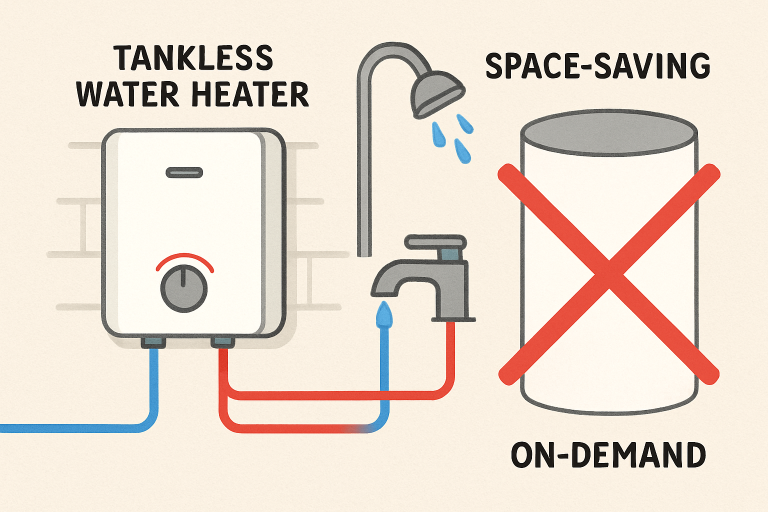
Traditional water heaters often require a substantial amount of indoor space, usually in basements or utility closets, to accommodate the bulky storage tank. In contrast, tankless water heaters are much smaller and can be wall-mounted almost anywhere, including tight spaces or even outdoors with the right model. This space-saving design frees up valuable room in your home for other uses, an important feature for those living in apartments, condos, or smaller homes.
As floor plans increasingly emphasize open layouts and efficient use of space, having a compact water heater can be a significant advantage. The freed-up space can be used for storage, hobbies, or even as an additional living area, depending on your home’s layout. Wall-mounted tankless units can also be installed out of sight, inside cabinets or utility closets, helping maintain a clean and uncluttered look. This flexible placement allows greater creativity in home organization and adds to the aesthetic appeal of modern interiors, especially where square footage is at a premium.
Longer Lifespan and Durability
Tankless water heaters are known for their reliability and longevity. When properly maintained, these units can last up to 20 years, double the typical lifespan of conventional water heaters. Maintenance, such as regular descaling and annual inspections, can help prevent mineral buildup, ensuring consistent performance for decades.
Because tankless units don’t have the issue of internal corrosion caused by storing water long-term, their parts often experience less wear and tear than standard tanks. If a repair is ever needed, many models have modular components, meaning specific parts can be replaced without swapping out the entire unit. This longer service life means fewer replacements over the years, minimizing both inconvenience and environmental waste associated with discarded water heaters. Long-term durability translates into further cost savings, while the lower frequency of replacement benefits the environment by generating less scrap material.
Environmental Benefits
The environmental advantages of tankless water heaters are significant. Because they use less energy, they contribute to a lower household carbon footprint. Many newer models are constructed with recyclable components or produced using sustainable manufacturing methods. In addition, tankless systems eliminate the risk of tank leakage and the subsequent waste of water and energy due to failed storage tanks.
Furthermore, using less energy to heat water translates to reduced greenhouse gas emissions, especially when paired with cleaner energy sources. Some tankless models are compatible with solar pre-heating systems, which can drastically reduce fossil fuel consumption. In regions where drought is a concern, the avoidance of tank leaks also conserves precious water resources, making tankless heaters both an eco-friendly and responsible choice for eco-conscious consumers. Every small change adds up, and by selecting an efficient water heating system, homeowners can make a measurable difference to the planet.
Considerations Before Installation
Despite all the benefits, there are important factors to weigh before installing a tankless water heater:
- Upfront Investment: The purchase and installation of a tankless unit typically costs more than a standard tank heater. However, the long-term operating savings can provide a meaningful return on investment.
- Flow Rate Constraints: Every tankless water heater has a maximum flow rate, meaning you must select a unit that can handle your peak household demand. Running multiple fixtures simultaneously may sometimes lead to fluctuations in water temperature or pressure.
- Ongoing Maintenance: To ensure optimal operation and extend the life of your tankless system, regular maintenance, such as descaling, is essential, especially in areas with hard water. Neglecting such care can impact performance and durability.
It’s also important to consider installation logistics. Because tankless systems often require different venting or gas line upgrades compared to standard tanks, a professional assessment is necessary before starting the project. Consult an experienced plumber to evaluate your existing infrastructure and ensure a smooth, code-compliant installation. Additionally, choosing the right unit based on the size of your home, the number of fixtures, and your family’s hot water usage patterns will ensure you enjoy the full benefits that tankless heating technology can offer.
Conclusion
Tankless water heaters are reshaping the way homeowners think about hot water. Their energy efficiency, reliability, space-saving benefits, and long-lasting performance offer compelling reasons to upgrade from conventional tank systems. By considering your household’s water usage habits and consulting with knowledgeable professionals, you can make a confident, informed decision that will provide comfort and savings for years to come.
If you are ready to invest in a tankless water heater for your home, reach out to trusted local experts for advice tailored to your specific needs. With the right selection and expert installation, you can look forward to reliable, efficient hot water and the peace of mind that comes from a smarter, more sustainable home improvement investment.
Discover more from The Cameron Journal
Subscribe to get the latest posts sent to your email.