Key Takeaways
- Many household septic tanks are pumped about every three to five years, although the proper interval depends on the home and system.
- Professional inspections can identify high solids levels, worn components, leaks, pump concerns, and drain field warning signs.
- Using water efficiently helps avoid sending more wastewater into the system than it can handle at one time.
- Only human waste and toilet paper belong in the toilet.
- Drain fields should remain clear of vehicles, structures, excess runoff, and deep-rooted plants.
- Service records help homeowners plan maintenance and provide useful information during a future property sale.
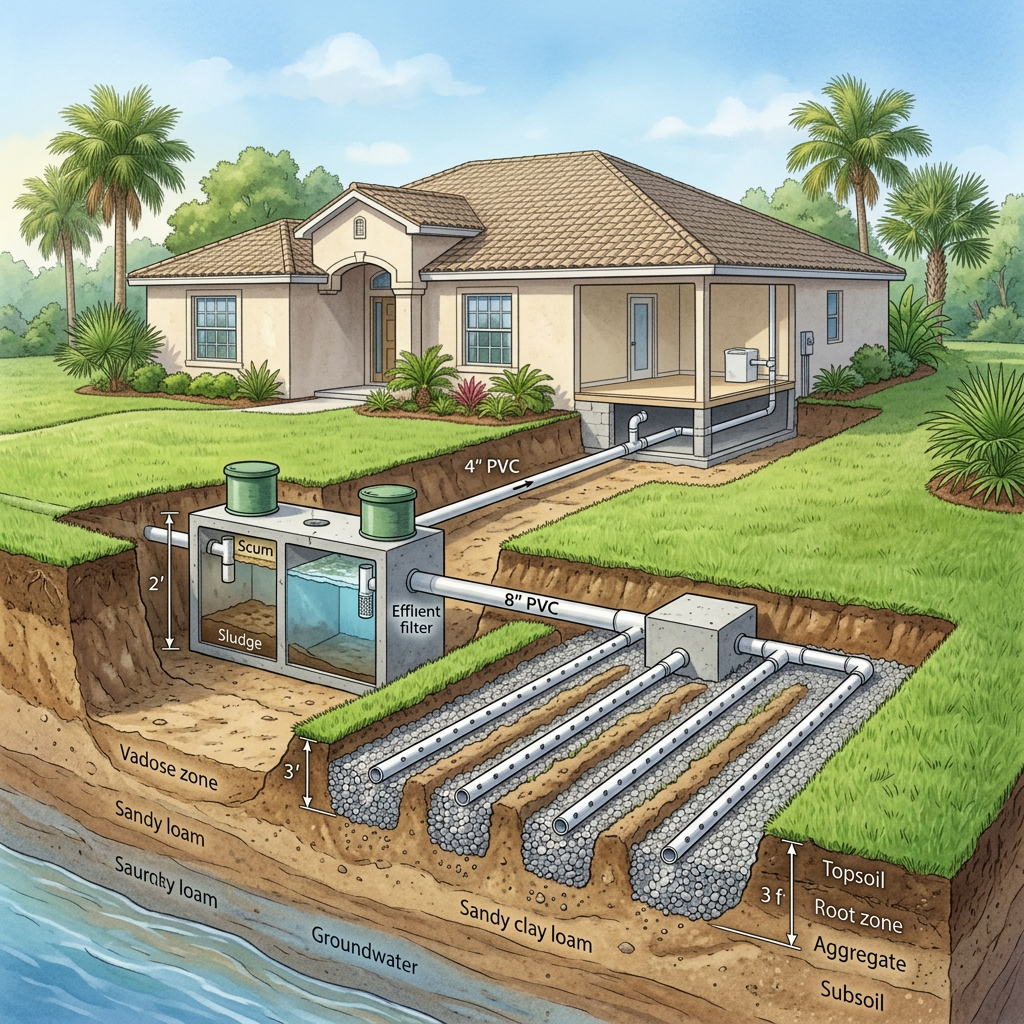
For many Clermont, Florida, homeowners, a septic system does its work quietly underground until a drain slows, an odor appears, or wet ground develops where it should not. A practical maintenance schedule helps prevent those surprises. Planning routine septic tank pumpingbefore symptoms appear is one of the most important steps in protecting the tank and the soil treatment area.
Clermont’s rolling terrain, lake-focused landscape, seasonal rain, and active residential growth make it especially important to know where a septic tank and drain field are located. Roof runoff, landscaping projects, vehicle traffic, and sudden periods of heavy household water use can all affect how well the system performs.
Why a Septic Care Schedule Matters
Septic systems are largely out of sight, which means a developing problem may not be obvious at first. When solids build up beyond the tank’s capacity, they can move toward the outlet and the drain field. That may contribute to backups, slow plumbing, odors, or saturated soil.
A sensible schedule is built around inspecting, pumping, using water efficiently, and maintaining the drain field. These four habits provide a useful baseline, but the exact service needs of a Clermont property should reflect its tank size, household use, system design, and prior service findings.
When a homeowner does not know the age or history of a system, septic tank inspections can help establish a starting point. An inspection is particularly useful after purchasing a home, completing major plumbing work, or noticing a change in drainage around the property.
Build a Basic Septic Maintenance Calendar
Monthly Tasks
- Pay attention to slow drains, gurgling fixtures, or unfamiliar sewage-like odors.
- Walk the yard and look for wet spots or unusually lush grass near the septic area.
- Repair dripping faucets, running toilets, and other plumbing leaks promptly.
- Spread laundry and dishwasher loads through the week instead of using large amounts of water in one day.
Seasonal Tasks
- Confirm that gutters, downspouts, and surface drainage direct water away from the drain field.
- Keep tank access covers secure, visible, and reasonably accessible for service.
- Make sure vehicles, trailers, stored materials, and temporary structures are not placed over the tank or drain field.
- Check landscaping plans before planting trees or large shrubs near septic components.
Every One to Three Years
- Arrange a professional inspection according to the system type, past recommendations, and any local requirements.
- Have the service provider assess sludge and scum levels, the tank condition, baffles, filters, pumps, alarms, and distribution components when applicable.
- Save the service date, findings, recommended repairs, and next suggested appointment.
Every Three to Five Years
- Plan for routine pumping unless a qualified professional recommends a different interval.
- Expect more frequent service when a household is larger, the tank is smaller, water use is high, or a garbage disposal adds more solids.
- Ask for the measured solids levels and the tank condition to be recorded in the service report.
How to Decide When the Tank Needs Pumping
A calendar reminder is helpful, but it is not a substitute for evaluating the specific system. Tank size, household occupancy, total wastewater, solid waste, and system type all influence pumping needs. Homes with pumps, float switches, alarms, or other mechanical treatment components may require more frequent attention than a conventional gravity system.
Do not wait for a backup to decide that service is needed. By then, the issue may involve more than accumulated solids. Ask the professional who performs the service to recommend the next inspection or pumping date based on what was found.

Everyday Habits That Protect the System
Use Water in Smaller Bursts
Water conservation is septic care. Run full dishwasher and washing machine loads, repair leaks, and avoid scheduling several large laundry loads on the same day. Efficient fixtures can also reduce the volume of wastewater entering the tank and drain field.
Keep Harmful Items Out of Drains
Trash, wipes, diapers, paper towels, dental floss, cat litter, and hygiene products should go into the trash rather than the toilet. Grease, paint, solvents, medications, and harsh chemicals should not be poured into sinks or drains. These materials can clog plumbing, add solids, or interfere with normal septic treatment processes.
Protect the Drain Field
Grass is generally a suitable cover because it helps limit erosion without the large roots associated with trees and shrubs. Keep cars, heavy equipment, sheds, patios, pools, and paved surfaces away from the drain field. Avoid directing irrigation, gutter discharge, or stormwater toward the soil treatment area.
Warning Signs That Need Prompt Attention
- Several sinks, tubs, or toilets drain slowly at the same time.
- Fixtures bubble or gurgle when water is used elsewhere in the home.
- Sewage odors develop indoors, near the tank, or over the drain field.
- Wastewater backs up into tubs, showers, sinks, or toilets.
- Standing water or persistently wet soil appears over the septic area.
- A high-water alarm sounds on a system with a pump tank.
These symptoms can have different causes, including a plumbing blockage, a full tank, a damaged pipe, a pump issue, or a drain field problem. Do not open a septic tank yourself. Tank openings can present serious hazards, so a trained professional should assess the system.
What to Do During a Septic Backup
- Stop using toilets, sinks, showers, washing machines, and dishwashers.
- Keep children and pets away from sewage or standing wastewater.
- Avoid direct contact with contaminated water and do not drive across the drain field.
- Contact a qualified septic professional and describe the symptoms, including alarms, odors, or wet areas.
- Take photos from a safe distance if they may help document the problem.
Keep Better Maintenance Records
Maintain one file with the system diagram, tank location and size, permits, inspection reports, pumping invoices, repair notes, and future recommendations. Also note unusual events such as flooding, extended vacancies, large gatherings, or construction near the septic area. Good records make it easier to schedule care and explain the system’s history to future owners.
Final Checklist for Clermont Homeowners
- Locate and mark the tank and drain field.
- Find the most recent pumping and inspection records.
- Set reminders based on professional recommendations.
- Fix leaks and spread out heavy water use.
- Keep grease, chemicals, wipes, and household trash out of drains.
- Protect the drain field from roots, traffic, paving, and runoff.
- Respond quickly to backups, odors, ponding water, or alarm alerts.
Discover more from The Cameron Journal
Subscribe to get the latest posts sent to your email.