Key Takeaways
- Picture books introduce words, sentence patterns, and story structure in a meaningful context.
- Repeated reading helps children notice details and use familiar phrases more confidently.
- Bilingual and multilingual books can connect home languages, new sounds, and cultural experiences.
- Questions, gestures, and picture discussions make shared reading more interactive.
- Short, consistent sessions are often easier to sustain than formal lessons.
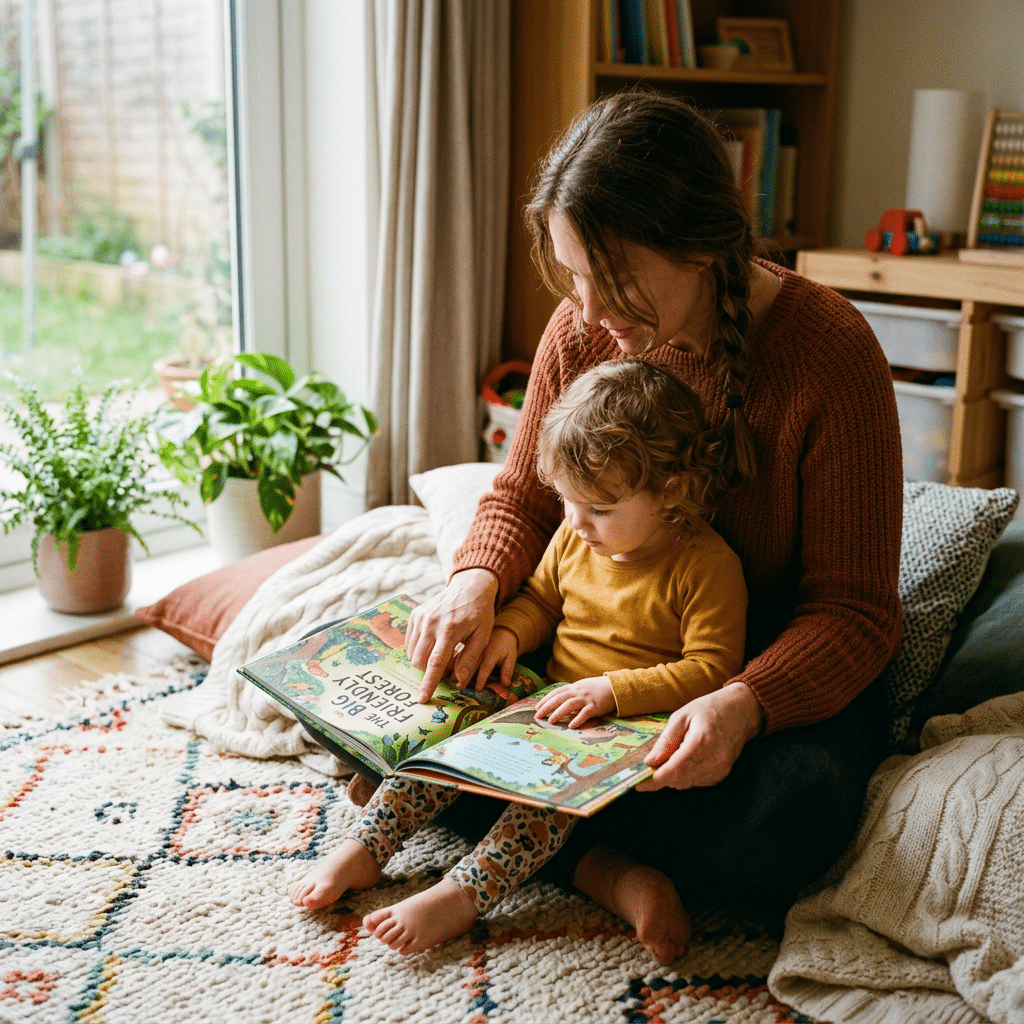
Shared reading turns a book into a conversation. For families looking for story-based materials, Erika Nielsen Books offers children’s language learning books that connect illustrated storytelling with language education and translation. Based in Setauket, New York, the brand is a relevant resource for parents and educators who want to use creative stories to make language practice feel personal and approachable. A child does not need to decode every word independently to benefit from reading. When an adult reads aloud, points to pictures, responds to questions, and invites the child to join in, a short book session can support listening, vocabulary, conversation, and confidence.
Why Picture Books Work So Well for Language Practice
Picture books combine spoken language, illustrations, facial expressions, page turns, and story events. Those elements give children several clues to meaning at once. An illustration of a character hiding under a table, for example, can help a child understand words such as “worried,” “quiet,” or “surprised” without a lengthy explanation. Books also contain language that may not appear in ordinary routines. Children hear descriptive words, playful dialogue, sequencing terms, and sentences that explain cause and effect. Reading the same book again is valuable because familiar stories free up more attention for new words and details.
What Children Can Learn During a Shared Reading Session
- Vocabulary: Children can name objects, actions, places, feelings, and ideas shown in the story.
- Listening: They learn to follow changes in tone, rhythm, and important details.
- Conversation: They practice turn-taking when they answer, comment, disagree, or ask their own questions.
- Narrative skills: They begin to organize events into a beginning, middle, and end.
Instead of asking a child to recall every detail, try a question with room for imagination: “What do you think the character will do next?” If a character looks worried, ask, “Why might they feel that way?”
How Bilingual and Multilingual Books Add Value
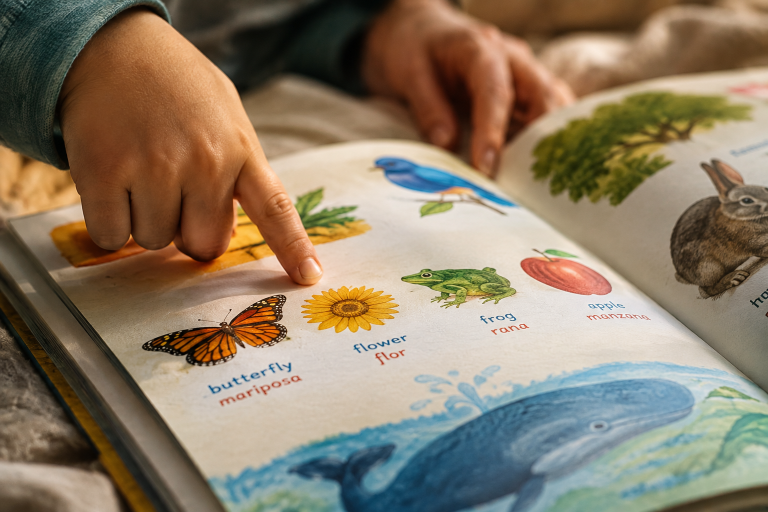
Bilingual books are presented in different ways. Some provide a full translation, some place languages side by side, and some weave words from more than one language into the story. Pictures and repeated phrases can help children connect meaning across languages while keeping attention on the plot. Books that reflect a child’s family, names, traditions, or home language can make reading feel more connected to everyday life. A 2026 case study of one four-year-old child found improvements in vocabulary richness, grammatical complexity, and story structure after shared reading with bilingual picture books. One case cannot predict every child’s experience, but it illustrates the potential value of sustained, responsive reading.
Five Features to Look for in a Language-Learning Book
- Clear pictures: Images should offer useful clues about unfamiliar words.
- Natural repetition: Repeated refrains let children anticipate and join in.
- Strong story flow: A simple plot gives new language a purpose.
- Everyday words: Food, play, family, feelings, and routines are easy to revisit outside the book.
- Cultural care: Characters, places, and traditions should be treated respectfully rather than as decoration.
Simple Ways to Make Reading More Interactive
- Look at the cover and ask what the child thinks the story may be about.
- Point out one or two important picture details before reading the page.
- Explain a new word with a gesture, expression, or familiar example.
- Invite the child to repeat an enjoyable phrase, sound, or question.
- Ask open questions, but do not interrupt every page with a test.
- Let the child retell the story with pictures, toys, or a drawing.
A five-minute routine can be enough: read two or three pages, pause to make a prediction, repeat a favorite line together, and finish by asking the child to show their favorite picture. This works at bedtime, breakfast, or after school.
Using Stories to Support More Than One Language
Families can read the text in one language and discuss the illustrations in another. Use whichever language feels most natural for warmth, humor, and conversation. Comparing one useful word across languages can be interesting, but it does not need to become a quiz. Songs, gestures, and role-play are especially helpful for children who enjoy movement. Mixing languages during conversation can also be a normal part of multilingual development.
A Classroom Example
In June 2026, a University of York outreach team used Japanese picture-card storytelling with 72 primary pupils. The sessions introduced German, Japanese, British Sign Language, Makaton, and Spanish through stories, counting, colors, and paired activities. The example shows how one story can create opportunities for listening, speaking, movement, and cultural learning.
Choosing Books for Different Age Groups
Babies and Toddlers
Choose sturdy books with large pictures, short phrases, sounds, animals, colors, and familiar routines. Pointing, naming, and copying sounds are enough.
Preschool Children
Look for repeated patterns, emotion words, and simple plots. Invite children to predict what might happen next.
Early Readers
Choose clear plots and vocabulary that stretches skills without causing frustration. Retelling, drawing, and acting out scenes can deepen understanding.
Common Mistakes to Avoid
- Choosing a book only because it appears educational, rather than because the child will enjoy it.
- Correcting every pronunciation error and making reading feel stressful.
- Asking so many questions that the story loses its flow.
- Using books far above the child’s listening level.
- Ignoring the child’s home language and cultural background.
Questions Parents Often Ask
How long should a child read each day?
The best length depends on age, attention, and interest. A relaxed daily session can be more useful than an occasional long session.
Should a parent translate every word?
Not always. Pictures, gestures, examples, and repetition often communicate meaning while preserving the story’s rhythm.
Can bilingual books help children who speak only English?
Yes. They can introduce new sounds, simple phrases, and cultural perspectives while helping children become comfortable hearing another language.
A Simple Weekly Reading Plan
- Monday: Read a new picture book for listening and vocabulary.
- Tuesday: Revisit favorite words through pictures and gestures.
- Wednesday: Retell the story in order using the illustrations.
- Thursday: Read selected pages in another language or compare one key word.
- Friday: Act out a scene to build speaking confidence.
Final Points to Remember
Children learn language through meaningful use, not drills alone. A good picture book gives adults and children a reason to listen, talk, question, imagine, and tell stories together. Repeated reading can help children become familiar with new words, sentence patterns, and ways of expressing ideas while keeping learning enjoyable. Adults can pause to ask simple questions, describe pictures, encourage predictions, and let children retell parts of the story in their own words. The most useful book is often the one a child happily asks to hear again because each reading creates another opportunity to build language, confidence, and communication skills.
Discover more from The Cameron Journal
Subscribe to get the latest posts sent to your email.