
Understanding Customer-Centric Marketing Funnels in 2026
The marketing landscape has drastically transformed, especially for local businesses like home service providers. In 2026, the traditional, linear marketing funnel—a model that often ends once a transaction occurs—is increasingly obsolete. This is because customer behavior has changed, with engagement now happening in nonlinear ways. A customer-centric marketing funnel, in contrast, places the homeowner at the absolute center of every strategy and interaction. It’s not just about guiding a prospect to a sale; it’s about creating value for them at every stage, from initial awareness to post-purchase advocacy.
The difference is profound: traditional funnels are business-focused, pushing products or services onto a broad audience. Customer-centric funnels are homeowner-focused, understanding individual needs and preferences to pull them through a personalized journey. This shift is critical because companies lose up to $1.6 trillion yearly as customers switch to competitors, often due to a lack of perceived value or personalization. Today, 71% of consumers now demand individual-specific experiences, making a tailored approach not just a preference, but an expectation. Homeowners lead the buying journey, researching solutions, comparing options, and seeking social proof long before engaging directly with a service provider. Their paths are rarely straight, often involving multiple touchpoints across various platforms.

Why Customer-Centricity is Vital for Digital Marketing for Home Services
For home service businesses, adopting a customer-centric approach is no longer a competitive edge; it’s a fundamental requirement for survival and growth. Homeowners today have unprecedented access to information and choices. They expect more than just a service; they anticipate a seamless, informed, and reassuring experience. When we prioritize the customer, we address their specific pain points, answer their questions proactively, and build trust long before a technician ever arrives at their door.
Understanding these evolving customer expectations means carefully considering every touchpoint, from initial online search to post-service follow-up. It is this comprehensive view that allows businesses to deliver not just a repair, but a complete and positive customer journey.
Focusing on these experiences helps build a lasting relationship, which is why many homeowners look for established home service companies that prioritize consistent, high-quality interactions. Such companies often detail their customer service philosophy and operational standards publicly, giving potential clients clear insight into their approach before engagement.
This approach significantly impacts conversion rates. By making the buying process easier through well-laid-out funnels, companies are 62% more likely to close high-quality sales where customers buy premium offerings. Beyond the initial sale, customer-centricity fosters brand advocacy. Satisfied customers become powerful promoters, sharing positive experiences and generating valuable word-of-mouth referrals. This not only attracts new business but also helps differentiate our brand in a crowded market, creating a loyal customer base that views us as a trusted partner rather than just another service provider.
The Evolution from AIDA to the Customer Lifecycle
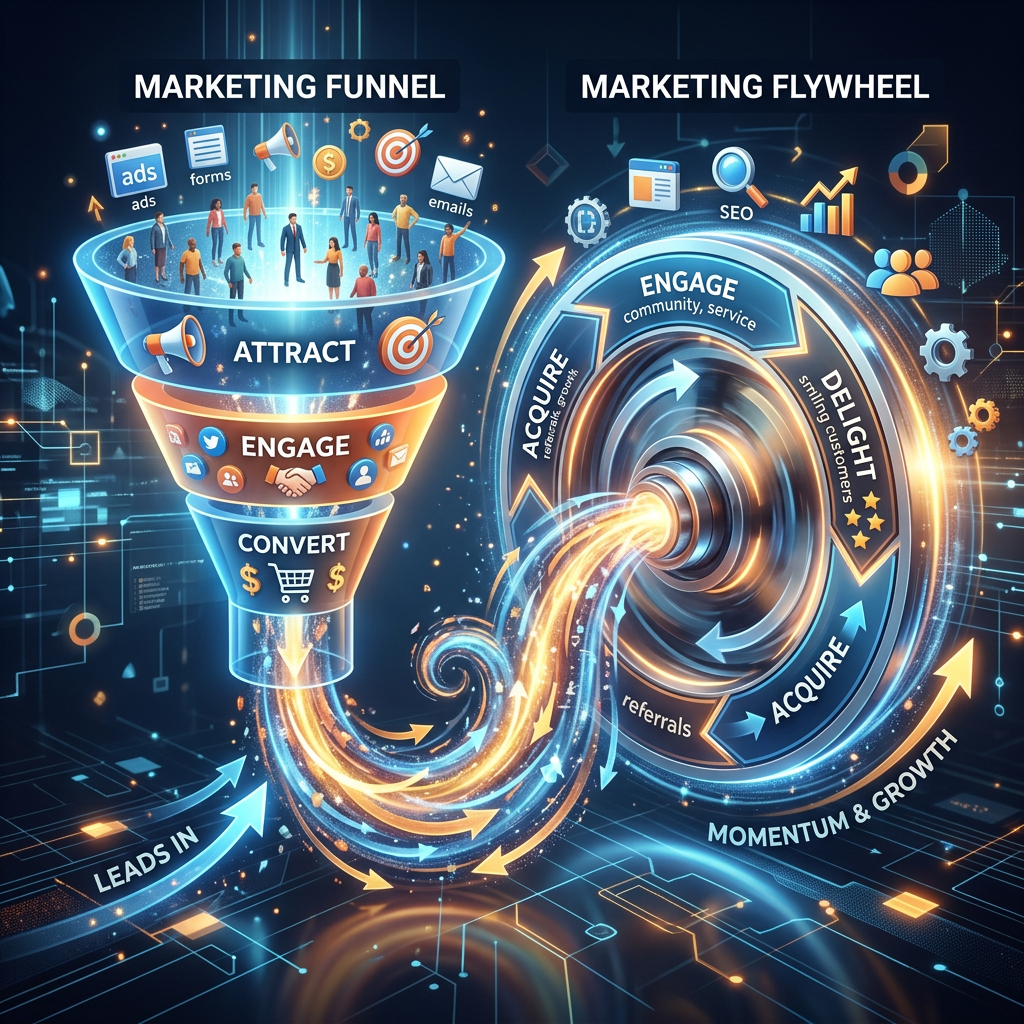
The classic marketing funnel, often based on the AIDA model (Awareness, Interest, Desire, Action), served its purpose in a simpler era. However, in 2026, it’s an incomplete picture. The customer journey doesn’t end with a purchase; it begins a new phase of engagement. This is where the concept evolves into a customer lifecycle or even a flywheel model, emphasizing continuous interaction and value exchange.
After the initial “Action” (purchase), a customer-centric model extends to crucial post-purchase stages: use/onboarding, retention/expansion, and advocacy/referrals. Focusing on these stages is financially astute: a 5% increase in customer retention can boost profits by 25-95%. This long-term perspective builds enduring relationships, transforming one-time buyers into repeat customers and enthusiastic brand advocates. Understanding the customer journey in its entirety, including these post-purchase phases, is essential for sustainable business growth in the home services sector. It’s about creating profitable, lasting relationships that fuel continued success.
Building the Foundation: Audience Segmentation and Buyer Personas
Effective customer-centric marketing begins with a deep understanding of who our customers are. For home service businesses, this means moving beyond broad generalizations to segmenting our audience and creating detailed buyer personas. This foundational work allows us to tailor our messages, services, and entire marketing approach to resonate directly with the specific needs and motivations of different homeowner groups.
Audience segmentation involves dividing our target market into distinct groups based on shared characteristics. This could include demographics (age, income, property type), psychographics (lifestyle, values, attitudes towards home maintenance), or behavioral data (past service history, online activity, preferred communication channels). From these segments, we construct buyer personas: semi-fictional, generalized representations of our ideal customers. Each persona should encompass their motivations, pain points, expectations, and decision-making processes when it comes to home services. For instance, a persona might be “Eco-Conscious Emily,” a homeowner interested in energy-efficient HVAC solutions, or “Busy Brian,” a landlord needing reliable, quick repairs for his rental properties.
Leveraging Data to Identify High-Intent Homeowners
In 2026, data is our most powerful ally in identifying homeowners who are not just browsing, but actively seeking solutions. We leverage first-party data from our Customer Relationship Management (CRM) systems, integrating it with insights from online behavior. This includes analyzing search intent—what keywords are homeowners using when their furnace breaks down or their AC needs maintenance? Localized targeting is paramount; for a plumbing service in a specific neighborhood, understanding the local search queries and community-specific needs is vital.
84% of shoppers start their online product searches on digital channels outside a brand’s website. This means we need to be present and visible where homeowners are already looking, whether it’s local directories, review sites, or social media groups. By understanding these digital footprints, we can identify decision-making triggers—the moments when a homeowner moves from passive concern to active search for a solution. Utilizing customer data for personalized HVAC marketing is a prime example of how this data-driven approach can lead to highly effective campaigns.
Creating Semi-Fictional Personas for Targeted Messaging
Developing robust buyer personas goes beyond basic demographics. It requires user research, including surveys, direct interviews with existing customers, and analysis of feedback forms. We delve into their daily routines, their biggest frustrations related to home maintenance, and what they value most in a service provider. For example, a persona for a new homeowner might prioritize transparent pricing and educational content, while a long-time resident might value reliability and preventative maintenance plans.
These insights allow us to craft service-specific needs and tailored value propositions. Instead of a generic “We fix all plumbing issues,” we can speak directly to “Homeowners concerned about hard water build-up” or “Families needing quiet, efficient AC systems.” Empathy mapping helps us visualize their thoughts, feelings, and actions, ensuring our marketing messages resonate on an emotional and practical level. This deep understanding informs every aspect of our communication, from website copy to social media posts, making our outreach feel less like an advertisement and more like a helpful conversation.
Mapping the Journey: Stages of Digital Marketing for Home Services
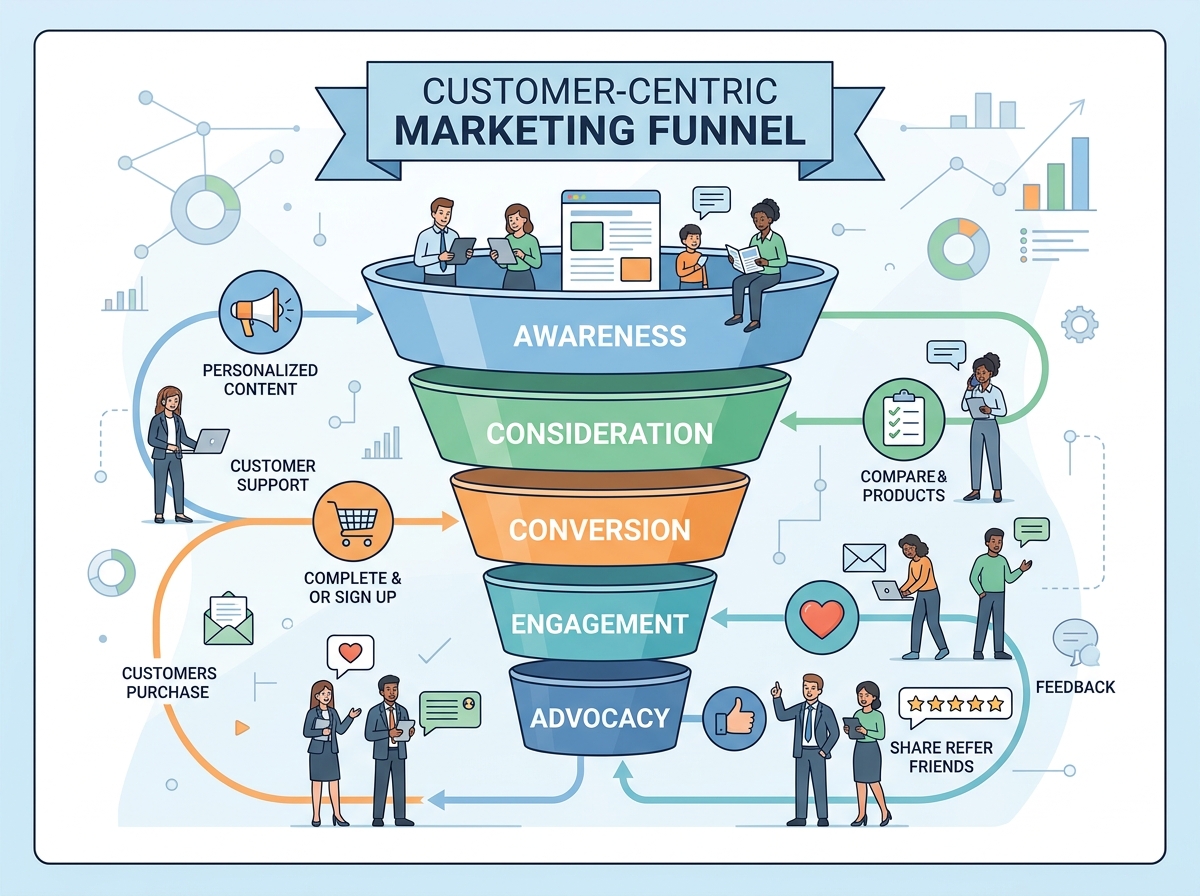
Once we understand who our customers are, the next step is to map how they interact with our business and the broader market. This involves visualizing the customer journey through the lens of a marketing funnel, albeit a more dynamic and customer-centric one than its traditional predecessor. We typically break this down into three main phases: Top of Funnel (TOFU), Middle of Funnel (MOFU), and Bottom of Funnel (BOFU), with an extended focus on post-purchase loyalty. This structured approach is crucial for any effective digital marketing for home services funnels.
The stages can be broadly defined as:
- Awareness (TOFU): Homeowners realize they have a problem (e.g., leaky faucet, inefficient AC) and begin to research potential solutions.
- Consideration (MOFU): They explore various options, comparing different service providers, brands, and approaches.
- Conversion (BOFU): They are ready to make a decision and choose a specific provider.
- Loyalty & Advocacy (Post-Purchase): After service, they become repeat customers and recommend the business to others.
Identifying Key Touchpoints in the Homeowner’s Path to Purchase
A homeowner’s journey to selecting a home service provider is rarely a straight line. It involves numerous “touchpoints”—any interaction they have with our brand, our competitors, or related information. These can include:
- Social media: Discovering our brand through a local community group or targeted ad.
- Local SEO: Finding us through a “plumber near me” Google search.
- Review platforms: Reading testimonials on Google My Business, Yelp, or industry-specific sites.
- Chatbots: Engaging with an AI-powered assistant on our website for quick answers. For insights on how these tools can enhance the customer experience, explore customer interactions with live chatbots.
- Email sequences: Receiving helpful tips or promotional offers after an initial inquiry.
The “rule of seven” in marketing suggests a person needs to see a marketing message seven separate times before making a purchase. This highlights the importance of omnichannel consistency—ensuring a cohesive brand experience across all these diverse touchpoints. Each interaction, whether online or offline, contributes to the homeowner’s overall perception and decision-making process.
Navigating the Non-Linear Path to Conversion
Modern homeowner journeys are characterized by research loops and comparison shopping. A homeowner might start by searching for “HVAC repair tips,” then compare local providers, read reviews, ask for recommendations on social media, and then circle back to our website several times before finally booking a service. This non-linear behavior means our funnel needs to be flexible and adaptive.
Crucially, 50% of qualified leads don’t want to buy right away. This makes MOFU nurturing vital to keep relationships strong until prospects feel ready. Social proof, such as customer testimonials and case studies, plays a massive role here, building trust and validating our expertise. We also focus on micro-conversions at each stage—small, incremental steps like downloading a guide, signing up for a newsletter, or using an online scheduling tool. By reducing friction at every potential drop-off point, we make it easier for homeowners to progress, even if their path is indirect.
Content Strategy and Lead Nurturing for Modern Contractors
Content is the fuel that drives a customer-centric marketing funnel. It’s how we educate, engage, and build trust with homeowners at every stage of their journey. For home service contractors, this means moving beyond simple advertisements to providing genuine value through personalized content, educational resources, and compelling success stories.
By aligning our content with the homeowner’s specific needs and questions at each funnel stage, we can significantly boost our marketing ROI. Companies that use complete funnel marketing strategies see a 15-20% boost in marketing ROI without spending more money. This is achieved by creating trust signals through expert advice, transparent information, and authentic representations of our service quality. Video marketing, in particular, can be highly effective for demonstrating expertise and showcasing our team in action.
Creating Relevant Content for Every Stage of the Funnel
The type of content we create must directly address the homeowner’s mindset at each stage:
- Awareness (TOFU): Homeowners are problem-aware. Content here should be broad, educational, and easily discoverable. Think “how-to guides” for common home issues (e.g., “5 Signs Your Water Heater Is Failing”), expert tips on preventative maintenance, and blog posts that answer frequently asked questions. The goal is to establish our brand as a helpful, authoritative resource.
- Consideration (MOFU): Homeowners are solution-aware and comparing options. Content should demonstrate our expertise and differentiate our services. This is the stage for detailed case studies (e.g., “How We Restored Comfort to a Historic Home with a New HVAC System”), demonstration videos of our technicians at work, and comparative articles (e.g., “Choosing Between Tankless and Traditional Water Heaters”). Clear Calls-to-Action (CTAs) should guide them to learn more or request a consultation.
- Conversion (BOFU): Homeowners are service-aware and ready to choose. Content here should directly address their final concerns and provide compelling reasons to choose us. This includes transparent pricing information, customer testimonials, guarantees, and clear instructions on how to book a service. Solution-aware messaging that reiterates our unique value proposition is key.
Best Practices for Nurturing Leads in Digital Marketing for Home Services
Nurturing leads is about building rapport and trust over time, especially since 50% of qualified leads don’t want to buy right away. Email automation is a primary tool for this, allowing us to send personalized, relevant content directly to prospects based on their engagement and interests. Lead scoring helps us prioritize which leads are most engaged and ready for a sales conversation, ensuring our team focuses their efforts efficiently.
Timely follow-ups are crucial, whether through email, phone calls, or even SMS marketing for quick updates or appointment reminders. The goal is to maintain consistent, helpful communication without being intrusive. This relationship-building approach pays dividends: getting a new customer costs five times more than keeping an existing one, and repeat customers tend to spend 67% more than new ones. Focusing on customer retention and engagement through effective nurturing strengthens our business from the inside out.
Measuring Success and Optimizing Funnel Performance
A customer-centric marketing funnel isn’t a “set it and forget it” strategy. To ensure it continuously delivers results for our home service business, we must diligently measure its performance and commit to ongoing optimization. This involves tracking key metrics and utilizing feedback loops to understand what’s working, what isn’t, and why.
Our measurement strategy combines quantitative metrics with qualitative insights:
Quantitative Metrics Qualitative Insights
Conversion Rates: From visitor to lead, lead to booked service, booked service to completed job.
Customer Feedback: Surveys (NPS, CSAT), reviews, direct interviews.
Cost Per Acquisition (CPA): The total cost to acquire a new customer.
User Behavior Analysis: Heatmaps, session recordings on our website.
Customer Lifetime Value (LTV): The total revenue a customer is expected to generate over their relationship with our business.
Sales Team Feedback: Insights from direct customer interactions.
Funnel Velocity: How quickly leads move through each stage.
Social Listening: Monitoring brand mentions and industry conversations.
Marketing ROI: Overall return on our marketing investments.
Competitor Analysis: Understanding market perception and offerings.
By tracking these, we can identify bottlenecks, understand customer behavior, and make data-driven decisions to improve our funnel’s effectiveness. Teams with clear definitions for conversions in each channel will have an easier time measuring success.
Utilizing Advanced Analytics and Feedback Loops
Modern tools provide deep insights into homeowner behavior. Heatmaps can show us where visitors click, scroll, and linger on our website, revealing areas of interest or confusion. Session recordings allow us to watch individual user journeys, identifying pain points or moments of frustration that might lead to drop-offs. These insights are invaluable for optimizing user experience.
Beyond quantitative data, soliciting direct feedback is crucial. Net Promoter Score (NPS) surveys gauge overall customer loyalty, while Customer Satisfaction (CSAT) surveys provide immediate feedback on specific interactions or services. This continuous feedback loop is essential for real-time adaptation and personalization, moving beyond guesswork. Companies that implement strong sales and marketing alignment, often facilitated by shared funnel metrics, grow 19% faster and see 15% higher profits, and are nearly 3x more likely to exceed new customer targets. Leveraging AI to analyze this data can further enhance our understanding and response capabilities, as detailed in articles on enhancing customer experience with AI and customer experience with AI in businesses.
Continuous Improvement Through A/B Testing
Optimization is an ongoing process of experimentation. A/B testing allows us to compare different versions of our marketing assets—such as messaging variants in email campaigns, landing page layouts, or CTA placements—to see which performs best. For example, we might test two different headlines for a service page or two different button colors for a “Request a Quote” form.
This iterative approach helps us refine our user experience (UX) and content for maximum impact. By continuously testing and adapting based on real-world results, we ensure our customer-centric funnel remains highly effective, responsive to homeowner needs, and aligned with our business goals.
Beyond the Funnel: Flywheels and Marketing Ecosystems
While the concept of a funnel helps us visualize the customer journey, modern marketing in 2026 often transcends its linear limitations. Many forward-thinking home service businesses are now embracing models like the “flywheel” and building comprehensive marketing ecosystems. These concepts recognize that happy customers are not just the end goal but also the most powerful drivers of new business.
The marketing flywheel model emphasizes that the momentum generated by customer delight and advocacy fuels continuous growth. Instead of a one-way path, the flywheel suggests a virtuous cycle: attracting customers, engaging them with exceptional service, and delighting them so much that they become promoters. This momentum makes future sales easier and more cost-effective. For example, a homeowner thrilled with their new HVAC installation is likely to leave a glowing review, recommend us to neighbors, and become a repeat customer for future maintenance. This cycle reduces wasted effort and builds sustainable growth. Companies with strong sales and marketing teams working together grow 19% faster and see 15% higher profits, illustrating the power of aligned efforts around customer satisfaction.
Integrating Feedback Loops into the Growth Engine
Feedback loops are the gears that keep the flywheel spinning efficiently. They involve actively listening to our customers and using their input to continuously improve our services and marketing. This includes:
- Social listening: Monitoring online conversations about our brand, industry, and competitors.
- Review management: Actively soliciting, responding to, and leveraging customer reviews for reputation & sales. Learning how to effectively respond to negative feedback and mastering the response to turn negative customer reviews into sales is also vital.
- Customer surveys and direct feedback: Gathering structured insights on satisfaction and areas for improvement.
By integrating these feedback loops, we ensure that our customer-centric approach is genuinely adaptive. Continuous engagement through loyalty programs, personalized communications, and proactive problem-solving fosters strong advocacy. User-generated content, such as customer testimonials and photos of completed projects, becomes an authentic and powerful marketing asset, further fueling the flywheel.
Building a Sustainable Business Ecosystem
A marketing ecosystem extends beyond our direct interactions with customers to include a network of partners, influencers, and community involvement. For home service businesses, this could mean:
- Partner networks: Collaborating with local real estate agents, home inspectors, or interior designers for referrals.
- Influencer collaborations: Partnering with local home improvement bloggers or community leaders.
- Local community involvement: Sponsoring local events, participating in charity drives, or offering educational workshops.
This multi-directional value flow allows us to meet homeowners where they already are, building trust and visibility within their trusted circles. Brand storytelling, focusing on our company’s values, mission, and the human connection we provide, becomes a powerful tool in this ecosystem. In the economic landscape of 2026, where consumers value authenticity and community, building a robust and sustainable business ecosystem is paramount for long-term profitability and market leadership. It’s about creating profitable customer relationships in home services and continually raising the bar: strategies for enhancing customer service in home services.
Frequently Asked Questions about Customer-Centric Funnels
What is the main difference between a traditional funnel and a customer-centric one?
The main difference lies in their focus and duration. Traditional funnels are linear, business-focused, and typically end at the point of transaction. Their primary goal is to convert a prospect into a buyer. In contrast, customer-centric funnels are cyclical, homeowner-focused, and extend beyond the initial purchase. They prioritize understanding and meeting the customer’s needs at every stage, aiming for long-term retention, repeat business, and advocacy, essentially turning customers into promoters rather than just buyers.
How can a home service business measure the ROI of a customer-centric approach?
Measuring the ROI of a customer-centric approach involves tracking several key metrics. This includes Customer Lifetime Value (LTV), which quantifies the total revenue a customer is expected to generate over their relationship with your business. We also look at referral rates and the reduction in Cost Per Acquisition (CPA), as happy, retained customers often cost less to serve and bring in new business through referrals. Improved customer retention rates directly translate to higher profits, making it a clear indicator of ROI.
Why is lead nurturing important if a homeowner isn’t ready to buy immediately?
Lead nurturing is crucial because, as statistics show, 50% of qualified leads don’t want to buy right away. Home service decisions, especially for significant repairs or installations, often involve careful consideration and research. Nurturing allows us to maintain a relationship with these prospects, providing valuable information, addressing potential concerns, and reinforcing our brand’s authority and trustworthiness. This ensures that when the homeowner is ready to make a decision, our business is top-of-mind and positioned as their preferred solution. It’s about building trust and staying relevant until their buying cycle aligns with our offerings.
Conclusion
In the dynamic landscape of 2026, scaling your home service business demands a strategic evolution from outdated marketing models. The customer-centric marketing funnel is not merely a trend but a fundamental shift towards sustainable growth, placing the homeowner’s journey, needs, and satisfaction at the core of every operation. By embracing this approach, we move beyond transactional interactions to foster lasting relationships, transforming customers into loyal advocates who drive organic growth.
We’ve explored how understanding audience segmentation, crafting detailed buyer personas, and meticulously mapping the non-linear customer journey are foundational. We’ve highlighted the power of relevant, personalized content and strategic lead nurturing to guide homeowners through every stage. Furthermore, we’ve emphasized the critical role of continuous measurement, advanced analytics, and feedback loops in optimizing performance. Finally, by integrating modern concepts like flywheels and building robust marketing ecosystems, we can create a powerful engine of growth fueled by customer delight and advocacy.
The future of home service marketing is undeniably customer-first and data-driven. By committing to this strategic evolution, your business can achieve not just short-term gains, but long-term profitability and undisputed market leadership.
Discover more from The Cameron Journal
Subscribe to get the latest posts sent to your email.




