
Key Takeaways
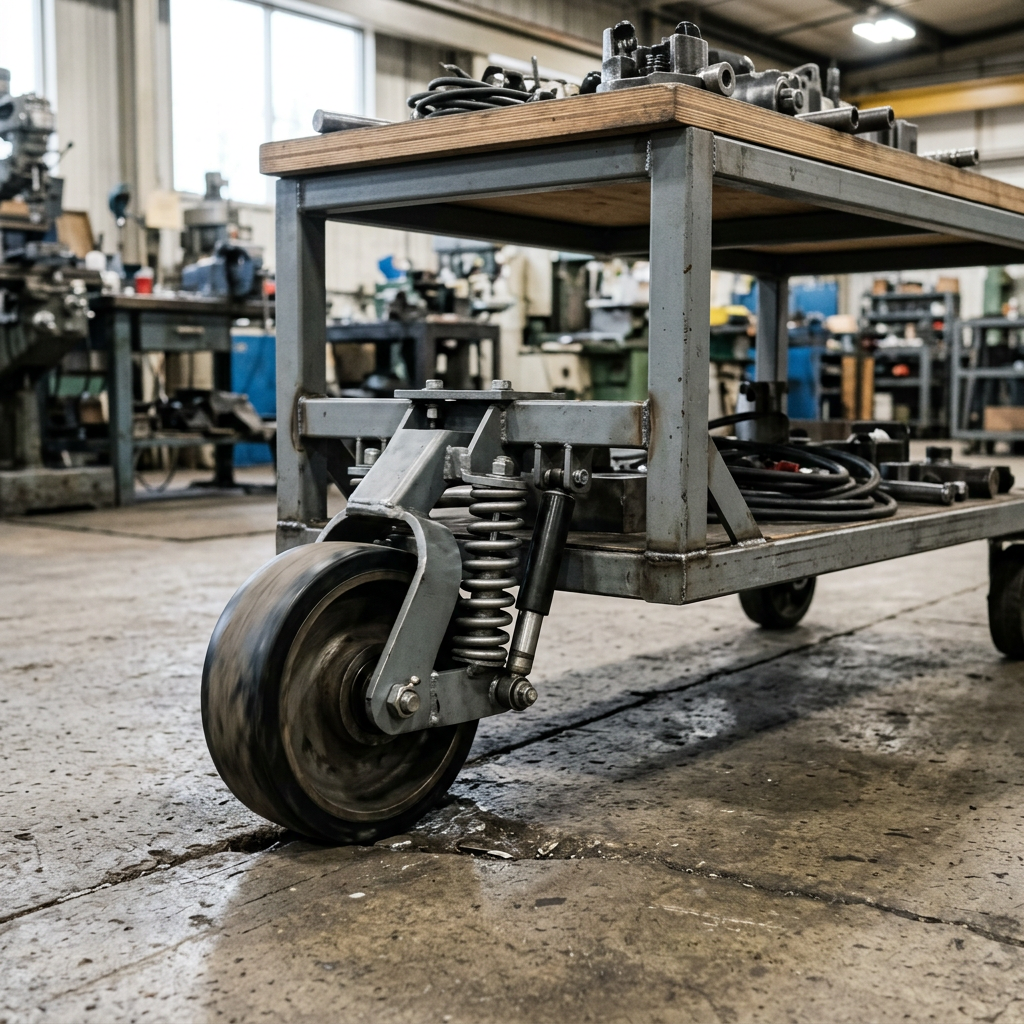
- R.T. Laird, Inc. specializes in shock-absorbing and shock-isolating caster designs for demanding mobile equipment applications.
- Its spring-loaded caster systems are intended to reduce transmitted shock, vibration, noise, wheel wear, and the risk of damage.
- Correct caster selection depends on load, route conditions, speed, wheel material, mounting requirements, and the desired performance outcome.
- A detailed suspension caster request gives the engineering team the information needed to recommend an appropriate configuration.
Moving sensitive equipment, finished goods, tools, or components across imperfect floors can create a costly cycle of vibration, noise, wheel wear, and payload damage. R.T. Laird, Inc. addresses that problem with suspension casters designed to help isolate carts, vehicles, and mobile equipment from impacts caused by thresholds, expansion joints, rough concrete, dock plates, and other uneven surfaces.
How Can R.T. Laird, Inc. Reduce Shock and Vibration?
A suspension caster introduces controlled spring deflection between the wheel and the equipment frame. Instead of allowing every bump to be transferred directly to the cart and payload, the suspension system is designed to absorb part of the impact. This can help protect the load, reduce stress on the mobile equipment, and create a less jarring experience for operators.
R.T. Laird, Inc. states that its shock-reducing caster designs can reduce shock and vibration by up to 80 percent and lower noise levels by up to 25 decibels in suitable applications. Those figures are application-dependent rather than universal guarantees, because surface conditions, load distribution, speed, wheel selection, and installation all influence the result.
Why Do Conventional Casters Struggle on Uneven Floors?
Rigid casters and designs with limited suspension travel may transmit sudden impacts directly into the equipment. When a wheel strikes a crack, threshold, or uneven transition, the resulting force can cause bouncing, shimmying, noise, payload movement, and repeated stress on frames, fasteners, instruments, and wheel assemblies.
It is useful to document the travel route before choosing a caster. Photos of problem areas, floor transitions, ramps, outdoor pavement, and dock interfaces can reveal why a cart is experiencing harsh movement or premature wear.
What Makes R.T. Laird, Inc. Suspension Casters Different?
R.T. Laird, Inc. emphasizes a wide deflection range and gradual spring response in its shock-isolating caster approach. The company explains that conventional casters with high initial and final spring rates can create destructive shock on inconsistent surfaces, while a broader, more gradual deflection response is intended to mitigate vibration and noise.
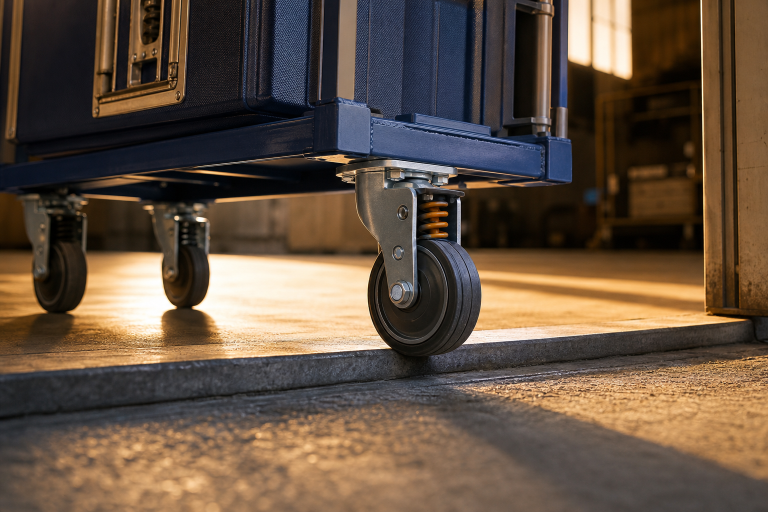
That design objective matters because suspension is not simply an added feature. The caster must be matched to the application. A useful review considers total equipment weight, the number of load-bearing casters, uneven-load conditions, wheel diameter, tread material, travel speed, mounting arrangement, braking needs, and available clearance. A poorly sized suspension caster can still bottom out, steer poorly, or fail to deliver the desired level of control.
Which Problems Can Suspension Casters Help Address?
- Fragile loads moving over rough floors: Shock isolation may help reduce the transmission of impacts to electronics, instruments, components, and finished products.
- Excessive rolling noise: A combination of suspension behavior and appropriate wheel material may reduce impact-related noise in production, laboratory, service, and technology environments.
- Cart bounce or shimmy: Reviewing load-deflection behavior can help determine whether the caster system contributes to unstable movement.
- Frequent wheel and equipment wear: Reducing repeated impacts may help limit stress on wheels, frames, mounts, and related material-handling equipment.
- Harsh operator movement: Better shock control can support a broader effort to improve travel comfort and equipment handling.
How Does Vibration Affect Material Handling and Operator Safety?
Vibration is more than a product-protection concern. It can affect operator comfort, equipment controls, maintenance demands, and the stability of a payload in motion. Research measuring vibration levels on warehouse and retail store material-handling equipment evaluated multiple equipment types in loaded and empty conditions across indoor and outdoor surfaces, reinforcing the importance of considering the entire travel environment.
Casters are only one part of a vibration-control plan. Route design, floor repair, load balance, travel speed, maintenance practices, and operator training can also influence how much shock reaches the equipment and its load.
Where Are R.T. Laird, Inc. Casters Used?
R.T. Laird, Inc. identifies food service, computer and technology companies, aviation, aerospace, and industrial material handling among the markets it serves. Potential applications include equipment carts, mobile work platforms, specialized industrial vehicles, sensitive-component transport systems, laboratory equipment, and aircraft support equipment.
For example, a cart carrying sensitive electronics may cross thresholds and concrete joints several times per shift. In that situation, a spring-loaded caster can be evaluated as part of a system designed to reduce the shock transmitted to the payload. The right design still depends on the cart’s weight, center of gravity, route, and duty cycle.
What Evidence Should Buyers Review?
Buyers should not assume that every caster labeled as suspended will perform the same way. Load-deflection information, rated capacity, wheel material, operating conditions, and field testing provide a more meaningful basis for comparison. R.T. Laird, Inc. describes its designs as using broad deflection and gradual spring rates to address dynamic bounce, resonance, and shimmy under demanding conditions.
Broader research also supports the engineering principle that wheel and caster configurations affect the vibration transmitted. A study examining caster configurations and vibration exposure in manual wheelchairs found measurable differences between configurations. That research does not predict outcomes for every industrial cart, but it illustrates why wheel and caster design choices deserve careful evaluation.
How Should a Buyer Prepare a Suspension Casters Request?
- Provide the combined weight of the equipment and maximum payload.
- State the number of casters and identify any uneven-load or off-center loading conditions.
- Describe floors, thresholds, ramps, dock plates, pavement, and other route conditions.
- List expected travel speed, daily operating hours, and typical travel distance.
- Explain the primary objective, such as payload protection, lower noise, operator comfort, floor protection, or longer equipment life.
- Include mounting dimensions, wheel preferences, braking or steering requirements, and clearance limits.
- Identify environmental concerns such as moisture, chemicals, temperature, sanitation needs, or clean-area requirements.
Choosing the Right R.T. Laird, Inc. Solution
R.T. Laird, Inc. can help buyers compare suspension travel, rated capacity, wheel diameter, tread material, mounting style, spring response, maintenance considerations, and noise or vibration priorities. The most productive request is specific about the problem rather than limited to a part number.
Published performance figures are a useful starting point, but real-world results should be evaluated against the actual application. For organizations moving sensitive loads over difficult surfaces, the practical principle is clear: performance is the measure of cost, especially when the alternative is repeated product damage, equipment wear, noise, and downtime.
Discover more from The Cameron Journal
Subscribe to get the latest posts sent to your email.




