

Key Takeaways
- Predictive maintenance leverages advanced technologies to anticipate equipment failures before they occur.
- Implementing PdM can lead to significant cost savings and increased operational efficiency.
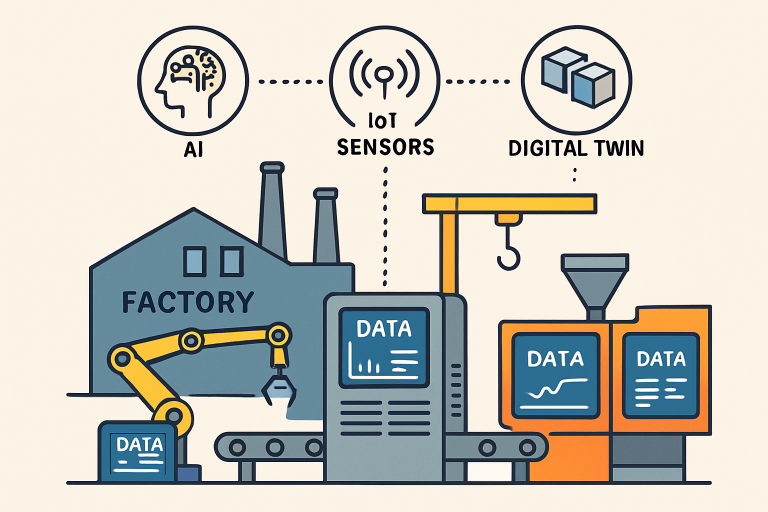
- Emerging trends in PdM include AI integration, IoT sensor deployment, and the use of digital twins.
Table of Contents
- Introduction to Predictive Maintenance
- Core Technologies in Predictive Maintenance
- Artificial Intelligence and Machine Learning
- Internet of Things (IoT) Sensors
- Digital Twins
- Augmented and Virtual Reality
- Case Studies and Industry Applications
- Challenges and Considerations
- Future Trends in Predictive Maintenance
- Conclusion
Introduction to Predictive Maintenance
Predictive maintenance technologies are rapidly reshaping the way industrial organizations manage their equipment. By leveraging data-driven insights, maintenance teams can predict issues before they lead to costly breakdowns, supporting improved reliability and efficiency across operations. Modern predictive maintenance software empowers companies to proactively monitor their critical assets, enabling them to schedule repairs or replacements at the optimal moment rather than reactively responding to unexpected failures.
This innovative approach to predictive maintenance (PdM) helps industries minimize downtime, extend equipment lifecycles, and reduce costs, particularly in sectors such as manufacturing, energy, and transportation. By leveraging technologies such as artificial intelligence, IoT sensors, and digital twins, PdM enables real-time monitoring and precise forecasting, driving smarter operational decisions. Adopting these strategies is critical to enhancing worker safety, regulatory compliance, and operational stability. Predictive maintenance emphasizes proactive monitoring to detect anomalies and potential failures early, ensuring optimal performance and a culture of continuous improvement.
Core Technologies in Predictive Maintenance
The effectiveness of predictive maintenance stems from several core technological advancements. Among these, artificial intelligence (AI) and machine learning (ML) algorithms play a fundamental role in analyzing data and generating actionable predictions. Internet of Things (IoT) sensors enable the collection of granular data from equipment, providing a detailed picture of operating conditions. Digital twins, which are digital replicas of physical assets, simulate and forecast asset performance over time. In addition, augmented reality (AR) and virtual reality (VR) technologies enhance maintenance training and support remote troubleshooting, improving both speed and precision.
- AI and ML: Algorithms detect failure patterns and forecast issues across diverse environments.
- IoT Sensors: Devices feed continuous data streams of parameters such as temperature, vibration, and performance.
- Digital Twins: These provide virtual environments for simulating and testing maintenance scenarios.
- AR and VR: Tools for immersive training and real-time visual guidance during equipment repairs.
Artificial Intelligence and Machine Learning
AI and ML are revolutionizing predictive maintenance by processing massive datasets to forecast failures with high precision. Advanced predictive models, such as Transformer Quantile Regression Neural Networks (TQRNNs), have shown promise in real-time machine failure prediction. For example, a recent study reported a prediction accuracy rate of over 70 percent with a one-hour lead time, enabling organizations to intervene before breakdowns occur. These continuously learning systems adapt and improve as they process more maintenance records and operational data, creating an evolving prediction engine that reduces the incidence of costly unplanned downtime.
Internet of Things (IoT) Sensors
IoT sensors form the backbone of real-time data acquisition in predictive maintenance. These devices are deployed across equipment fleets to monitor variables such as structural integrity, environmental conditions, vibration, and pressure. Modern sensor networks can detect subtle shifts in equipment behavior and trigger alerts before faults escalate into failures. Industries like construction leverage this technology to monitor worker safety and asset conditions at every stage of a project. As IoT continues to mature, these sensors are becoming increasingly affordable and accessible, broadening the reach of predictive maintenance across more industrial sectors.
Digital Twins
Digital twins bridge the gap between physical assets and digital intelligence by creating dynamic, real-time models that reflect equipment status and usage. These virtual environments allow maintenance teams to simulate various scenarios, refine their strategies, and determine the ideal times for interventions. By leveraging analytics from digital twins, organizations can minimize unscheduled downtime and extend equipment lifespan. In high-stakes industries where failure is not an option, digital twins provide an invaluable tool for optimizing maintenance intervals and allocating resources effectively.
Augmented and Virtual Reality
Augmented and virtual reality are enhancing maintenance teams’ skills by delivering immersive experiences and just-in-time information. Technicians equipped with AR wearables can instantly access step-by-step repair procedures and overlay sensor data directly onto machinery during inspections. Remote experts can collaborate with on-site teams, offering live support and guidance without travel delays. Similarly, VR-based simulations allow workers to safely train on virtual equipment, reducing the learning curve and minimizing operational risks. These technologies are increasingly being adopted to speed up repairs and lower training costs, helping companies remain agile amid evolving maintenance challenges.
Case Studies and Industry Applications
Across sectors, real-world applications illustrate the transformative power of predictive maintenance. In the mining industry, for example, a multi-layered framework integrates edge devices, gateways, and cloud platforms for continuous equipment monitoring and rapid decision-making. Leveraging Tiny Machine Learning (TinyML) allows these systems to adapt inference calculations for accuracy and responsiveness, even on devices with limited resources. This approach minimizes energy consumption, extends the longevity of remote monitoring sensors, and optimizes battery life, critical advantages in demanding, remote operational environments.
Challenges and Considerations
Despite its many advantages, implementing predictive maintenance presents several challenges. First, data quality is paramount. Poor sensor accuracy or incomplete datasets can undermine the reliability of predictions. Second, the smooth integration of new technologies with legacy systems remains complex. Many organizations face interoperability issues that delay the full realization of PdM benefits. Third, while long-term savings are substantial, the initial capital investment in advanced sensors, connectivity, and analytics platforms can be daunting for some businesses. Decision-makers must carefully consider these factors, balancing risk with strategic opportunity.
- Data Quality: Reliable PdM depends on complete, high-quality operational data.
- Integration: Compatibility with existing infrastructure can be challenging.
- Cost: Upfront investment is offset by substantial long-term savings and improved asset performance.
Future Trends in Predictive Maintenance
The next horizon in predictive maintenance is being shaped by even greater collaboration, advanced services, and accessible technology. Companies are rolling out AI-powered managed services that fuse maintenance expertise with machine learning, allowing industries to anticipate issues with unprecedented accuracy. The predictive maintenance software market is also seeing a rise in strategic collaborations, as organizations pool resources and innovation to deliver comprehensive solutions that meet evolving industrial demands. With the PdM market expected to grow rapidly over the coming years, staying at the forefront of these trends is vital for industry leaders.
Conclusion
Predictive maintenance is no longer an emerging concept. It is now an integral strategy for any organization seeking to elevate operational efficiency, minimize downtime, and reduce long-term costs. By harnessing technologies such as AI, IoT sensors, digital twins, and AR/VR, forward-looking organizations can anticipate problems before they become critical. As these technologies continue to evolve, predictive maintenance will only become more effective and essential, future-proofing industrial operations in a rapidly advancing world.
Discover more from The Cameron Journal
Subscribe to get the latest posts sent to your email.




 utilizes advanced technologies like AI, IoT sensors, and digital twins to foresee equipment failures, enhancing operational efficiency and reducing costs.)