
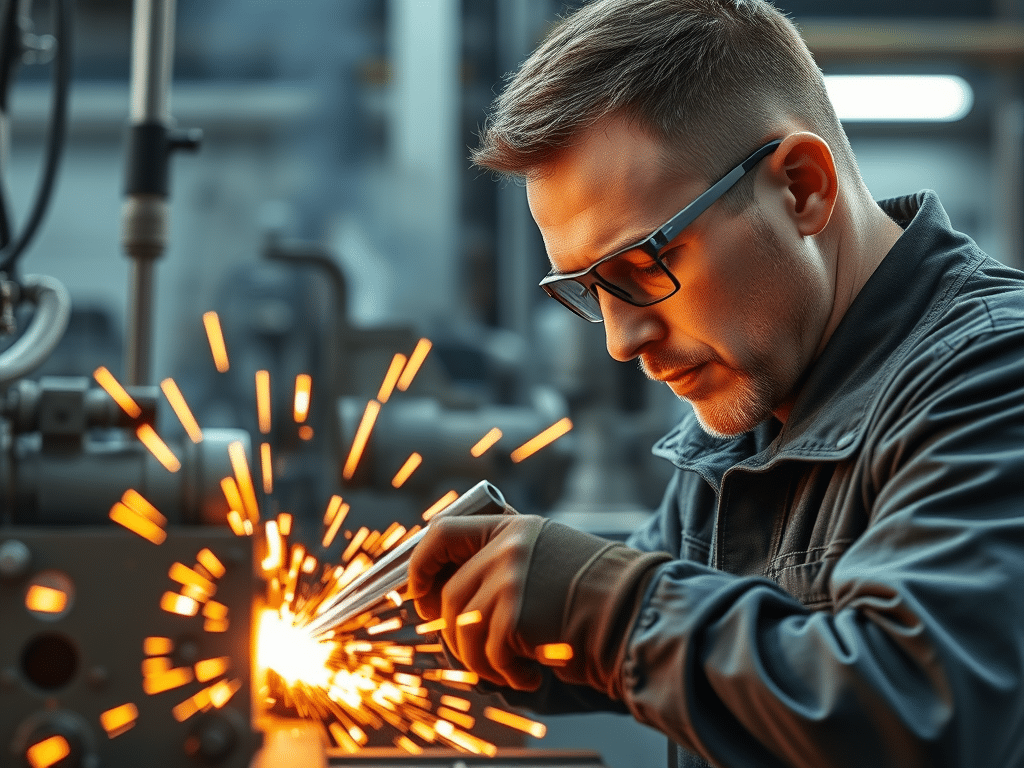
Businesses are constantly seeking new ways to improve efficiency, reduce waste, and stay competitive through smarter manufacturing investments. With technology rapidly evolving an industry demanding more precision and customization, investing in the right manufacturing processes can offer long term strategic advantages. Finding the right balance between cost and quality is a major part of any manufacturing plan. Many companies now look for specialized services like Mild steel fabrication Sheffield to help with their project needs. This approach allows for more control over the final product and its durability. It is often more efficient than buying mass-produced parts that might not fit the exact requirements. Working with local experts also helps keep the supply chain simple and reliable.
Among the most promising options is custom steel fabrication, a process that plays a vital role across sectors such as construction, automotive, infrastructure and energy. Here are some of the top manufacturing processes worth investing in, whether you’re scaling up production, entering a new market or looking to modernise your current operations.

- Custom steel fabrication. This involves the cutting, bending and assembling steel components to match specific requirements. Unlike mass produced parts, this process allows for tailor made solutions in design, strength and durability. As industries push for more specialist components, especially in sectors like renewable energy, architecture and transportation customs, steel fabrication becomes a critical investment. This process also supports innovation, and with the rise of sustainable building materials and modular construction, demand for customized steel frameworks and parts is expected to grow. With an investment in advanced steel fabrication capabilities, companies can offer high precision on demand solutions that meet modern engineering and architectural standards.
- Additive manufacturing. Also known as 3D printing, this is transforming how products are designed and built. Rather than removing material as in machining, this process builds parts layer by layer from digital models, enabling highly complex designs and rapid. Additive manufacturing is particularly valuable in aerospacing medical and automotive industries. This is where lightweight components and intricate geometries are essential. Investing in 3D printing allows businesses to shorten production development cycles, reduce material waste and produce parts on demand. This saves both time and money.
- CNC machining. Computer numerical control, or CNC machining, remains one of the most versatile and precise manufacturing methods available right now. It’s ideal for producing parts with tight tolerances and complex shapes, and it can work with a wide range of materials, including metals, plastics, and composites. As automation continues to evolve, modern CNC machines are now integrated with AI driven monitoring and predictive maintenance systems. This makes CNC machining not just a staple in manufacturing, but also a forward-looking investment.
- Injection Molding. This is the go to method for mass production of plastic parts from medical devices to consumer electronics. This process offers speed, repeatability and low per unit cost once the initial mold is created. With advancements in mould making and automated assembly, injection molding remains a solid investment.
- Laser cutting. Precision cutting processes like laser cutting are essential in industries that demand accuracy and speed. When integrated with automation systems, these processes can drastically reduce labour costs and lead times. Laser cutting pairs especially well with custom steel fabrication, ensuring precision cuts in complex metal designs.
The manufacturing sector is evolving and so should your investments. Whether it’s adopting custom steel fabrication for specialist builds or embracing 3D printing for prototyping, the right technologies can position your business for growth, resilience, and innovation.
Discover more from The Cameron Journal
Subscribe to get the latest posts sent to your email.




